
The Movie Man: ‘Inside Out 2’ is a ‘Warranted Sequel,’ Continues the ‘Creative Spark’

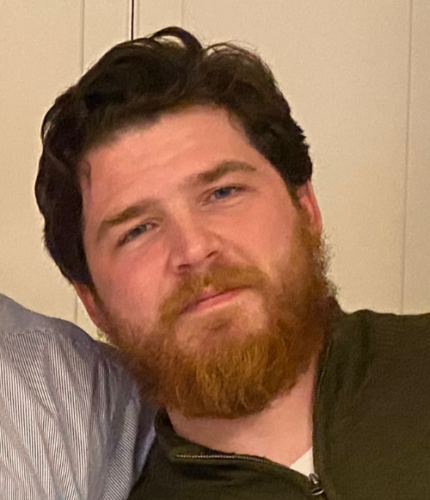
Kevin Ganey is ‘The Movie Man.’

Inside Out 2 is a warranted sequel. So often studios will crank out sequels for business reasons, despite the fact there is either no way to continue a story that has already been resolved; or that the sequel could not live up to the standard set by the original. Thankfully that is not the case, here.

In 2015’s Inside Out, Pixar gave, what I consider, to be one of their most creative and original movies as we saw the inner-thoughts of 11-year-old Riley personified by a committee of five emotions: Joy, Anger, Fear, Disgust, and Sadness (an example of some of the best casting decisions in film history).

Two years later, just as Riley is getting used to her five main emotions, puberty begins, accompanied by the arrival of four new emotions: Envy, Embarrassment, and Ennui, all led by Anxiety. While Riley’s emotions dealt with her move across the country in the first movie, the four new emotions take Riley in a different direction as she navigates unfamiliar territory with the social pressures that are a part of the teenage experience (such as self-esteem and ethical dilemmas.)

Anxiety guides an ambitious and competitive Riley towards poor decision-making, justifying it all as an attempt to make a good first impression at a hockey camp for talented youth. What makes her a powerful antagonist is that her rationale appears to be sound. While we know better as we watch the movie, our suspension of disbelief believes her ideas to be reasonable (kudos to the writing team for this.)

Beyond the overall narrative and performances, I must give credit to Pixar for keeping the creative spark going through metaphors about the subconscious. But what I truly must commend is Pixar’s depiction of mental health in teenagers and how these years are a vulnerable era as teens seek to establish their own identities, experience the popularity contest, and understand right and wrong.

While Pixar movies are family-themed movies, I think this installment is incredibly relevant to teenagers (even the ones who are going through the brief aversion of anything from their childhoods to be avoid being lame.) I hope it consoles them and lets them know it that they are human, it is okay to not be perfect, and, above all: to love themselves.

I have learned over the years that I should be suspicious over sequels as they are often unnecessary, but Pixar has given me another reason to still hope for them despite the prospects of let-downs. Inside Out 2 gave its original characters another opportunity to prove themselves and they nailed it.

With the success of this sequel, I believe a third installment is inevitable. I cannot help but wonder how Riley’s subconscious committee would handle young adult life down the road?

Who knows?

I just hope I don’t jinx it.

About the Author: Though no longer a resident of Lyme, Conn., Kevin knows he can never sever his roots to the tree of his identity. When not attending to his job in Boston, he is committed to ensuring a better grasp of current (and past) releases of cinema to his home community as he strives to leave his own mark in the same field that has always been his guide to understanding life. If you enjoy his published reviews here on LymeLine.com, follow him on his website at ‘The City of Cinema and read more of his unique insights into entertainment.

The Movie Man: No Film Festivals Likely for ‘Unfrosted’ but it’s Still “Amusing, Captivating … Worth the Watch”

Kevin Ganey is ‘The Movie Man.’

Jerry Seinfeld’s Unfrosted, a non-canonical biopic of the invention of the pop-tart, contains a star-studded cast (led by Seinfeld, Melissa McCarthy, and Jim Gaffigan … along with cameo after cameo from A-list entertainers) that goes full-on ridiculous in this outrageous campy satire of The Sixties, and guarantees constant laughs throughout.

For the record, I doubt this will be considered for film festivals or award shows (just check out the ratings on Rotten Tomatoes of IMDb, after all.) But simply: it is amusing, captivating, entertaining and worth the watch. 

The story is predictable: rival corporations (Kellogg’s and Post) fight to be the first to put a simple breakfast treat in grocery stores (mirroring the Space Race.) It involves secrets, betrayal, mafia-like tactics, cameos from iconic performers … but Unfrosted goes farther than any business rivalry could go, adding acts of treason and the loss of lives.

A predictable plot line, but fun jokes layered throughout its duration. To be truthful, it reminds me a great deal of the movies by Mel Brooks (Spaceballs in particular.)

What makes a satire great is pointing out social issues that we have subconsciously conditioned ourselves to and pointing out the absurdities that we have gone along with for years. Unfrosted contains joke after joke directed at the ideas of The Sixties that clearly did not age well (the Vietnam War, high fructose corn syrup, and above all: the Cold War).

But this satire is completely unrealistic. How so?

An award show that demonstrates the rivalry between Kellogg’s and Post is held at a local Holiday Inn, milkmen imitate the Teamsters, and the creation of Kellogg’s products mirrors that of a top-secret science lab. In fact, there is almost a cartoonish fantasy element to its storytelling.

But what is most appealing about this movie is not its jokes, but its length: only an hour and a half. The time will fly by and will be over before you know it.

It’s clear the creator of the show about nothing heeded the wisdom of the Master of Suspense, Alfred Hitchcock, who quipped that a film’s length should match the endurance of the human bladder. And in this case, since it has been released through Netflix, one can conveniently stop and continue this quick film at one’s own pace anyway.

Again, this is not a groundbreaking film that will redefine cinema and comedy, as we know it. But it is a fun watch filled with entertainers that have been amusing us for decades, and makes a nice way to spend an hour and a half of our time.

Not all movies worth watching push the limits of art and define a generation.

It is no secret that I am a fan of the Criterion Collection/Channel, and can often recommend movies that could be considered “dry” by my peers … but I also consider Billy Madison and The Waterboy to be among my favorite movies (with no disrespect to Adam Sandler, who has always been lionized for how he has never given into his ego in pursuit of celebrity-status.)

About the Author: Though no longer a resident of Lyme, Kevin knows he can never sever his roots to the tree of his identity. When not attending to his job in Boston, he is committed to ensuring a better grasp of current (and past) releases of cinema to his home community as he strives to leave his own mark in the same field that has always been his guide to understanding life. If you enjoy his published reviews here on LymeLine.com, follow him on his website at ‘The City of Cinema and read more of his unique insights into entertainment.

The Movie Man: ‘Poor Things’ Takes ‘Surreal Fantasy Approach to Science-Fiction … Spares No Sensitivity’

Kevin Ganey is ‘The Movie Man.’

When I first watched the coming-of-age teen comedy Superbad in 2008, I was immediately won over to Emma Stone as Jules, the object of Jonah Hill’s affection. As the years passed and she released hit after hit (Zomebieland, Easy A, and The Amazing Spider-Man), I knew she would have a successful career as the new “it” comedy girl ranking alongside comediennes such as Gilda Radner, Carol Burnett, and Julia Louis-Dreyfus. I also have had a crush on her ever since.

However, I did not anticipate her taking home, not one, but TWO Academy Awards for Best Leading Actress within the next 15 years.

I expected the Oscar for Best Actress to go to Lily Gladstone for her unforgettable performance in Martin Scorsese’s Killers of the Flower Moon. But when the honor went to Stone, I knew that I would need to screen Poor Things. I just had to see what it was that Stone had over Gladstone.

I was able to find Poor Things available for streaming via my Hulu subscription. While I have often lamented the almost immediate availability to stream recent releases alongside the theatrical release, I must concede I was grateful to have watched this film from the comfort of my own home, where I had the option to turn on subtitles (which can totally change the movie-watching experience) and even rewind to rewatch something I did not immediately understand.

Poor Things takes a surreal fantasy approach to science-fiction. Set in Europe during the Victorian era, many liberties have been taken to provide certain technologies to the characters that were not historically available.

When the eccentric, mutilated surgeon Godwin Baxter (played by Willem Dafoe) discovers the body of a pregnant woman who attempted suicide by jumping from a bridge, he takes an unorthodox approach of transplanting the brain of the unborn baby into the head of the mother, resulting in a Frankenstein-like creation: Bella Baxter, who must experience life for the first time as an infant in a grown woman’s body (especially sexuality) acquiring wisdom as she journeys throughout Europe.

Like Barbie, another 2023 film dealing with self-discovery, Bella has come into a strange new world and must face the realities of life and the suffering that is inherent to our existence. However, Bella’s challenging of social mores and taboos is far more graphic and provocative than that which Barbie’s family-friendly audience can handle. The surreal narrative is reinforced by the choice of cinematography, which often includes a fish-eye lens along with bright and vibrant colors that contrast with each other.

But I must commend the overall arc of the narrative. I have learned over the years that storytelling is much more challenging than previously assumed, particularly when it comes to the resolution. It is quite common for us to finish a movie questioning the relevance of one or more characters, or even the direction the story went.

When this movie ended, whatever reservations I initially had about its surreal nature were cast aside in euphoric satisfaction. All details were suddenly relevant and necessary to lead us towards this ending.

I must warn all readers of the surreal and sometimes disturbing themes on display, as is usually the case with Yorgos Lanthimos and his filmography. Again, it is the R-rated version of Barbie.

While Greta Gerwig and Margot Robbie masterfully tackled existential feminist issues, it was done at a family-friendly level. Poor Things spares no sensitivity and squeamishness. If one wants to learn the truths of life, one must be prepared to face life on all levels, including its ugliness.

About the Author: Though no longer a resident of Lyme, Kevin knows he can never sever his roots to the tree of his identity. When not attending to his job in Boston, he is committed to ensuring a better grasp of current (and past) releases of cinema to his home community as he strives to leave his own mark in the same field that has always been his guide to understanding life. If you enjoy his published reviews here on LymeLine.com, follow him on his website at ‘The City of Cinema and read more of his unique insights into entertainment.

The Movie Man: “‘Dune Part II’ Delivers in Every Way Imaginable”

Kevin Ganey is ‘The Movie Man.’

Dune: Part II exceeded my expectations and, like the first installment released in 2021 (which I also reviewed), deserves to be ranked among iconic science-fiction movies including 2001: A Space Odyssey, Alien, Star Wars, and Blade Runner.

I think the simplest way to summarize my feelings is that, whichever way one screens it—whether it be iat a theater or streaming via a MAX subscription at home—it is worth whatever price you will be charged …. but I must emphasize that if you have the ability, this must be seen in a theater because going to the cinema is an experience that further enriches whatever movie you are viewing.

Having never read the novels by Frank Herbert (save for the first chapter involving Paul placing his hand inside the box of death… I need to work on my attention-span for reading), I am unable to commend the faithfulness of these adaptations on my own merit.

However, I saw both films with my brother and his best friend (both of whom are major fans of the original novels), and I spent the next two hours afterwards observing them rave about their vindication of both films. So, by way of proxy, I can confirm that this installment is worth seeing for anyone, who read the books.

Dune delivers in every way imaginable. What struck me most was the cinematography, particularly with the depiction of colors through the rays of sun on the desert planet Arrakis.

Sound plays a major role, too, such as the pulse vibrations placed in the sand used to conjure the dangerous sandworms.

And we cannot omit anyone’s performances in this star-studded cast, led by Timothée Chalamet, Zendaya, Rebecca Ferguson, Stellan Skarsgård, Javier Bardem and Josh Brolin (always interesting to see these real-life friends as co-stars again, considering their first film involved Bardem hunting Brolin across the Texas desert in No Country for Old Men); in addition to new cast members including Austin Butler, Lea Seydoux, Florence Pugh, and Christopher Walken.

I do not think it would take much persuasion for studio executives to greenlight raising the salary cap to include more A-listers such as Leonardo DiCaprio, Brad Pitt, and Al Pacino.

What I most appreciate about this form of storytelling is learning about this setting through casual background noise with subtlety. It can be quite a turnoff when filmmakers attempt to reveal important story pieces when the unnatural dialogue makes it seem like they are proselytizing the narrative.

The sign of a good science-fiction movie is when we can suspend our disbelief and accept the science that is presented to us, regardless of whether we have a degree in physics or are simply science-savvy, particularly when it comes to the technology the characters use (be it transportation or weapons).

I can only hope that it won over Neil deGrasse Tyson, who has built a reputation for ruining nearly any movie for the scientific inaccuracies (especially when he remarked that the star constellations were wrong in Titanic).

But, above all, we cannot neglect the narrative and characters. Filmmakers can use the best production value available and wow everyone with the special effects, but it is utterly useless if the story and the characters are garbage. The politics embedded in this narrative recalls the drama of ancient Roman history as people calculate their moves to how leaders will be cast down and others will rise to replace them, whether they are virtuous or not … but lacking virtue always makes a character far more interesting (just ask Vincent Price about his preference for playing villains).

Dune has rightfully earned its place among our watercooler conversations as one of the must-see movies of the year. If you are generally not a fan of science-fiction movies, I promise you that this is worth your attention. Movies that fire off all cylinders only come around once every blue moon and are always worth seeing, regardless of the genre and themes.

Again, whatever price the theater charges for your ticket, it is worth every penny.

About the Author: Though no longer a resident of Lyme, Kevin knows he can never sever his roots to the tree of his identity. When not attending to his job in Boston, he is committed to ensuring a better grasp of current (and past) releases of cinema to his home community as he strives to leave his own mark in the same field that has always been his guide to understanding life. If you enjoy his published reviews here on LymeLine.com, follow him on his website at ‘The City of Cinema and read more of his unique insights into entertainment.

The Movie Man: ‘Barbie’ May not Receive the Awards it Deserves, But is Unquestionably ‘One of the Best Movies of the Year’

Kevin Ganey is ‘The Movie Man.’

It’s not every day when a movie about a child’s toy touches the souls of its audience and brings awareness to social issues. Then again, we are living in extraordinary times we never anticipated (the Red Sox and Cubs both have World Series championships, and American politics resembles trashy reality TV).

In fact, perhaps it is an even more fertile era to bring all the inequalities of society to the masses?

When Barbie (Margot Robbie) suddenly thinks about death in the matriarchal utopia of Barbieland, she is instructed by the wise, but incredibly battered, Weird Barbie (Kate McKinnon) to venture to the Real World and find the girl, who is playing with her, and resolve whatever distress she is experiencing. As she makes her way through the Real World, she discovers life is, in fact, not as perfect as she and the other Barbies and Kens have trusted it to be.

While accompanying his girlfriend in her quest, unappreciated “Just” Ken (Ryan Gosling) discovers Patriarchy, which he intends to introduce to the rest of the Kens in Barbieland.

With elaborate colorful sets (there have been rumors that this caused a shortage in supplies of pink paint) reminiscent of the golden and silver era of Hollywood, accomplished director Greta Gerwig throws in familiar storytelling themes about consciousness, ranging from the creation and fall of Adam and Eve in the Garden of Eden to Plato’s Allegory of the Cave. This is in addition to cinematic references dealing with similar themes, particularly the opening scene parodying 2001: A Space Odyssey.

The characters and audience must wrestle with the discrepancies between the hopes and ideals of Barbieland, where young girls can pretend they have successful careers filled with proper recognition and achievement, and the bitter reality of the Real World in which women still struggle for equality and are held to different standards (and sometimes are even blamed for men’s failures).

This is all perfectly summarized in a rant that my mother still raves about, delivered perfectly to the national treasure that is America Ferrera.

Photo by Sandra Gabriel on Unsplash.

Patriarchy still exists, one man assures Ken, it is just better hidden now. Throw in the charming and silly humor peppered throughout the movie (particularly the performances of Ryan Gosling and Will Ferrell as antagonists we actually want to see more of), and simple-yet-extravagant special effects, and we have ourselves a film that will be immortalized as a classic.

Having spent much of my formative years in an all-guys environment (thank you, Xavier High School), Barbie exposed me to the daily frustrations experienced by women across the globe from dealing with benign assumptions to malicious violations of human rights.

And having not been Mattel’s target market for Barbie while growing up, the movie introduced me to the expanded universe of Malibu Barbie and her friends (who would have expected Michael Cera to steal a scene as Alan?).

As Award Season is set to conclude with the Oscars on March 10, we cannot help but observe the irony that Ryan Gosling was given a nomination for Supporting Actor as Ken, while star Margot Robbie, who took us through a transformative experience, got nothing for her performance. Like Ken in his new enthusiasm for Patriarchy, Gosling was given the glory for Barbie’s own movie, which even he lamented.

When we learn that nominations for the awards take place akin to political lobbying, should it be a surprise that such omissions happen? Have we learned nothing after all these years that once people find an easier route that compromises morals, they will exploit it?

Barbie is, without question, one of the best movies of the year. I do not see it taking home the prize of Best Picture, I believe it will go to Oppenheimer (see the review here).

But even if Barbie wins it all, I do not believe Margot Robbie will always remember and be proud of this movie because of the Oscar in her house, but rather the countless women who have spoken to her since its release about how it touched their souls, and recognized them and their own personal struggles wrestling with patriarchy.

About the Author: Though no longer a resident of Lyme, Kevin knows he can never sever his roots to the tree of his identity. When not attending to his job in Boston, he is committed to ensuring a better grasp of current (and past) releases of cinema to his home community as he strives to leave his own mark in the same field that has always been his guide to understanding life. If you enjoy his published reviews here on LymeLine.com, follow him on his website at ‘The City of Cinema and read more of his unique insights into entertainment.