Divorce is often a very stressful and traumatic experience. Even the person who files for divorce may struggle to deal with their emotions. One of the ways that people get through the divorce process is by focusing on the future. They imagine their life after the end of the divorce to get through the hardest parts of the process.
Those trying to think about the future generally need to have a reasonable idea of what to expect. Someone who has dedicated decades of their life to a particular profession might start thinking about enjoying their retirement after divorce. They may hope to travel or achieve other personal goals during their golden years.
The pension that they accrued throughout their working life could have a major impact on their stability in their retirement years. Can divorcing spouses expect to keep their pensions instead of dividing them during a divorce?
People who settle stay in control
Every individual contemplating divorce has different circumstances and personal goals. For those who have funded pension benefits by working for years in the same profession, keeping that pension might be their biggest priority. Others might want to continue running a family business or to stay in the family home.
Spouses preparing for divorce generally have the option of pursuing an uncontested divorce. If they can work out a settlement with their spouses, they can potentially achieve the financial goals that matter the most to them. Someone willing to take on more marital debt or make concessions related to other assets could potentially retain a pension in an uncontested divorce scenario.
Litigation may make a pension vulnerable
Under state equitable distribution rules, the courts have the authority to allocate resources accumulated during the marriage to either spouse. There have previously been court cases where the state has affirmed that pensions are often subject to division during divorce proceedings.
Much of the asset division process relies on a judge’s discretion in litigated cases. They may have to directly divide high-value assets, including pensions, to achieve a fair outcome. Spouses have little control over the terms set by judges when they litigate.
Identifying personal priorities early in the divorce process can make it easier for people to achieve their goals. A spouse can theoretically preserve their pension if they have the right approach to property division negotiations or litigation.
Editor’s Notes: i) Suisman Shapiro is located at 75 State Street, New London, CT 06320. Their mailing address is 2 Union Plaza, P.O. Box 1591 New London, CT 06320. Visit their website or call 800-499-0145 — lines are open 24 hours a day.
ii) If you are involved in a divorce, the attorneys at Suisman Shapiro can assist you. Reach an attorney specialized in the matter at the number above .
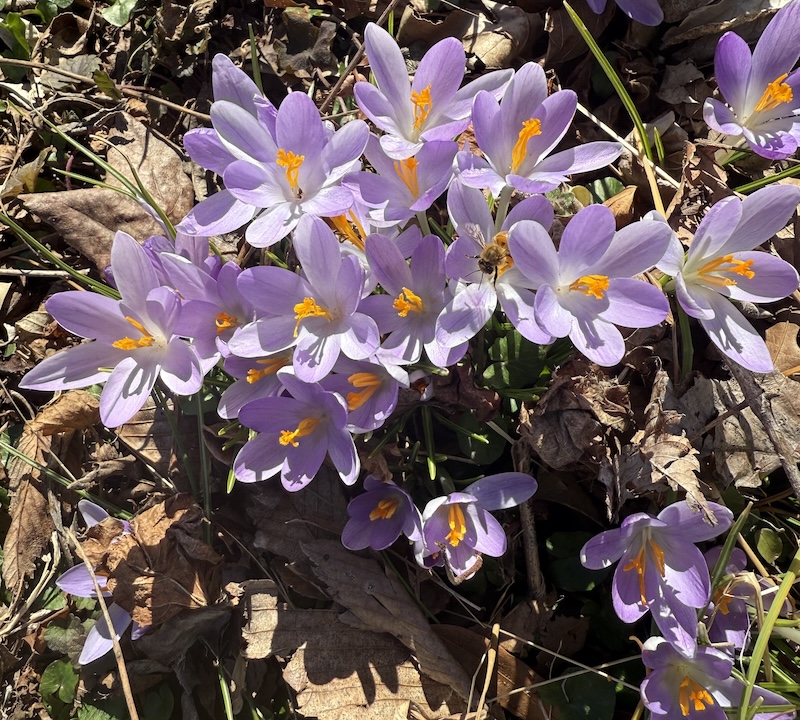
Signs of spring … crocuses will soon be flowering once again.
Maureen Haseley-Jones is ‘The English Lady’
This winter, as in other winters when I need a blossom boost, I enjoy the fragrance of the paper-white narcissi that I planted in tall glass vases. I surrounded the bulbs with seashells from White Sand Beach here in Old Lyme and kept them in a dark cool area, ensuring the shells and the bulbs were moist as the roots developed.
When the bulb foliage reached about six inches, I moved the bulbs in their vases into indirect light, which encourages the blooms to open. Each morning on entering my lounge, I am met with the fragrance of these beautiful bulbs and, feeling refreshed, I am ready for my day.
I keep extra bulbs in a brown paper bag in the vegetable keeper in the refrigerator. I plant these bulbs when the first blooms have gone by and with this method, I have a succession of blooms and fragrance permeating my home into spring.
Before you know it, spring will be upon us together with the anticipation that resides in all of us gardeners, which is to get outdoors and plunge our hands into the soil.
That being said, there is so much to look forward to and I feel I must once again stress the importance for all of us to garden organically.
In this country and around the world, the results of pollution and chemicals are just some of the factors that are causing climate change. We are in a crisis, with invaders that have already battened down the gates and invaded our gardens. These invaders are destroying Mother Nature and your health in the form of poisonous pesticides and herbicides.
The main producers of these poisons are Monsanto, Bayer and other biological monsters, who have been decimating our planet, our soil, human health and committing all those egregious crimes purely for selfish profit.
Bees, for example, have been killed in the millions, because the EPA under the Trump administration allowed the spraying of over 14 million acres of land, with poisonous chemicals. Please note folks, that bees pollinate 70 percent of the world’s food and their demise is our demise.
Last year was recorded as the hottest year on record. Drought in the west of this country, resulted in dry tinder conditions, causing devastating fires that brought death and destruction to people in California, Oregon and Colorado. This extreme weather pattern continues here, bringing tornadoes and extreme flooding, followed by even stronger hurricanes due to the rise of our oceans, which is the result of warming water.
Across the world, extreme weather patterns have also had a tragic effect on extreme drought in Africa causing famine and death to that region and terrible earthquakes as we have seen in Turkey, Northern Syria, Japan and China. I am glad that the government in this country had begun to seriously address the Climate Crisis, but much more needs to be done … Editor’s Note: Sadly, the current administration does not seem willing to address the Climate Crisis seriously.
As gardeners, it is our task to help counteract these negative changes by using only organic methods of gardening on our own plots of land; what we do in our own gardens contributes to healing the planet. Over the span of 25 years on my radio show WRCH 100.5 FM and through my Garden Earth lectures, I received a commitment from thousands of people to discard all poisonous herbicides and pesticides and to garden organically. The response had been tremendously positive in the production of organic gardens grown in healthy soil.
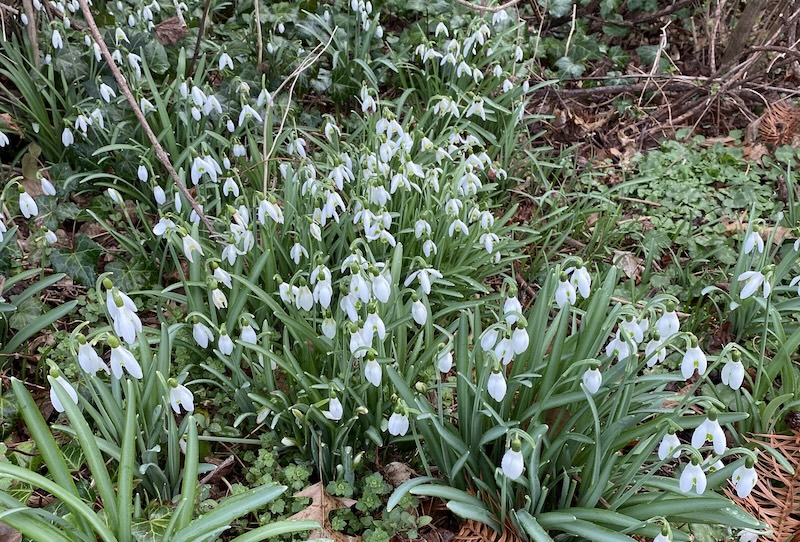
Wild snowdrops are welcome sign of the approaching Spring. File photo.
It begins with what you put into the soil for the growth of the plants, and this is accomplished by adding liberal doses of my favorite stuff–Aged Manure, which you may procure, either from the farm or in bags from the garden center.
The following, is a paragraph from a book I am writing on gardening and the vital importance of the humus component to our gardens.
In 1937 Franklin D Roosevelt said that ‘the nation that destroys its soil destroys itself’
America has not heeded that warning. Precious soils in this country and around the world are being destroyed by dangerous practices in industrialized agriculture and poisonous chemicals, which completely disrupts our eco system and poisons all living things.
In your own garden you can build and retain a rich growing environment by building the Humus component. We are all carbon-based creatures as is all life on earth. Not only humans but also our soil microbes need carbon to flourish. And to attract carbon from the atmosphere into your soil you need to build the humus component.
HOW TO BUILD THE HUMUS COMPONENT:
Do not till soil – tilling breaks up soil structure.
First step – Add composted manure three times each season –beginning in spring when the soil has reached a temperature of 50 degrees. If the soil has not reached that temperature the soil organisms are not able to work with the bacteria in the manure to produce nutrients for the roots of the plants. Purchase a soil thermometer to check the soil’s temperature. This year, following deep frosts, the soil temperature may reach 50 degrees by the end of April to early May. Add the manure again in July to continue to nourish your growing plants and again in October to protect and nourish the roots of your plants through the winter. Manure is not a fertilizer; it builds soil structure and works with all the soil animals to keep a healthy disease-free growing environment.
Second step – Add wood chips in the form of brown fine bark mulch or wood chips that you produce from your garden of aged wood chips with a combo of leaves, twigs and branches.
These two major steps build the humus component. If you do this in your garden – not only, will you help to heal the planet but also produce the healthiest of gardens.
A question I am often asked is ‘Can I put manure over mulch, for example, on my mid-summer garden in July?’ The answer is ‘yes’ – the manure together with nature’s moisture and your own irrigation enables the manure to find its way easily into the soil and the roots of your plants.
WHAT EXACTLY DOES HUMUS DO?
Humus acts like a sponge and can hold 90% of its weight in water.
Because of its negative charge – plant nutrients stick to humus for nitrogen, calcium, phosphorus and other elements, which prevents these from washing away and acts as nature’s slow- release fertilizer throughout the year.
Humus improves soil structure making it loose and friable, which helps plants root in the soil with better access to nutrients, water and oxygen.
Humus also helps to filter’ toxic chemicals from the soil, much like carbon-based water filtration systems that filter toxins from your water.
We cannot control industrialized agricultural practices, however, in your own garden you can make a difference. Feed the soil, and it will feed the plants.
This week I spoke with my friend Ann, who lives in Cheshire, in England, which is next door to my home county of Shropshire. Ann is an avid gardener and she told me that her daffodils are well above the soil and last week she started to plant seeds in the greenhouse. I was so envious, when Ann told me of her garden bloom, but our time will soon come.
PLANTING SEEDS:
It will soon be time for serious indoor seed-planting.
February 20 to March 20 is the time for serious indoor seed planting here. Check which garden centers are stocking organic seeds or go online for the organic varieties – one company that I use is “Botanical Interests”. Do not go overboard when buying packs of seeds as there are about 500 seeds in each packet. If you do purchase too many – have a seed sharing party with gardening friends.
Equipment to have on hand for seed planting are cheap envelopes (you probably have envelopes you discard from your mail) fresh sterilized potting soil mix, and sphagnum moss. Also seed trays, egg cartons and cardboard milk containers that are cut down also work well. Make sure all containers are scrupulously clean. Sphagnum moss works well as a planting medium as the moss can prevent a soil born fungus that causes “damping off” which causes seeds to rot before germination. I have, together with many gardening friends, used this method for years and have not lost seeds to “damping off”.
For tiny seeds, I use the moss as the planting mix and for larger seeds, I install a topsoil base and a layer of the moss on top of the soil. I mix fine seeds with sand before I sow; this method helps to loosen them up. Soak the seeds overnight before planting and just before planting spray them with warm water, never cold as cold water can delay germination. When they have germinated, water gently.
The best method of watering seedlings is to water from the bottom. But, if you feel you must top water, just mist with a fine sprayer, otherwise you will drown the delicate seeds, washing them out of the planting mix. Use new sterilized soil when seeding and do not use any leftover soil from last season, Leftover soil from the previous year can develop disease, which can ruin your seedling crops. If you are growing seedlings on a windowsill, place them on a south or west-facing sill; seedlings need light, not heat to thrive.
WINTER CARE OF HOUSEPLANTS
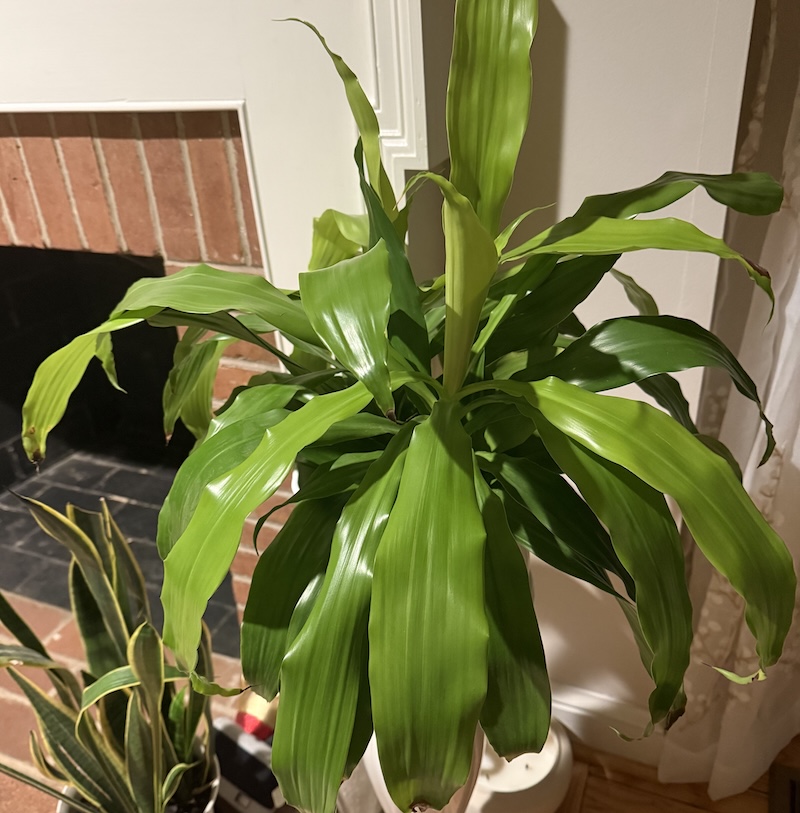
Houseplants can lift your spirits throughout the year. File photo.
I love my houseplants year round but in winter the blooming ones in particular lift my spirits. I talk to my plants enjoying my cyclamen and my blooming cacti, and the different foliage on the ivy, philodendron and spaphyllum which also clean the air in a stuffy home environment.
Keep your houseplants away from draughts and direct heat. If you are able, place humidifiers and air purifiers in the rooms of your home, which will benefit not only the plants but also your own health. Place pebble trays under the plants and keep the pebbles moist for additional humidity.
Spray houseplants every few days with lukewarm water and once every couple of weeks, put the plants in a sink or bathtub and allow lukewarm water to run freely over the plant to remove dust from the leaves and clean salt residue from the soil. The exception to the spray or soak rule is African violets, as African violets do not do well with wet leaves.
Aphids and white fly thrive indoors in winter and an organic sulphur solution called Safer works well to clean the soil of insect eggs and from the foliage. Perhaps you are fortunate like me to have Ladybugs in your home in winter; if so, allow these useful creatures to roam freely; the ladybug menu is aphids and white flies.
The best time to repot houseplants is from April through June but if a plant has become root bound with no visible soil, then you can repot them in February. Water the plant to loosen the roots from the soil, turn it sideways on a newspaper and gently slide it from the pot.
Cut away any dead roots and repot in fresh potting soil in a clean pot that is only two inches larger than the original. With the plant firmly in place and the soil one inch from the rim, water it gently and do not fertilize with an organic fertilizer until April. Plants need this dormant period to recharge.
A few suggestions for trouble-free foliage plants in the home are Rubber Plants, Spider plants, Ivy, Philodendron, Monstera and Spaphyllum. If you have a sunny window Aloes, Succulents and Cacti do great and are a trouble- free variety.
Blooming plants sitting side by side with foliage plants, enjoying one another’s company, give one an impression of a miniature garden.
A few suggestions of house plants that bloom are Cyclamen, African Violets, Kalanchoe, Primulas and Paper white narcissus. To prevent pets from chewing on the plants, add some cayenne pepper to the water when watering. I also enjoy my herbal plants, which sit in a sunny window. My favorites are Rosemary, Basil and Parsley which are great additions to any recipe.
POWER TOOLS:
Check any power tools that require maintenance or repair. February or March is the time to get them into the repair shop, because as soon as the weather breaks the shops get busy and you may not get your lawn mower back until August.
Check all tools and implements in the garage or shed. If you did not clean them off at the end of last season, plunge the shovels and spades into a bucket of sand; sand is an abrasive and will clean off any leftover soil and manure residue. Oil the wooden handles of tools with Linseed oil or some inexpensive vegetable oil; oil feeds the wood and keeps the handles splinter free. At the same time, check your hoses and fittings that may have sprung leaks since last year.
Make a shopping list of new tools that are needed – there are lots of sales in late winter for you to get a good deal. However, I suggest that you buy only quality tools and hoses; as the saying goes, “you get what you pay for”. Also check that there is enough twine, bamboo rods, wire ties or nails and peat on hand.
In March or early April when soil and manure are available purchase bags of composted manure from the garden center. On the other hand, if you have a farm close in your local area, that sells aged manure, acquire a small truck to acquire a load. If you decide on that method, ask the farmer for manure from the bottom of the pile – aged stuff. Manure needs to be at least six months old before applying to your soil, as fresh manure will burn your plants.
Check the paintwork on your wooden fences, arbors, decks and any other outdoor wooden structures. Then, purchase paint supplies so that on a dry day in March for painting, everything will be on hand.
Don’t forget to put paintbrushes on your list – I have a feeling you forgot to clean your old brushes last season, which means they are stiff as a poker, also remember sandpaper, brush cleaner and if possible, buy eco conscious paint. If you are painting benches and garden seats on a dry day, put them under cover before sundown.
White walls in the greenhouse reflect light so any areas that need retouching, use white paint. It’s so rewarding to see how much lighter and brighter the greenhouse is after a touch of paint and the glass is cleaned. However meticulously clean and tidy your greenhouse, you may find that white fly, greenfly and scale insects have found their way inside the greenhouse for warmth and so it may be necessary to spray with an organic spray. I mix an organic spray of orange peels in white vinegar and allow it to sit for two weeks before spraying – this works well and is very economical.
Walking around a garden that looks good and feels good in mid-winter is a real pick me up. Patterns emerge created by paths, walls and hedges. As you walk, enjoy the shapes of shrubs, the shadows of evergreens and the strong silhouettes of tree trunks and enjoy their shape and bark without foliage.
Keep the bird feeders full. I love to watch the birds in their quick flights across the garden to alight on the feeders, and their sudden bursts of song when the sun peaks through. It is so much fun to watch the “pecking” order and see the blue jays, who can be bullies and red cardinals, who like the blue jays can be rather territorial. Bringing up the rear, come the finches and house sparrows. And sometimes a bird appears that I do not recognize and out comes my binoculars and Peterson bird book.
If you notice squirrels swarming the bird feeders, add some cayenne pepper to the birdseed; if that occurs do not be concerned as the heat from the cayenne does not affect birds. And you may, choose a spot away from the feeders to sprinkle cayenne free birdseed on the ground so the squirrels can also enjoy a meal.
Winter has its own distinctive fragrance, the fog, in the morning when the air is very heavy, thick and damp – a damp even more bone chilling than rain. I can deal with that for a while and know that in about six weeks I will be inhaling the healthy nose clearing fragrance of the soil, rich and brown, well manured or covered with wood mulch, shredded leaves or salt hay. Winter fragrances are a potpourri, one moment sharp and cold like the north wind, whereas spring’s flavors are light and sweet.
If you find you have spent year after year throwing good money after bad, then it may be time to get a professional design. If that is so, don’t hesitate; if you want work to begin in the spring, a design takes time to complete. You may want to contact my son Ian, whose company LlanscapesbyIan.com shows his lovely natural landscape creations and Ian will work with you and your budget.
Have a great month and I’ll see you in your garden in late March. If you have any gardening questions, feel free to email me. MaureenHaseleyJones@gmail.com
About the author: Maureen Haseley-Jones is a member of a family of renowned horticultural artisans, whose landscaping heritage dates back to the 17th century. She is one of the founders, together with her son Ian, of, The English Lady Landscape and Home Company. Maureen and Ian are landscape designers and garden experts, who believe that everyone deserves to live in an eco-conscious environment and enjoy the pleasure that it brings. Maureen learned her design skills from both her mother and grandmother, and honed her horticultural and construction skills while working in the family nursery and landscape business in the U.K. Her formal horticultural training was undertaken at the Royal Botanic Gardens at Kew in Surrey.
OLD LYME — The Old Lyme Zoning Commission meeting, originally scheduled for Thursday, Feb. 27, in the Lyme-Old Lyme Middle School (LOLMS) Auditorium, has been rescheduled to Wednesday, April 9, at 6:30 p.m. in the Lyme-Old Lyme High School (LOLHS) Auditorium. The Zoning
The capacity of the LOLHS auditorium is 550 in contrast to that of the LOLMS auditorium at 225.
The agenda for the Feb. 27 meeting included an item under both the Continued Public Hearing and Old Business as follows: Petition to Amend the Old Lyme Zoning Regulations, Section 5.15-creating a Halls Road Overlay District [HROD} allowing, among other items, mixed zoning use along Halls Road and the entire C-30S Zoning District, with associated architectural design guidelines.
The applicant in both cases was the Halls Road Improvement Committee.
It is assumed the same item will be on the April 9 agenda.
Old Lyme First Selectwoman Martha Shoemaker explained the reason for the postponement in her weekly newsletter sent Friday, Feb. 28, to residents as follows, “One reason for this request was to provide more time to review the additional exhibits that were recently submitted. While it was not included in the letter that was posted on social media, an additional reason for the request to postpone directly relates to potential occupancy. I am aware of the strong interest in the topic of the Halls Road Overlay District proposal.”
She continued, “After consulting with other town officials, there was a concern that the Lyme-Old Lyme Middle School auditorium (with a capacity of 225 people) could be too small for this meeting to take place. Given the importance of having adequate time and space for every citizen of Old Lyme who wishes to attend and/or be heard, we felt it appropriate to make a change. I asked Land Use Coordinator, Eric Knapp to plan for the Lyme-Old Lyme High School Auditorium (with a capacity of 550) for a future date.”
In her original letter dated Feb. 25, in which Shoemaker had requested postponement of the Feb. 25 meeting, she had stated, “The Halls Road Improvement Committee and I acknowledge that the Zoning Commission has received many additional exhibits and request additional time to review them. We would like to request to postpone the meeting of February 27, 2025, until late March 2025. This will provide the committee with additional time to review the exhibits.”
That letter was addressed to Paul Orzel, Chairman of the OL Zoning Commission, and copied to Eric Knapp, Old Lyme Land Use Coordinator; Edie Twining, Chair of the Halls Road Improvement Committee, and William R. Sweeney, Attorney for the Halls Road project,
Lyme-Old Lyme High School junior Chase Gilbert stands atop the medal podium after her record-breaking first place win in the New England Championship mile. Photos by A. Mercaldi.
Old Lyme’s Eastman-Grossel Comes Fifth in 300m Setting Both LOLHS Record, Personal Best
BOSTON, MA—UPDATED 1:30pm with coach’s comments: At yesterday’s New England Indoor Track and Field Championship held at the Reggie Lewis Track and Athletic Center in Boston, Mass., Old Lyme’s Chase Gilbert took first place in the mile with a time of 4:48.45, setting not only a meet record, but also a Lyme-Old Lyme High School (LOLHS) record and a personal best.
Chase Gilbert celebrates her victory in the mile at the New England Championships.
Old Lyme senior Zoe Eastman-Grossel came in fifth in the 300 meters with a time of 40.14, setting both a LOLHS record and a personal best.
After her graduation from LOLHS in June this year, Eastman-Grossel has committed to run D1 Track and Field at the Naval Academy in Annapolis, Md.
Zoe Eastman-Grossel displays her medal after coming in fifth in the 300 meters at the New England Championships with both a school record and a personal best time.
Asked how she felt about these remarkable achievements, LOLHS Track & Field Coach Alyssa Mercaldi told LymeLine exclusively, ” We are incredibly proud of Chase and Zoe.”
She continued, “After both battling injuries last indoor season, their resilience and determination to come back stronger have been truly inspiring.
Mercaldi concluded, “Seeing their hard work payoff is a testament to their dedication and perseverance.”
Editor’s Note: Congratulations from all of us at LymeLine to these exceptional athleteson their record-breaking results!