Jeff Duigou (R): Candidate for CT State Senate District #33

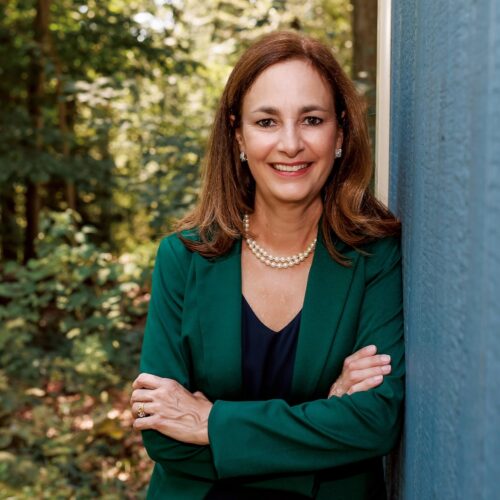
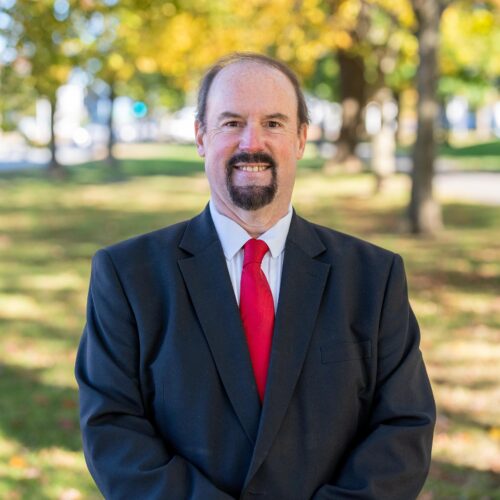
Jeff Duigou was born in Waterbury CT, raised in public schools in East Hartford and was always a strong student being named to the National Honor Society in high school. Jeff graduated from UConn in Storrs with a Bachelor’s degree in Biology/Marine Science and later attended graduate school studying in the field of Environmental Biotechnology.  Jeff has been married for 40 years to his wife Cari. Jeff’s volunteering has encompassed being a Scoutmaster for the Boy Scouts of America as well as coaching youth sports. Jeff is a conservationist and enjoys the outdoors with his family and friends.

What is the most serious problem currently facing the state of Connecticut? What proposal(s) would you make to alleviate the problem?   

Currently, the most serious problem affecting working and middle class families and seniors on fixed incomes in the 33rd District and state-wide are the excessive electric bills that the residents are currently being burdened with.  My opponent Norm Needleman, Chairman of the Energy and Technology Committee does not have a clear solution to remedy the excessive Public Benefit taxation on your electric bill. He voted against using ARPA monies to pay down the 4-Year cumulative debt caused by the Electric Shutoff Mandate by Governor Lamont during the Covid pandemic.  CT was one of only two states in the entire country to have a 4 yr. moratorium on the shut off for non-payment of electric bills.  Norm Needleman voted against a Special Session to address this issue.  When elected, I will work with the State Senate Republican Caucus and colleagues across the aisle to develop a bipartisan approach to solving this issue which may include using left over ARPA funds to pay down the electric bill debt caused by the shutoff notice mandate and negotiating a phased in approach to use some rainy day funds and left over debt to be placed into the state biennial budget.  This approach will not completely remove fees associated with hidden taxes due to the mandates associated with the CT Green New Deal that will remain on your electric bill as a “Public Benefit”.  As responsible legislators, we need to readdress the fiscal sustainability of renewable energy and a more responsible approach to phase these projects into our State Energy portfolio without creating excessive financial burdens on the taxpayers/ratepayers of Connecticut. 

Book-banning’ has been a significant issue in the community—where do you stand on the matter? 

In my humble opinion, I don’t believe in “Book-banning” but do want to see the placement of books in the appropriate section of a public school or community library.  We have FCC rules associated with rating publicly viewed videos/movies on television or in theaters for example, why aren’t we using similar ratings to protect our children from inappropriate literature in public schools and community libraries?  Something for us as a society to debate and address.

Why are you running for this position? 

For 30 years, I spent my professional career serving the communities in which I have lived and worked.  I enjoy seeing the completion of policies and projects that come to completion for the benefit of our communities.  I take the fiduciary responsibilities of completing taxpayer funded policies and projects very seriously.  I have learned “one size does not fill all” when developing and enforcing regulatory processes or scope of work to complete legislative approaches to the betterment of our society.  CT residents need more of a balance in the State General Assembly to drive bipartisan debate and policies that will benefit all of us.  For decades the Democrats have had majority control of the State House and Senate.  This stagnates good policies that come forth from the minority party often overcome by special interests which harm taxpayers and affordability in CT.  I am a 30-year veteran consulting in the field of Energy (oil, natural gas, nuclear), worked for many of the 169 towns in CT on municipal projects, cleaned up Brownfield sites in Bridgeport, Hartford, New Britain, New Haven, Stamford and surrounding communities to build public schools, successfully improved campus infrastructure at UCONN, was involved in affordable public housing projects, and safety services for over 12 school districts in CT since 2003.  I have provided leadership in these accomplishments resulting in countless good paying jobs for construction workers, retail workers, commercial and financial institutions, K-12 schoolteachers, administrators, and maintenance/cafeteria workers, and major energy development and utility companies including AES Corporation, National Grid, Eversource, United Illuminating and Dominion Energy.  I have always been a “fixer” taking on challenges placed before me to make life in the communities I served better for the common good.  I will bring this leadership to Hartford to make life in the 33rd Senate District and Connecticut affordable for everyone by lowering our energy and electric bills.  I will fight to improve affordability for individuals and families.  It’s no longer about Right vs Left, it’s about Right and Wrong.  I am the right candidate for State Senator of the 33rd District and to serve Connecticut.

Devin Carney (R): Candidate (Incumbent) for CT House District #23

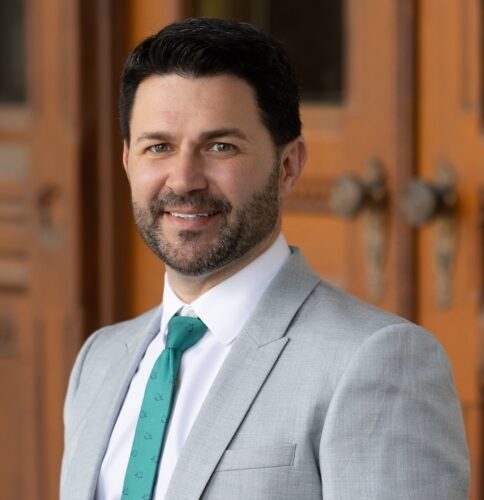
Devin Carney has served as State Representative for the 23rd District since 2015. He currently serves in leadership in the House Republican caucus as Policy Co-Chair. He also serves on the Finance, Revenue and Bonding Committee, Transportation Committee, and Education Committee. He formed the bipartisan “Future Caucus” and was awarded the national “Rising Star” award for these efforts. He recently received the “Town Crier” award from the CT Council of Small Towns for his advocacy. He works in finance and serves as Treasurer of the National Caucus of Environmental Legislators and on the board of The Kate.

What is the most serious problem currently facing the state of Connecticut? What  proposal(s) would you make to alleviate the problem? 

The most serious problem facing Connecticut is affordability. Connecticut continues to  rank poorly when it comes to this, and we need more legislators who will make it a priority.  

This past term, I was able to pass legislation that would reduce income taxes on pensions  and IRAs for many Connecticut residents. As in the past, I have proposed various tax cuts  and also fought new tax hikes. 

I supported the largest tax cut in Connecticut’s history while preserving our fiscal  guardrails. These fiscal guardrails have limited increases in taxing and spending and also  allowed us to build up a healthy rainy-day fund while also paying down about $8B in long term debt. This was a huge success borne of bipartisanship back in 2017 when the state  was facing a fiscal crisis. If the guardrails were to be drastically scaled back, we would lose  a lot of the progress made – particularly with the paydown of debt. We still have roughly  $80B of debt, much of it is unfunded pension debt. We owe it to our current and future  taxpayers to continue on this path. 

I have always fought against new mandates on our municipalities that would lead to higher  property taxes and a reduced quality of life. There have been efforts to force educational  and zoning mandates onto our communities, which would require additional costs, thus  adding to our property tax burden. There have also been efforts to create a statewide  property tax and make the car tax a statewide tax (the proposed formula would have raised  ours), which I successfully defeated. 

Many constituents were shocked by the cost of their electric bills and reducing utility costs  must be a strong focus of next year’s session. I would reduce the public benefits portion of  electric bills by moving some of the mandated costs to the state budget. Eversource and  PURA must be held accountable to ratepayers. I would bring them back to the table to  figure out the most cost-effective way to handle power purchase agreements, delivery  charges, and energy diversification. We can move towards a cleaner future while also  balancing cost. 

‘Book-banning’ has been a significant issue in the community—where do you stand  on the matter? 

I do not support banning books. I actually think a healthy dialogue about different perspectives, backgrounds, and experiences needs to happen more in public education at  age-appropriate levels. As far as I know, there have been no successful book challenges in  Connecticut. Unfortunately, this issue has become increasingly political, and I anticipate  my opponent will focus on legislation I voted against in the Education Committee that would have required Boards of Education to create new state mandated subcommittees  and processes that were not asked for by any of the school districts in the 23rd.  

When commenting on the bill in question, the Connecticut Association of Boards of  Education and Lon Seidman, the Democrat Chair of the Essex Board of Education, stated that boards already have policies and procedures in place to deal with book challenges and employ librarians who have the appropriate training to oversee things. Lyme-Old Lyme Schools use CABE policy services, so I would expect they would have similar guidelines. I  have discussed this very issue with our superintendent and there appeared to be no concern about current practices and no books have been banned. 

I firmly believe this should be left to the experts and not to Board of Education members  (who are also volunteers) who want nothing less than to be thrown into a controversy over a book. Parents also deserve a say in what their own kids read/don’t read. There is a reason the legislation did not move past committee, did not have the strong support of majority  caucus leaders, and was also opposed by Democrat Representative and public-school teacher Chris Poulos. It is incredibly disingenuous to equate it with book-banning, which my opponent has tried to do. Let’s just let kids read and let our school boards continue to focus on our fantastic educational system. 

Why are you running for this position? 

I am running for re-election to continue to provide effective, independent, and competent leadership for our district.  

Connecticut is entering another year of fiscal uncertainty as ARPA funds have dried up and there will be attempts to drastically undo our guardrails. We need legislators who understand the budget process and have the institutional knowledge to successfully promote fiscally sound policies.  

I want to put an extra emphasis on energy policy next year and work to get us on a better  path forward that works for ratepayers first. I plan on joining the Energy & Technology Committee to be able to most effectively articulate change.  

I want to continue focusing on reducing costs for seniors, families, and small businesses  and to continue supporting our small towns and local public education. There have been many attempts to supersede local control by requiring top-down state mandates and we  need legislators fighting for our unique communities and their values. 

We deserve legislators who are willing to work on a bipartisan basis and to focus on doing  what’s right for their districts. Many candidates, including my opponent, pledged to not join  a ‘moderate caucus’ and to disavow the Connecticut Business and Industry Association in  their quest for the Working Families Party endorsement. I would never sign a pledge like  that because it puts you in a narrow political box. Instead, I received the Independent Party cross-endorsement for my independent views and approach to legislating. I have never  blindly supported legislation because the title sounds good or some special interest group  supports it, but rather read every detail of every bill, do my homework, and do what I believe constituents would want. That’s the type of service and representation people  expect. 

I take this job incredibly serious and, unlike many in politics, I focus on ideas, not political  party or personality. I have always done that and those who know me know that. I am proud of the work I have done, and it has truly been the honor of a lifetime serving the  23rd District. I am asking for voters to, once again, support me.

Jane Wisialowski (D): Candidate for CT House District #23

After a long career in corporate marketing, Jane became a conservator and fiduciary serving adults who face healthcare and financial hardships. For the last 15 years, she has been working specifically in elder care services.  
A committed public servant, Jane is a Parks and Recreation Commissioner, a member of the Old Saybrook Board of Education, and Vice Chair of the Old Saybrook Democratic Town Committee. She also serves on the board of directors of the Valley Shore YMCA.
Jane’s candidacy comes with several endorsements, including from Planned Parenthood of Connecticut, CT Against Gun Violence, and American Federation of Teachers Connecticut.

What is the most serious problem currently facing the state of Connecticut? What proposal(s) would you make to alleviate the problem?

I believe the most serious problem facing the residents of Connecticut is the high cost of living, especially the high cost of housing. The lack of affordable housing has reached a crisis. Many seniors can’t afford to remain in the communities they built. Young people can’t start their families here and businesses can’t attract the workers they need. We must address this crisis, but for shoreline communities like those I seek to represent, we must do so in a way that respects the small town feel we are committed to maintaining. 

As a state representative, I would support setting achievable goals for affordable housing across the state and would fund programs like HB 5390—the so-called “work, live, ride” bill which provides access to discretionary funds for qualifying communities—a much needed “carrot” approach. I’d support programs that actively re-develop existing vacant properties and brownfields to put back into productive use as housing. Also, converting vacant commercial space into housing addresses multiple issues—it avoids developing open space, keeping the character of our towns. It also makes unproductive assets more valuable on municipal tax rolls and adds much needed housing stock. In my own community of Old Saybrook, we are using ARPA money to fund a Housing Task Force that will develop a plan for building many more affordable units that fit our small town feel. We are also using surplus money to secure the necessary grants at the State level to attract developers to make these plans a reality. This is the kind of public-private partnership at the state and local level that could serve as a model statewide.  

‘Book-banning’ has been a significant issue in the community—where do you stand on the matter?

As a mom of two college students, I recognize the importance books play in developing critical thinking. I support every parent’s right to decide what is appropriate for their children to read, but I equally oppose every attempt to ban and limit access to age-appropriate books in our libraries.  As a member of the Board of Education, I meet regularly with educators. I understand how their expertise shapes their thinking and ensures they make terrific decisions for our children. I do not believe that I, or most members of a Board of Education, have the expertise to make these important decisions. I have also been extremely displeased to learn that many book banning efforts are not the work of well-intentioned but misguided parents. They are often well organized efforts across the country funded by right-wing extremist groups who don’t have children in our schools.

I was also disappointed to learn from the Connecticut Education Association that my opponent was opposed to a bill introduced in the legislature this term (but not passed) to limit the authority of local boards to ban books. While “local control” has its place, it’s often nothing more than a set of political buzzwords designed to divide us – to pit people against the state and stir up fear. This has no place in controlling what books our children have in their libraries.  

Why are you running for this position?

I am running for State Representative because I love this community and have made it my home for 25 years. It is where I raised my two sons and where I intend to retire. I believe it is critical to preserve its natural beauty and make it a more vibrant and equitable place to live.

Even as I built my corporate marketing career, I worked countless hours volunteering for school and charity events and more recently, serving as an elected member of the Old Saybrook Parks and Recreation Commission as well as the Board of Education. Like many women, I struggled to conceive but, through IVF, I was able to start my family.  And through my work with the Agency on Aging and as a conservator, I have learned about the hardships many older adults and people with mental illness face and the role that the government can play in easing their burdens. These experiences have helped me recognize what’s important for our community.

Unlike my opponent, I believe you should be represented by someone who will vote your values. I will vote to protect women’s reproductive rights; to preserve our coastline from the ravages of climate change; to make life more affordable for seniors and working families; to enhance our schools, prohibit book bans and protect our children from gun violence. I think it is time for a change and for a strong voice for our district in Hartford, not to continue with someone who claims to be a moderate but votes quite the opposite.

Once elected, I will work with any colleague, no matter their party, to deliver measurable results for Lyme, Old Lyme, Old Saybrook, and Westbrook. I will fight for the unique needs of these small towns.  I will work with the leadership of the State Assembly to assure our voices are heard and bring funding back to our projects.  You can count on me to always represent our values.

Shaun Mastroianni (R): Candidate for CT State Senate District #20

I’m Shaun Mastroianni, and I’m honored to run for the 20th District in the Connecticut State Senate. I live in Old Lyme with my husband Antonio, our spirited daughter Sophia, and our energetic dog Bruno. As a father, healthcare professional, and small business owner, I understand the challenges faced by hardworking families, seniors, and taxpayers. With extensive experience operating senior care facilities, I’ve gained insights into the needs of healthcare providers and patients. My mission is to eliminate bureaucratic hurdles and fight for the extraordinary results our communities deserve, standing against the broken politics that have long plagued Hartford.

What is the most serious problem currently facing the state of Connecticut? What proposal(s) would you make to alleviate the problem?

The most serious problem currently facing Connecticut is the crushing cost of living that hardworking residents are grappling with daily. Whether it’s housing, groceries, healthcare, or energy bills, these rising costs are overwhelming families and individuals across our state. We must promote policies that drive down expenses and embrace financial discipline.

To address the energy crisis, I propose capping power purchase agreements with utility companies to prevent overcharging ratepayers. It’s crucial to end the practice of shifting Hartford taxes and fees onto ratepayers by moving the costs of public policy changes into the state’s general budget. We need to hold state regulators accountable for overseeing energy utilities and reduce the cost of our clean, homegrown nuclear and hydropower by eliminating unnecessary classifications that inflate costs.

In terms of pensions, Connecticut has contributed over $7 billion to state employee and teachers’ retirement systems since 2020, with a significant portion allocated to addressing past underfunding. There’s no need to cut retirement benefits; instead, we must prioritize consistent pension contributions in future budgets. Enhanced fiscal management is essential, so I advocate for independent auditors or an independent board to oversee pension fund management, ensuring transparency and accountability.

Ultimately, we need comprehensive healthcare reform that lowers costs while improving care. I will propose policies that increase transparency in medical billing, expand access to preventive care, and support our dedicated healthcare workers. Together, these measures will help alleviate the burdens faced by Connecticut residents and create a more sustainable future. 267

‘Book-banning’ has been a significant issue in the community—where do you stand on the matter?

I firmly believe that while books should remain age-appropriate, book banning has no place in Connecticut. It’s crucial to foster an environment where children can learn and explore diverse ideas. As a party that champions parental choice, we cannot simultaneously dictate what children can or cannot read. 

History has shown us that banning books is a slippery slope that undermines freedom and open dialogue. Instead of restricting access to literature, we should encourage discussions around the content, promoting critical thinking and understanding. Our schools should be safe spaces where children can engage with a variety of perspectives, fostering growth and empathy. 

As your senator, I will advocate for policies that promote literary diversity and empower parents to guide their children’s reading choices without imposing restrictions that limit access to important narratives. Let’s create a community where learning thrives, and every child has the opportunity to explore the world through the written word.

Why are you running for this position?

I am running for state Senate to give a voice to everyday people who are struggling to make ends meet. It’s disheartening to see our current senator only engaging with the community when seeking votes, rather than actively listening to the concerns of constituents. I want to change that narrative.

As a father of a young daughter, my motivation is deeply personal. I want to ensure that Connecticut is a place where she can stay, learn, grow, and ultimately raise a family of her own. I envision a prosperous future for our state, one where families can thrive and enjoy a high quality of life.

I care deeply about our community and the challenges we face. I believe in bringing people together to create meaningful change, focusing on policies that prioritize affordability, healthcare, and education. I am committed to working across the aisle, recognizing that true progress comes from collaboration rather than partisanship. My goal is to listen to the needs of our district and make decisions that reflect those needs, rather than simply voting along party lines.

By fostering open communication and building relationships with colleagues from both parties, I aim to create solutions that benefit all residents of Connecticut. I want to lead with integrity and compassion, ensuring that every voice is heard and every concern is addressed. Together, we can build a Connecticut that supports families, promotes economic growth, and enhances the quality of life for everyone.

I believe that when we prioritize the interests of our community over political affiliations, we can truly make a difference.

Norm Needleman (D): Candidate (Incumbent) for CT State Senate District #33

Norm Needleman has served in the State Senate since 2019 and is now in his third term. He serves as Senate Chair of the Energy and Technology Committee. In addition to the State Senate, Norm is also First Selectman of Essex and the owner of Tower Laboratories, a manufacturer of effervescent products headquartered in Centerbrook. In his free time, he loves spending time with his family and spoiling his many grandkids.

What is the most serious problem currently facing the state of Connecticut? What proposal(s) would you make to alleviate the problem?

The biggest issue impacting Connecticut today is housing affordability, especially for the lifeblood of our economy, young workers and middle income families. The rising cost of housing combined with shortages in our communities are impacting our workforce, making hiring more challenging for some companies, and could cause ripple effects that negatively impact our economy over time. We need to find solutions, but as no two towns are the same, we can’t apply an overarching strategy statewide. I believe that pushes for workforce housing and middle income housing are key. Having housing built to support our businesses, companies and industries will have a directly positive impact and alleviate much of this pressure, and designing future housing around key transportation hubs – bus lines, train lines, and highways, among others – can provide direct in-roads for access to jobs and support communities in the process. We need to make sure new housing and redevelopment in our communities supports our overall needs, and this overarching effort would be transformative in a positive way for our state.

‘Book-banning’ has been a significant issue in the community—where do you stand on the matter?

Book bans are an ineffective and overly controlling effort often made to restrict people from accessing information others don’t want them to read. I oppose book bans barring specific circumstances where materials can be determined to be truly harmful to the public. Many publicized book bans in recent years have targeted books focused on topics including the LGBTQ+ community, racism and discrimination, sexual assault and other topics. It often seems these bans are being made to limit access to books on these topics for purposeful reasons, and they often lead to overstepping that limits educational and representational reading. A book isn’t “dangerous” on its own, and the consequences of a book ban are often are worse than the materials being limited in the process. Add in that many analyses have shown that the majority of book ban suggestions come from a very limited number of people and the purposeful banning of books on important topics is often done with political purpose. A vast majority of parents – 70% – oppose book bans. I join them in my opposition.

Why are you running for this position?

After serving my community as the First Selectman of Essex, as well as other local community service and aiding local communities as a business owner, I’ve continued to feel a desire to give back to our community that goes beyond what I’ve accomplished in these roles. Working as State Senator has given me the ability to give our community a say in Hartford in every major bill discussed, proposed and enacted. Using my experiences as a business owner and local leader, I know no two communities are the same, and I’ve been able to voice that concern throughout my work in the Senate. I want to serve for another term to build on the good work we’ve accomplished to move Connecticut forward, including cuts to the state’s income tax, policies supporting families such as paid family and medical leave, new regulatory control over state utilities to reduce costs and support ratepayers and protecting the rights of everyone. I want to give back to my community and cannot fathom a better way than continuing to serve.