Summer Arts Programs for Teens Kicks Off, Registration Still Open

The 2024 Lymes Creative Arts Program offers a variety of opportunities for teens during the summer.

LYME/OLD LYME—Teens in Lyme and Old Lyme are invited to unleash their creativity with the fourth season of Lymes Creative Arts, a vibrant summer arts program. This year’s lineup includes exciting new classes such as hip-hop dance, a drama workshop, and dyeing with natural materials, alongside popular returning courses such as filmmaking and ceramic mosaic-making.

These courses are open to Lyme and Old Lyme students in middle and high school.

Discover more and register at Lymes Creative Arts.

This summer’s program offerings include:

Summer Songwriting Workshop with Peter DiGennaro
June 24 to 26, 9am to 3pm at Nightingale’s Acoustic Cafe

Creating a Character, a High School Drama Workshop
Tuesday, June 25, 11am to 1pm at LYSB

Ceramics and Mindfulness Workshop with Danessa Pedroso
Thursday, June 27, 4 to 5 pm at OLPGN Library

Ceramic Mosaic Workshop with Lilywork Studio
Tuesdays, July 2, 8, 16, 10 to 11:30 am

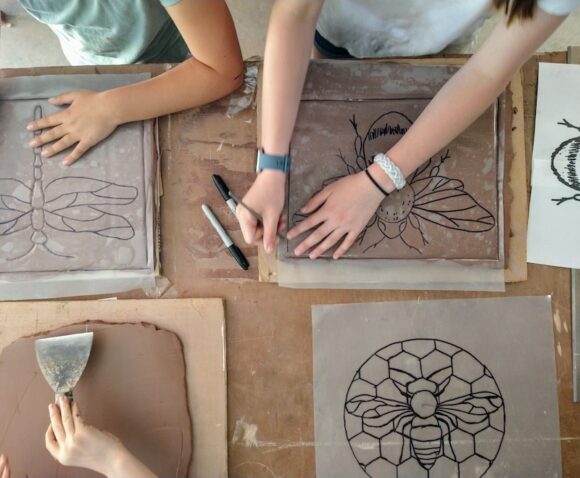
Last year’s popular course learning the art of tiling at Lilywork Artisan Tile studio in Old Lyme is offered again this year by Lymes Creative Arts. Photo by Lilywork Artisan Tile.

Summer Stitch Club
Tuesdays, July 9 to August 6, 3 to 4:30 pm at OLPGN Library

Introduction to Punch Needle with Michelle Beaulieu-Morgan
Thursday, July 11, 9:30am to 1:30 pm at LYSB

Hip Hop Dance
Saturday, July 13, 2 pm at the Lyme Library

Afro Colombian Dance
Saturday, July 20, 2 pm at the Lyme Library

Dyeing with Natural Materials
July 22 to 24, 1 to 3 pm at the Lyme Art Association

Filmmaking Workshop with Green Planet Films
Fridays, July 26, August 2 & August 9, 9:30am to 12pm at Old Lyme Memorial Town Hall

A Painterly Approach to Self-Portraiture and Mural Making with Nancy Gladwell
August 5 to 9, 1 to 4 pm at Lyme Art Association

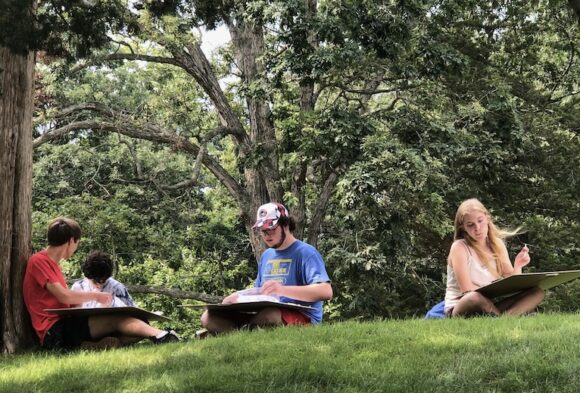
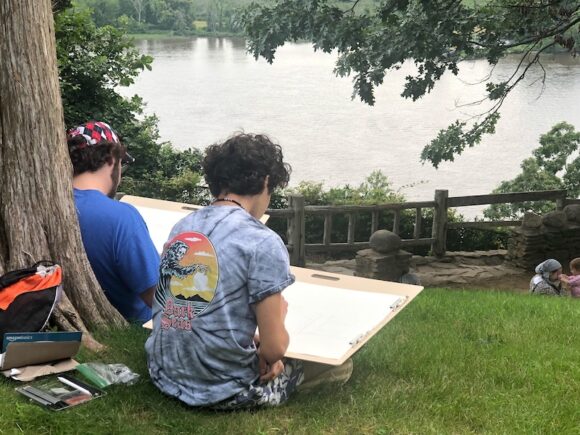
Teen artists enjoy painting ‘en plein air’ during last year’s Lymes Creative Arts program. Photo by Kristen Thornton.

Lymes Creative Arts is produced and funded by the Sustainable Committees of Lyme and Old Lyme, in collaboration with the Lymes’ Youth Services Bureau (LYSB). Additional support is provided by the public libraries of both towns.

The program’s core mission is to eliminate barriers to participation by addressing challenges such as location access, scheduling conflicts, and financial hardship.

Participation fees are kept minimal, with scholarships available, and sessions are held at convenient locations throughout Lyme and Old Lyme at various times during the summer.

Oh, What a Fun-Filled Night of Music!

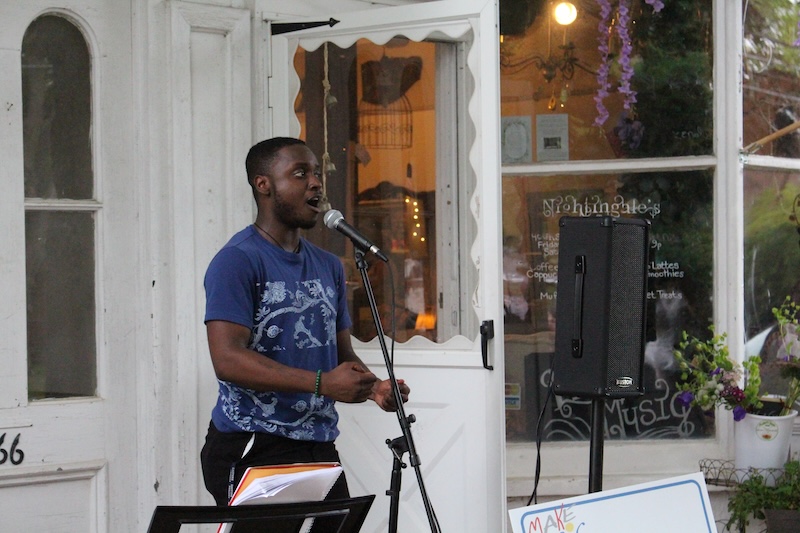
At Friday’s ‘Make Music Old Lyme’ event, Chris Gregor drew a large crowd in front of Nightingale’s where he sang a mix of Broadway tunes and opera vocals. All photos by Old Lyme Arts District.

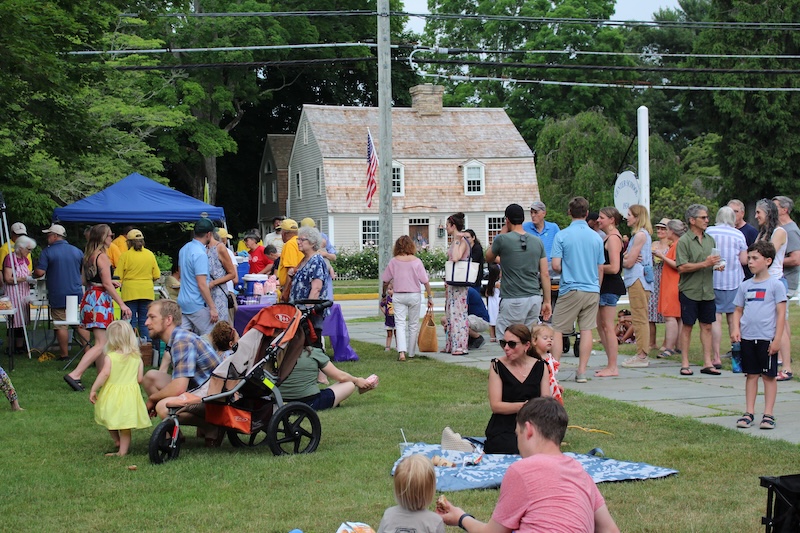
OLD LYME—Despite the vagaries of the weather, more than 300 people came out onto Lyme Street Friday evening to enjoy the sights and sounds of ‘Make Music Old Lyme.’

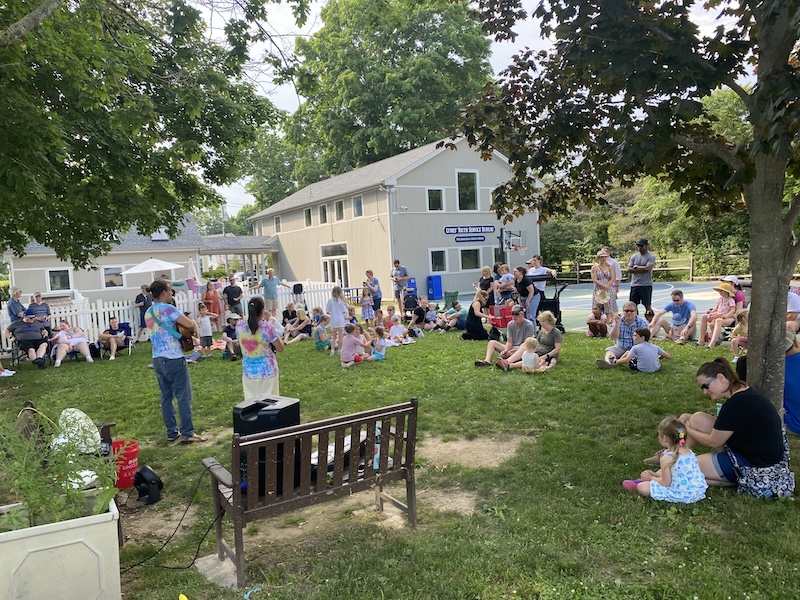
Sunny Train gave a well-attended concert on the grounds of the Lymes’ Youth Service Bureau (LYSB).

The event kicked off at 4 p.m. with a popular, family-themed concert by the effervescent Sunny Train at LYSB.

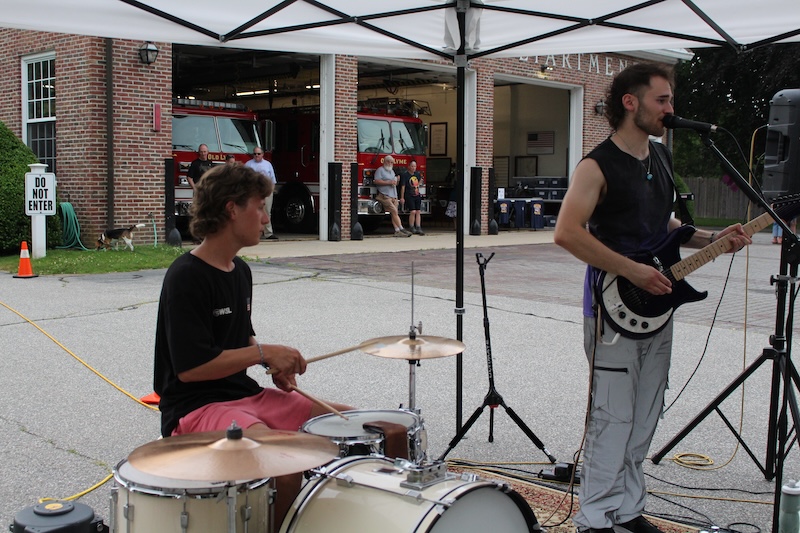
‘The Colin Hallahan Band’ played in front of the Lyme St. Firehouse.

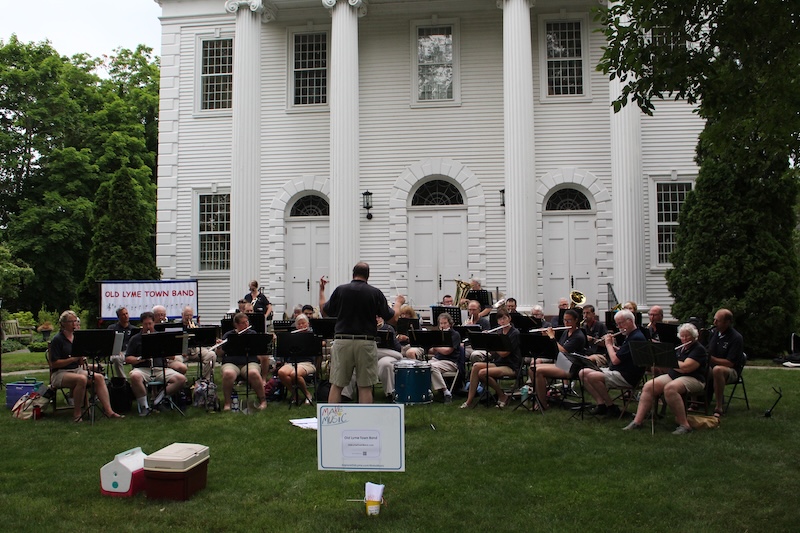
The Make Music Old Lyme celebration spanned Lyme Street from the First Congregational Church of Old Lyme at #2, where the Old Lyme Town Band played, to the Old Lyme Firehouse at #69, where the Colin Hallahan Band performed.

People of all ages strolled down Lyme Street to enjoy the music.

An international celebration of free music for all, the Old Lyme Arts District produced the town’s event in conjunction with the Cultural Coalition and the MusicNow Foundation.

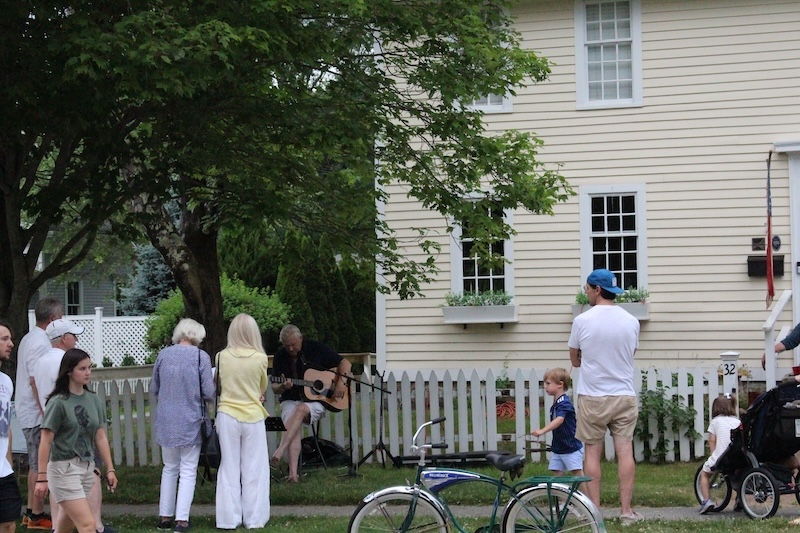
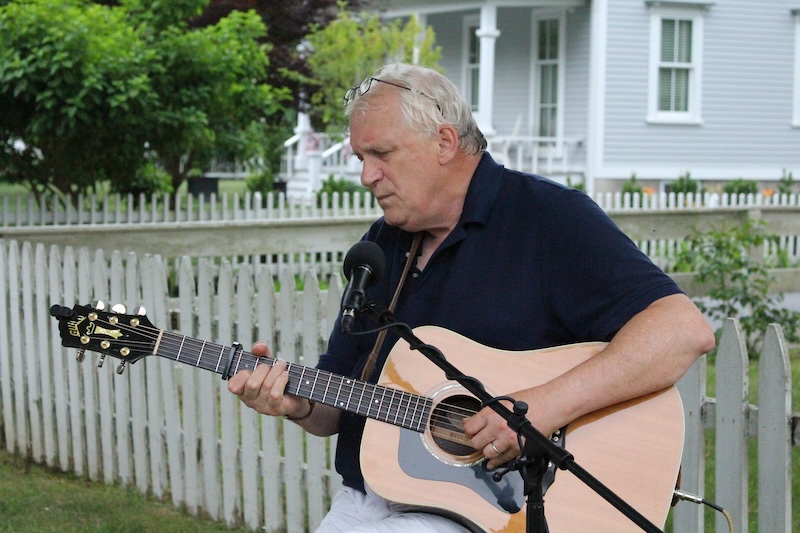
Paul Loether sang and played his guitar at a spot midway along Lyme St.

In total, 12 different musical acts performed live along Lyme Street.

‘Mellow Men Two ‘with Kipp Sturgeon (left) and Gary Buttery delighted audiences with their performance.

Launched in France in 1982, Make Music Day is an international music festival open to all who would like to participate, and takes place in over 2,000 cities globally on June 21, the summer solstice.

It was a great evening for catching up with friends and neighbors.

The State of Connecticut Office of the Arts debuted the State’s ‘Make Music Day‘ effort in 2018.

The Old Lyme Town Band played a host of tunes in front of the First Congregational Church of Old Lyme.

This year, the CT Office of the Arts had been notified of over 400 Make Music events across the state, including the one in Old Lyme. 

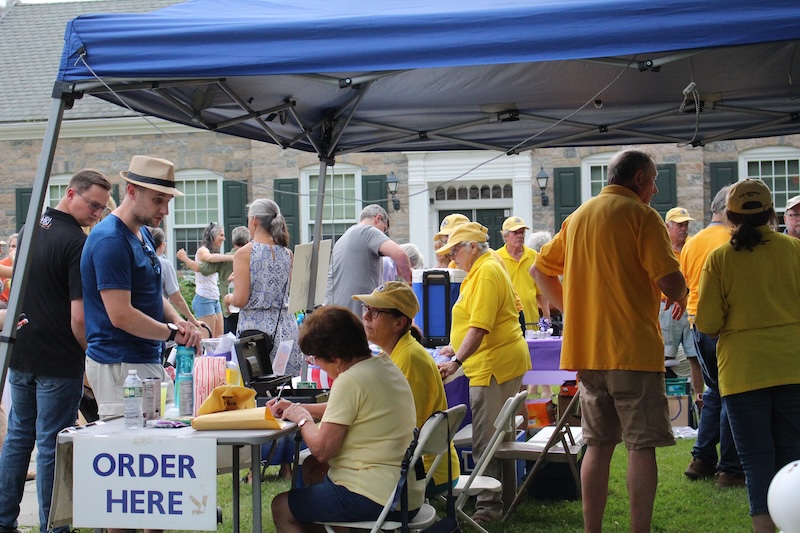
The Lyme-Old Lyme Lions Club was kept busy at the grill in front of Center School serving hot dogs and burgers to hungry customers.

Music wasn’t the only item on the menu during Make Music Day—food was also available at various locations.

The always popular ‘Midnight Anthem’ was a major attraction when they played in front of Center School.

The Old Lyme Arts District is a partnership of a dozen organizations and businesses promoting arts and culture on Lyme Street.

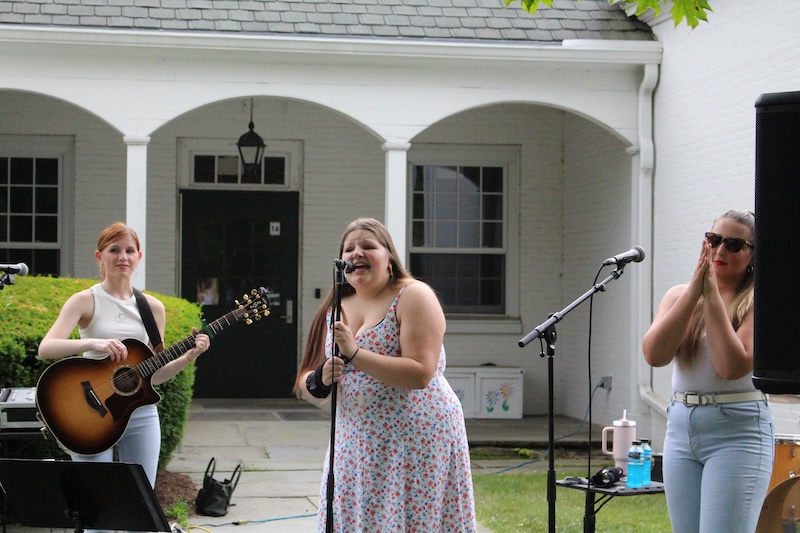
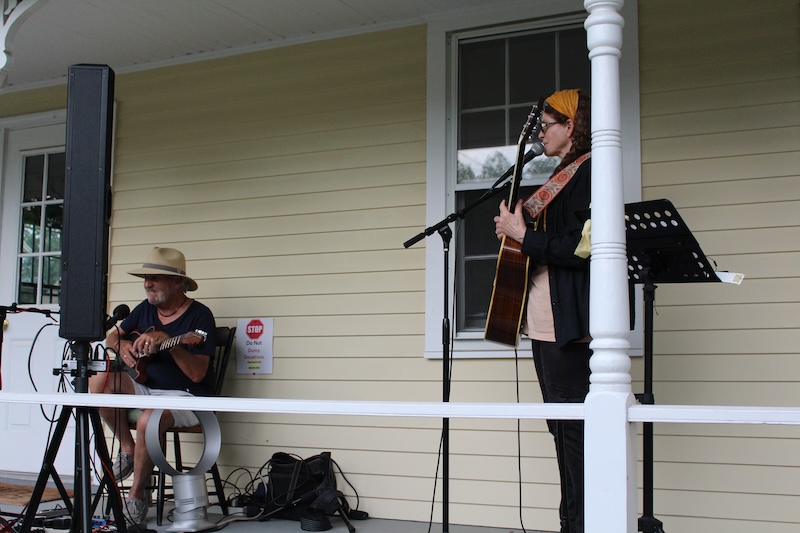
Laura Mattson and friend joined with Indie Rock to play on the Lymes’ Youth Service Bureau porch.

The Event Sponsor for Make Music Old Lyme was Pasta Vita of Old Saybrook, with additional support from Caliber Computing and the Cultural Coalition of Southeastern Connecticut..

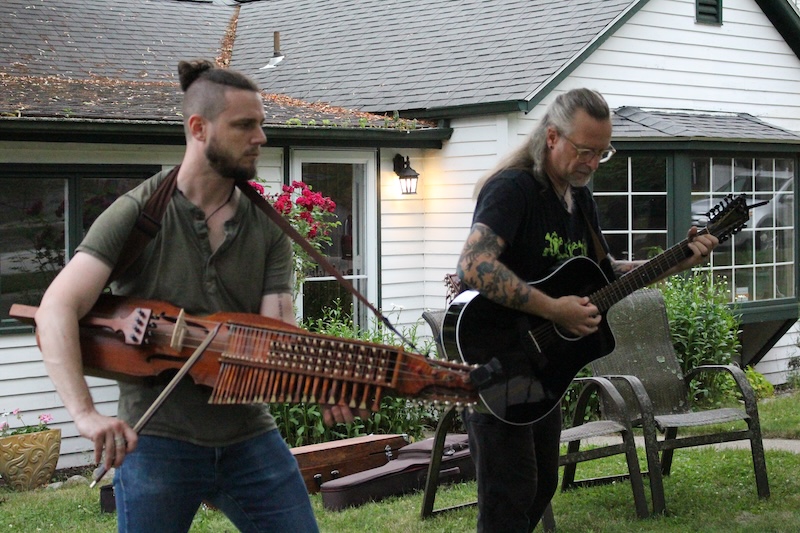
Lämning offered an eclectic range of music in front the law offices on Lyme St.

Shoreline Web News LLC, owner of LymeLine.com, was the media sponsor of the event.

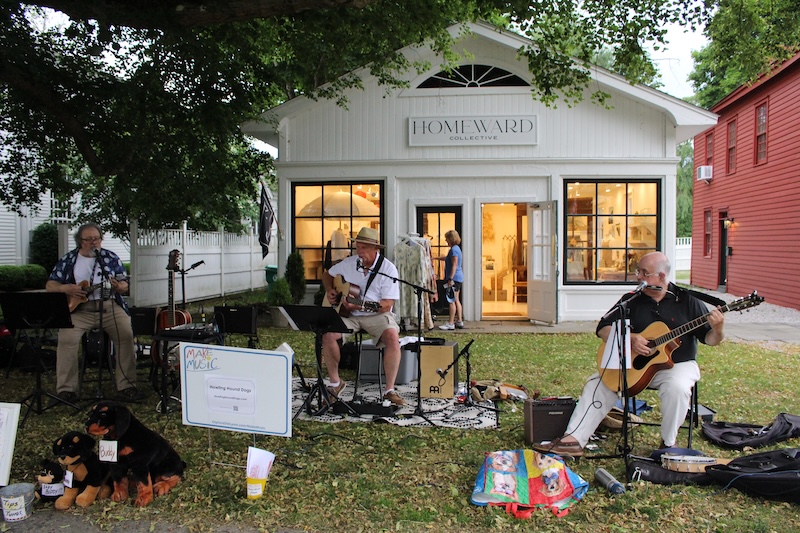
Howling Hound Dogs made music in front of Homeward Collective.
The Old Lyme Historical Society offered youngsters the opportunity to make their own musical instruments.
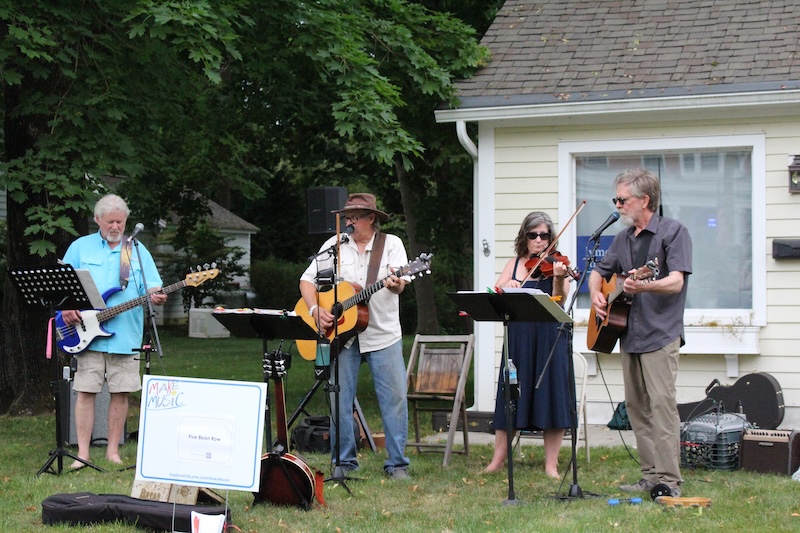
The ‘Five Bean Row’ band was a popular attraction outside the Village Shoppes.
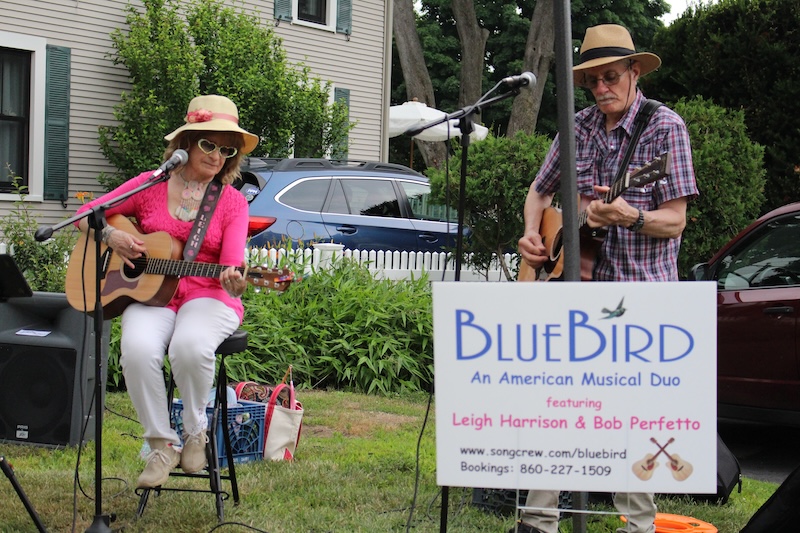
The Americana musical duo, ‘Bluebird,’ performed a variety of songs and tunes.
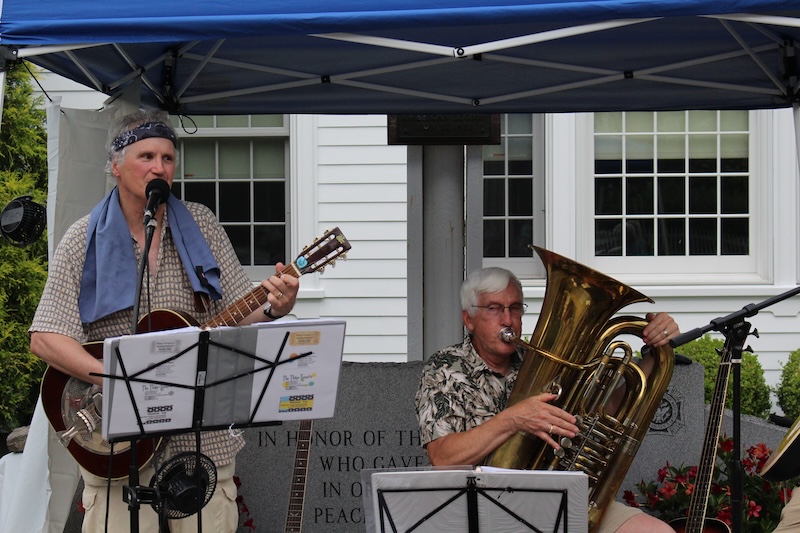
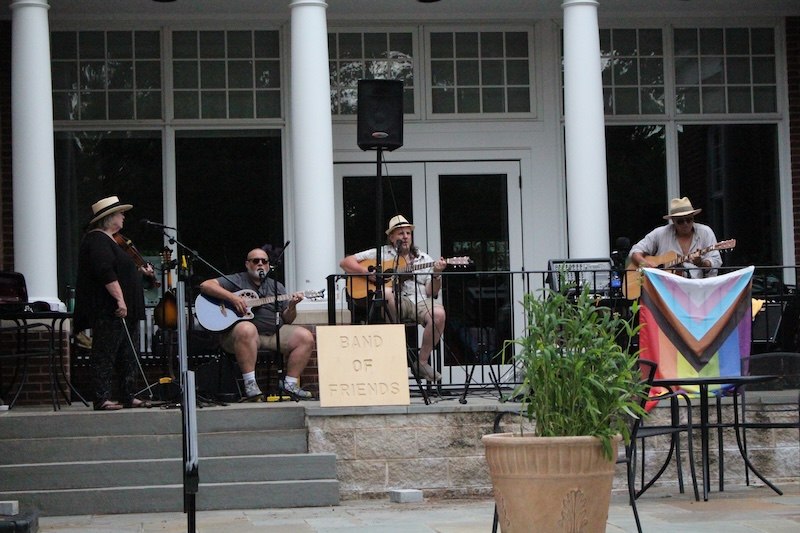
Playing on the Phoebe Griffin Noyes Library’s patio, the ‘Band of Friends’ was a big draw.

The Movie Man: ‘Inside Out 2’ is a ‘Warranted Sequel,’ Continues the ‘Creative Spark’

Kevin Ganey is ‘The Movie Man.’

Inside Out 2 is a warranted sequel. So often studios will crank out sequels for business reasons, despite the fact there is either no way to continue a story that has already been resolved; or that the sequel could not live up to the standard set by the original. Thankfully that is not the case, here.

In 2015’s Inside Out, Pixar gave, what I consider, to be one of their most creative and original movies as we saw the inner-thoughts of 11-year-old Riley personified by a committee of five emotions: Joy, Anger, Fear, Disgust, and Sadness (an example of some of the best casting decisions in film history).

Two years later, just as Riley is getting used to her five main emotions, puberty begins, accompanied by the arrival of four new emotions: Envy, Embarrassment, and Ennui, all led by Anxiety. While Riley’s emotions dealt with her move across the country in the first movie, the four new emotions take Riley in a different direction as she navigates unfamiliar territory with the social pressures that are a part of the teenage experience (such as self-esteem and ethical dilemmas.)

Anxiety guides an ambitious and competitive Riley towards poor decision-making, justifying it all as an attempt to make a good first impression at a hockey camp for talented youth. What makes her a powerful antagonist is that her rationale appears to be sound. While we know better as we watch the movie, our suspension of disbelief believes her ideas to be reasonable (kudos to the writing team for this.)

Beyond the overall narrative and performances, I must give credit to Pixar for keeping the creative spark going through metaphors about the subconscious. But what I truly must commend is Pixar’s depiction of mental health in teenagers and how these years are a vulnerable era as teens seek to establish their own identities, experience the popularity contest, and understand right and wrong.

While Pixar movies are family-themed movies, I think this installment is incredibly relevant to teenagers (even the ones who are going through the brief aversion of anything from their childhoods to be avoid being lame.) I hope it consoles them and lets them know it that they are human, it is okay to not be perfect, and, above all: to love themselves.

I have learned over the years that I should be suspicious over sequels as they are often unnecessary, but Pixar has given me another reason to still hope for them despite the prospects of let-downs. Inside Out 2 gave its original characters another opportunity to prove themselves and they nailed it.

With the success of this sequel, I believe a third installment is inevitable. I cannot help but wonder how Riley’s subconscious committee would handle young adult life down the road?

Who knows?

I just hope I don’t jinx it.

About the Author: Though no longer a resident of Lyme, Conn., Kevin knows he can never sever his roots to the tree of his identity. When not attending to his job in Boston, he is committed to ensuring a better grasp of current (and past) releases of cinema to his home community as he strives to leave his own mark in the same field that has always been his guide to understanding life. If you enjoy his published reviews here on LymeLine.com, follow him on his website at ‘The City of Cinema and read more of his unique insights into entertainment.

Project Status Update from Halls Road Improvement Committee

OLD LYME—On Monday, June 17,, the Halls Road Improvement Committee (HRIC) met with the Old Lyme Board of Selectmen and presented a document summarizing the status of the project. The HRIC Chair Edie Twining asked if we would be willing to publish the document as she felt it would be of interest to our readers. We are happy to oblige and the document is published in its entirety below.

Where are we today? 

HRIC is working to implement the Halls Road Master Plan to secure the future prosperity of our main commercial district by: encouraging investment in town-facing businesses; allowing mixed use; making it more attractive, inviting, and safe for pedestrians and cyclists; and integrating it more fully with the life of the town. That implementation requires multiple, parallel efforts. The efforts all work together, but can be divided according to the main regulatory agencies and stakeholders whose approval is required for each. 

Plan Element Agency/Stakeholders

Complete Streets (sidewalks/ trails along motorway) CT DOT
Bridge & Trails: (walk/bike routes to Halls Road) DEEP, OL Harbor Management., Corps of Engineers
Halls Rd. Overlay District: (allow new zoning options) OL Planning and Zoning Commissions.

“Complete Streets” is a DOT term for their commitment to considering something beyond motorized vehicle traffic flow when authorizing proposed changes along their rights-of-way. They view favorably proposals that integrate roadways with sidewalks, lighting, landscaping, cross walks, bike lanes, bus stops, and other access to alternative transportation—as ours does. For purposes of grant applications, HRIC has adopted Complete Streets to describe that part of the project that seeks public infrastructure improvements along the roadway of Halls Road. 

Any work along a state motorway absolutely requires a DOT “encroachment permit,” regardless of how the project is funded. In practice, such permits are usually sought in connection with applications for grants administered by DOT, and we applied for DOT’s Local Transportation Capital Improvement Program (LOTCIP) grant in 2022 accordingly. 

HRIC sought DOT’s review of our LOTCIP proposal, asking if the project is appropriate and worthy of going forward. They would not do a full, formal review until DOT was ready to allocate funds, but we received confirmation on May 24, 2024 from Grayson Wright at DOT that “DOT agrees that this project makes sense and has no major concerns.” DOT indicated that new LOTCIP funds would not be available until 2027-2028. DOT recommended we secure additional funding for the project in the interim, and suggested we consider pursuing the project in phases. 

HRIC Grants team met with CT Rep. Devin Carney (R-23rd), CT Sen. Martha Marx, (D-20th), US Rep. Joe Courtney’s office, CT DOT; and our local Council of Governments (RiverCOG) to learn what Old Lyme needs to do to move the Complete Streets Project along, including potential funding opportunities. In addition, we have talked with Old Saybrook and Essex to learn how they obtained funding and approvals for their recent sidewalk projects. 

In May, the town applied through RiverCOG for the Transportation Alternatives Program (TAP) grant for construction funding for the entire Halls Road Public Improvements project, including both Complete Streets and Bridge & Trails. The request was for $7,177,500. If our request is approved (in whole or in part), we could expect to receive funds in 3-5 years. This program is offered every 5 to 7 years. 

Bridge & Trails Project design work was initially fully-funded with 2 grants to provide concept design, surveys, permitting, and construction documents for a prefabricated pedestrian bridge crossing the Lieutenant River at the old bridge abutments on the Lieutenant River, along with trails on both ends connecting to Halls Road. 

DEEP owns a triangle of property on the east bank of the Lieutenant River between the centerline of the old Cross Road (which crossed at the old abutments) and today’s Halls Road. DEEP is prepared to donate this property to the Town, but has requested that, in return, a fishing pier and 8 parking spaces be included in the project. Old Lyme’s Harbor Management Commission has also requested that a floating dock be added to the pier. These changes to the initial project scope require additional design work and more extensive surveys and permitting. HRIC is currently working out the expected costs and investigating options to fund them. 

In April, the town applied to Joe Courtney’s office for the 2024 Community Project Funding grant, asking $2 million to help support construction costs for the Bridge & Trails Project. If approved, those funds would be available in 2025.

HROD (Halls Road Overlay District)
After being considered by the Planning and the Zoning Commissions in 2022-2023, the application was denied. Since then, HRIC has worked to address the Commissions’ concerns. There were concerns about infrastructure suitability (water & septic) in the district as well as the need for DOT’s approval of the public improvements needed on the right of way. To answer these questions a soil review was conducted by CLA Engineers, Inc. which showed that the infrastructure is suitable for additional development. As noted above, CT DOT has provided both verbal and written support for the right of way details of the Halls Road Master Plan. HRIC will reapply with the revised HROD proposal in this fall.

What are the next steps for HRIC? 

HRIC is working to create and publish an RFP to do the remaining design work for the Halls Road Complete Streets Project (CDs, etc.). We first need to determine how this project will be framed, as a phased project or single full scope. Phasing increases design costs by about 10% (duplicating some work), but may give us greater flexibility and make more grant opportunities available. 

HRIC will continue to seek funding for the design portion of the Halls Road Complete Streets Project from town and/or through grant opportunities. Many of the potential funding sources investigated thus far require the town to provide matching funds. This could be up to 20 percent of the total ask, and typically can be sourced either through town funds or other grant funding. 

We expect to finalize costs for the additional design work for Bridge & Trails fishing pier/dock this summer. HRIC will work with Harbor Management to review all fishing pier/dock concepts and approvals. HRIC will seek funding from town and/or through grant opportunities to support the design and construction of the pier/dock.

HRIC will submit the revised HROD proposal to Planning and to Zoning in November/December 2024. 

Where do we want to be?  

By 2026 we would like to see work beginning to replace the sidewalks between Lyme Street and the Lieutenant River. We would also like to see construction initiated for the Bridge & Trails project. 

By 2025 we would like to see the HROD approved. With approval, we would recommend that an HRIC Marketing Committee be formed to seek investors and developers for the district. This is a key extension of the HRIC project to ensure good developers learn about our Master Plan with the aid of a developer’s packet describing the HROD and its Design Guidelines. The town will also need to create a Design Review Committee to assist investors in designing projects that fit Old Lyme’s character, and to advise Zoning on Special Permit applications under HROD. 

What do we need to do to get there?

Post RFP for Complete Streets design project.

Continue to seek grant programs for the public improvements along Halls Road.

Finish fishing pier addition to Bridge & Trails Project and post design for bids.

Secure approval of town Planning Commission and Zoning Commissions for revised HROD proposal. 

Create the HROD Marketing Committee & Developer’s Packet

Create the HROD Design Review Committee

Develop HRIC Budget request for town to support costs for Complete Streets design work, HROD legal fees, and Bridge & Trails. 

Explore hiring a Planning Consultant to assist in managing the implementation of the Halls Rowd Master Plan, going forward. 

A Note about Design and its Place in Major Projects: 

Design is an iterative process of generating ideas, testing, and mapping them out in increasing accuracy and detail. In commercial and highway projects there are broadly recognized stages of that process, but it can be confusing when all of them are called simply “design.” This is an effort to describe the stages, from vague ideas to finished construction, and to show the terms typically used to name them. 

The Design Process 

  • Predesign – Review master plan concepts, permit requirements, conduct survey including utility layout and right of way parameters. Include complete streets program requirements.
  • Concept Development – Based on Predesign information develop concept for approval by all regulatory agencies and client.
  • Design Development – Based on Concept Design feedback develop design to base final documentation drawings. Ensure all permitting is understood and preview final drawing set.
  • Construction Documents – provide final permitted drawing set including all options needed for Bid Set Submittals
  • Bidding Process – Submit requests for bids, review with client and assist in selecting best company for project.

Project administration – Oversee all project Requests for Information, Additional Clarifications and process invoices from contractor.

High Hopes Names New Executive Director, Celebrates 50th Anniversary

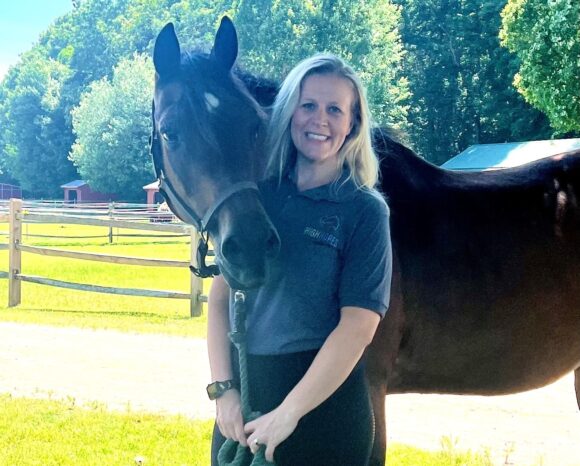
Missy Lamont has been named the new executive director of High Hopes Therapeutic Riding in Old Lyme.

OLD LYME—Celebrating its 50th anniversary with an annual gala that generated more than $500,000 in philanthropic support, High Hopes Therapeutic Riding has announced that its new executive director, effective July 1, 2024, will be Missy Lamont.

She joined the High Hopes team in December 2023 as director of operations and has worked closely with Interim Executive Director Alison Zack Darrell since January 2024, this enabling a seamless transition and continuity in leadership.

A search committee, chaired by John Catlett, current trustee, and former board chair, invested significant time in interviewing and selecting the ideal candidate for this pivotal role.

According to Catlett, “Missy’s extensive experience in therapeutic riding coupled with her demonstrated leadership skills made her the unanimous choice among the search committee members. With Missy at the helm, High Hopes is well-positioned to embark on its next 50 years, ready to innovate and grow to meet the evolving needs of our participants and community.”

Chief Philanthropy Officer Claire Gadrow agrees and adds, “I am excited to work alongside Missy in her new executive leadership role. This is a pivotal moment for High Hopes. During this anniversary year, we are proudly celebrating 50 years of empowering lives. For five decades, our founders and the community have been energized by our mission. This year, we have achieved historic levels of philanthropy, in large part due to the dedicated volunteers and generous donors. With the unwavering support of the community and this leadership appointment, High Hopes is poised to drive impactful change. I am confident that under her leadership, we will achieve our strategic goals and elevate our efforts to new heights.”

Lamont brings over a decade of experience in the nonprofit sector, including a previous role as an executive director. She has worn various hats, from program development and community outreach to fundraising and strategic planning. Her commitment to the nonprofit world deepened when she obtained a Certificate in Nonprofit Strategies from Harvard Business School, equipping her with essential skills to navigate the ever-evolving challenges of today’s nonprofit landscape and showcasing her dedication to creating positive impact.

Lamont’s journey in equine-assisted therapies began in Southwest Florida, where she worked for over 15 years. Starting as a volunteer at a center in Naples, Florida, Lamont’s love for horses drew her to the field, but it was the transformative impact of horses on human lives that inspired her to stay. She has since become a certified therapeutic riding instructor with the Professional Association of Therapeutic Horsemanship (PATH Intl.). In addition to her hands-on experience, Lamont actively contributes to the industry by serving on the PATH Intl. Governance Committee. Her leadership roles as a State Chair and Region Representative further underscore her commitment to advancing therapeutic horsemanship.

“I am honored and excited to lead the High Hopes team,” said Lamont. “I had admired High Hopes from a distance for years and felt a deep connection to the organization, having been originally certified at this center many years ago. Its national reputation preceded it, and I am proud to take on this new role in such an outstanding institution. Together, we will continue to create a positive impact through equine-assisted therapy and foster an inclusive community where lives are transformed.”

Since its inception in 1974 with just eight participants, 10 volunteers, and borrowed horses, High Hopes Therapeutic Riding has cultivated a vibrant community, positively impacting over 1,400 lives. Today, with the support of 412 volunteers, 11 instructors, 22 horses, 125 acres, and countless donors, the organization is ready to embrace its future. With Lamont’s extensive experience and genuine passion for equine therapy, she is poised to spearhead significant advancements in High Hope’s mission under her leadership as executive director.

For further information about High Hopes, visit this link.