
Jim Cameron
The road ahead for commuters may be less crowded … or maybe more.
One theory has it that, as people gradually return to work, they will shun mass transit out of safety concerns and commute, instead, by car. That could create problems on our roads if people try to drive five days a week.
The other speculation is that the “new normal” will mean less commuting overall as people have found they can be just as productive from home and will commute less than the normal five days a week.
Work hours may also be staggered, asking employees to go to their jobs every other day to avoid crowding in the office. And some New York City based companies may opt for adding suburban “satellite office” space, again changing the normal commute.
But for all of these scenarios, Metro-North will be the big loser.
“It will be years, if ever, before ridership gets back to pre-COVID-19 levels,” Catherine Rinaldi, President of Metro-North told me.
Ridership is already down 95 percent and service has been cut substantially to just one train per hour. So far, cheaper off-peak tickets are valid on all trains, even at rush hour. That seems unlikely to change. Why give potential returning riders any excuse to not come back?
Because Metro-North charges the highest fares of any commuter railroad in the US, fares cover more of the railroad’s operating expenses than on any other railroad. On Metro-North, 75 percent of the cost of running the trains is covered by fares compared to only 20 percent by MBTA in Boston (where fares are heavily subsidized to encourage ridership.)
Monthly commutation passes give riders a 50 percent discount over one-way fares. But if people aren’t commuting five days a week, monthly tickets won’t make sense so maybe they’ll go for 10-trip tickets (still, a 30 – 40 percent discount over buying single tickets.)
The railroad’s parent, MTA, says it is expecting almost $6 billion in lost revenue, a $1.7 billion cut in tax revenue and $800 million in additional costs for employee safety.
The MTA will receive $3.9 billion from the Federal Government in aid, but that comes nowhere near what will be needed.
If ridership doesn’t come back strong and fast, the losses will only worsen.
With reduced ridership and fewer trains, the railroad may have to do something more to reduce costs … but layoffs and furloughs are not being considered, I’m told. The MTA wants to keep those staffers close so they can be put back on trains if demand increases as some hope.
“We will have to be nimble and improvise, depending on how quickly passengers return,” says Rinaldi.
As CDOT is doing with our highways, Metro-North is taking advantage of this lull to accelerate infrastructure repairs. The Waterbury branch, which has reverted to bussing, has seen 5500 railroad ties replaced, bridge timbers upgraded and signal work moving apace.
President Rinaldi gives a big “shout out” to her 6600 employees. “I’m so proud of their amazing dedication” coming to work and keeping the railroad running.
And to riders, past and future, Rinaldi’s message is simple:
“Thank you for staying home and staying protected. We want you to come back and we will do everything we can to keep you safe.”
Posted with permission of Hearst CT Media.
About the author: Jim Cameron is founder of The Commuter Action Group, and a member of the Darien RTM. The opinions expressed in this column are only his own.You can reach him at CommuterActionGroup@gmail.com For a full collection of “Talking Transportation” columns, visit www.talkingtransportation.blogspot.com.

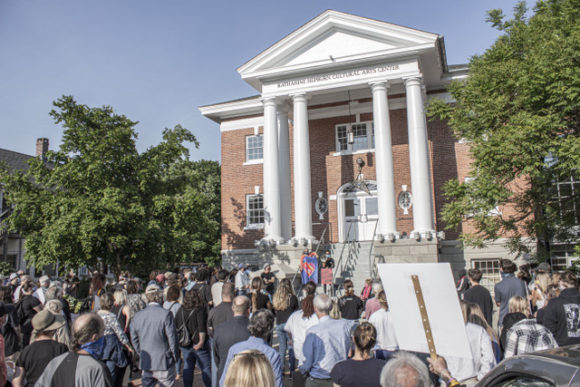
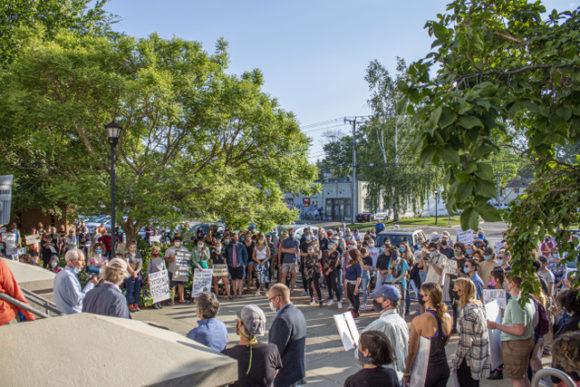
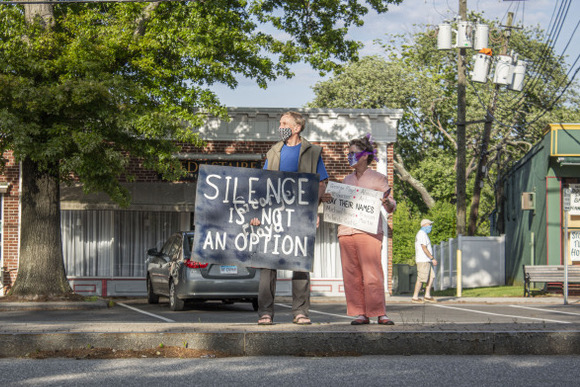
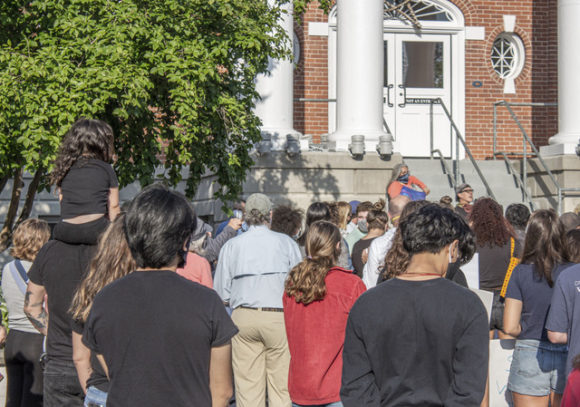
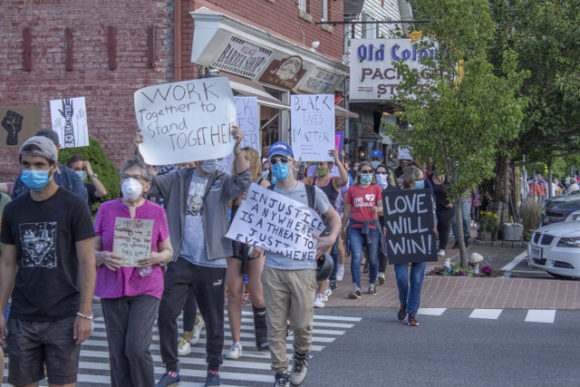

 LYME – The Lyme Democratic Town Committee released a statement yesterday requesting all 2020 candidates who seek to represent the residents of Lyme to pledge to support reform of the nation’s criminal justice system and to address police misconduct at all levels.