Edward O. Wilson, the eminent Harvard biologist and noted student of ants, describes our strange species in a remarkable and memorable book. In 15 brief, succinct and challenging chapters, each less than 10 pages, he suggests that, at once, we are far more and far less than we imagine.
His is a daunting title but the contents live up to expectations.
First, far less: homo sapiens have existed through a modest six millennia, a mere blip in the 13-plus billion years of our universe, the 4.5 billion years of this earth and the 400 million years of other “species on earth.” And this earth is but a “mote of stardust near the edge of our galaxy (an estimated hundred billion star systems make up the Milky Way galaxy) among a hundred billion or more galaxies in the universe.”
And even among the other species here on this planet, “how bizarre we are as a species … we are chemosensory idiots” when compared to most of them. “Our species is almost unconscious of most stimuli.”
But we are unusual.
We have the “capacity to imagine possible futures, and to plan and choose among them,” the “ability to invent and inwardly rehearse competing scenarios of future interactions.”
Dr. Wilson compares the “humanities” to “science.” The humanities tell us “what,” “the particularities of human nature back and forth in endless permutations, albeit laced with genius and in exquisite detail,” while science increasingly is needed to tell us “why.”
Are we trapped in our own egos?
In Chapter 11, The Collapse of Biodiversity, we seem to be knocking off many species, only to find more. But “ … without nature, finally, no people!” “The human impact on biodiversity, to put the matter as briefly as possible, is an attack on ourselves!” This re-confirms the famous Pogo adage, “We have met the enemy and he is us.”
Wilson suggests we remember the acronym HIPPO: Habitat loss; Invasive species; Pollution: Population growth; and Overharvesting. These may be the most important challenges our species face.
Has the human creation of religions helped? Wilson is dubious.
Religion’s “history is as old or nearly so as that of humanity itself. The attempted resolution of its mysteries lies at the heart of philosophy.” But “the great religions are also, and tragically, sources of ceaseless and unnecessary suffering.”
He adds: “the true cause of hatred and violence is faith versus faith, an outward expression of the ancient instinct of tribalism. Faith is the one thing that makes otherwise good people do bad things.” Many will find this offensive but it is a considered opinion, backed up with solid examples. Wilson summarizes thus, “the best way to live in this real world is to free ourselves of demons and tribal gods!”
He returns to the balance of science and the humanities; the latter describe “the human condition,” while science “encompasses the meaning of human existence.” We are “an accident of evolution,” from herbivore to carnivore, from wanderer to static, from small families to multiple “tribes.” And “when an individual is cooperative and altruistic, this reduces his advantage in competition to a comparable degree with other members, but increases the survival and reproduction rate of the group as a whole.” No wonder we have conflicting views of how to respond …
Dr. Wilson’s conclusion: “Are human beings intrinsically good but corrupted by the forces of evil, or the reverse, innately sinful yet redeemable by the forces of good? Are we built to pledge our lives to a group, even to the risk of death, or the opposite, built to place ourselves and our families above all else? Scientific evidence, a good part of it accumulated during the past twenty years, suggests that we are both of these things simultaneously. Each of us in inherently conflicted.”
“If the heuristic and analytical power of science can be joined with the introspective creativity of the humanities, human instinct will rise to an infinitely more productive and interesting meaning.”
After each chapter, I had to stop and reflect on Wilson’s ideas, taking many notes.
And I plan to re-read it in its entirety next year.
Editor’s Note: ‘The Meaning of Human Existence’ by Edward O. Wilson, was published by W. W. Norton & Co., New York, 2014.
Felix Kloman
About the Author: Felix Kloman is a sailor, rower, husband, father, grandfather, retired management consultant and, above all, a curious reader and writer. He’s explored how we as human beings and organizations respond to ever-present uncertainty in two books, ‘Mumpsimus Revisited’ (2005) and ‘The Fantods of Risk’ (2008). A 20-year resident of Lyme, he now writes book reviews, mostly of non-fiction, which explores our minds, our behavior, our politics and our history. But he does throw in a novel here and there. For more than 50 years, he’s put together the 17 syllables that comprise haiku, the traditional Japanese poetry, and now serves as the self-appointed “poet laureate” of Ashlawn Farm Coffee, where he may be seen on Friday mornings. His late wife, Ann, was also a writer, but of mystery novels, all of which begin in a village in midcoast Maine, strangely reminiscent of the town she and her husband visited every summer.
HARTFORD/OLD LYME – (Press release from DPH) RESIDENTS ARE ADVISED TO PROTECT THEMSELVES AND THEIR CHILDREN BY AVOIDING OUTDOOR ACTIVITY FROM DUSK TO DAWN, WHEN MOSQUITOES ARE MOST ACTIVE
Yesterday, Department of Public Health (DPH) Commissioner Renée D. Coleman-Mitchell announced a second Connecticut resident has tested positive for Eastern Equine Encephalitis (EEE) infection. The patient is an adult resident of Old Lyme, who became ill during the second week of September with encephalitis and remains hospitalized. Laboratory tests, which were completed Friday at the Centers for Disease Control and Prevvention (CDC) Laboratory in Ft. Collins, Colo., confirmed the presence of antibodies to the virus that causes EEE.
Friday afternoon, DPH learned that the first person diagnosed with EEE this year in Connecticut passed away earlier this week. The patient, an adult resident from the Town of East Lyme, was hospitalized with encephalitis in late August. This is Connecticut’s first fatal human EEE case since 2013.
“The identification of two Connecticut residents with EEE, one of whom has passed away, emphasizes the seriousness of this infection,” cautioned DPH Commissioner Renée Coleman Mitchell. “Using insect repellent, covering bare skin and avoiding being outdoors from dusk to dawn are effective ways to help keep you from being bitten by mosquitoes. Mosquitoes continue to be active until the first heavy frost.”
States throughout the Northeast are also experiencing an active season for EEE. In addition to the virus being found in mosquitoes, there have been a total of 10 human cases of EEE infection in Massachusetts, including two fatalities, and three human cases in Rhode Island, including 1 fatality. Although EEE-infected mosquitoes continue to be detected in the southeastern corner of Connecticut, the numbers are declining and we are not experiencing the excessively high levels of
activity seen in Massachusetts. Although EEE-infected mosquitoes continue to be detected in the southeastern corner of the State, the numbers are declining and the area is not experiencing the excessively high levels of activity seen in Massachusetts.
It takes four to 10 days after the bite of an infected mosquito to develop symptoms of EEE. Severe cases of EEE virus infection result in encephalitis, an inflammation of the brain. Approximately a third of patients who develop EEE die and there is no specific treatment for EEE.
The DPH continues to advise against unnecessary trips into mosquito breeding grounds and marshes as the mosquitoes that transmit EEE virus are associated with freshwater swamps and are most active at dusk and dawn. Overnight camping or other substantial outdoor exposure in freshwater swamps in Connecticut should be avoided. Even though the temperatures are getting cooler, mosquitoes continue to be active until the first heavy frost and residents should continue to take measures to prevent mosquito bites. Pesticide spraying to kill adult mosquitoes is unlikely to be effective at this time of year when it is cooler at night and mosquitoes are less active.
First Human Case of West Nile Virus (WNV) Identified in Connecticut This Year
The DPH is also announcing an adult resident of Danbury has tested positive for West Nile virus (WNV) infection. This is the first human case of WNV identified in Connecticut this season. The patient became ill during the third week of August with encephalitis and is recovering. Tests performed at the CDC Laboratory in Ft. Collins, Colo., confirmed the presence of antibodies to the virus that causes WNV disease.
West Nile virus has been detected in the state every year since 1999. While WNV has been detected in mosquitoes in the state this season, the numbers of infected mosquitoes identified have been lower than the historical average. The mosquitoes that transmit WNV are most abundant in urban and suburban areas with dense human populations.
Most people (8 out of 10) infected with WNV do not develop symptoms. Approximately 1 in 5 people who are infected develop a fever and other symptoms. About 1 out of 150 infected people develop a serious, sometimes fatal, illness. In 2018, 23 human cases of WNV virus were identified in Connecticut residents, including one fatality.
Connecticut Mosquito Management Program
The management of mosquitoes in Connecticut is a collaborative effort involving the Department of Energy and Environmental Protection (DEEP), the Connecticut Agricultural Experiment Station (CAES) and the Department of Public Health (DPH), together with the Department of Agriculture and the Department of Pathobiology at the University of Connecticut (UCONN). These agencies are responsible for monitoring and managing the state’s mosquito population levels to reduce the potential public health threat of mosquito-borne diseases.
For information on what can be done to prevent getting bitten by mosquitoes and the latest mosquito test results and human infections, visit the Connecticut Mosquito Management Program web site at https://portal.ct.gov/mosquito
For more information about EEE prevention, visit the CDC website:https://www.cdc.gov/easternequineencephalitis/gen/pre.html
OLD LYME — If you live, work or own a business in Old Lyme, then you’re invited to a SWOT Analysis Workshop tomorrow (Saturday, Sept. 21) morning at the Town Hall from 9 a.m. to 12 p.m.
SWOT is an acronym for Strengths, Weaknesses, Opportunities and Threats and represents a technique frequently used in strategic business planning. The Old Lyme Economic Development Commission (EDC) working with the Connecticut Economic Resource Center (CERC) are using the technique with input from a variety of stakeholders to assist in determining the overarching goals, which will help guide the future economic development of Old Lyme.
Working collaboratively, the two organizations are seeking to prioritize of efforts in three areas primarily, as follows
Retaining existing businesses
Attracting new investments (especially in available commercial properties that are presently abandoned and/or neglected)
Promoting entrepreneurship — since local business owners, who live in Old Lyme, have a vested interest in the community.
The EDC is working closely with the Halls Road Improvement Committee (HRIC) to ensure the two groups work in tandem. BJ Bernblum, HRIC Chairman, told LymeLine, ” “The Old Lyme Board of Selectmen is taking seriously the economic health of the town. A few years ago it formed the Halls Road Improvements Committee and this year it revitalized the Economic Development Commission.” He continued, “The EDC is working with the Connecticut Economic Resource Center to analyze the current state of Old Lyme’s economy and to recommend ways to ensure a sound future.”
Bernblum also encouraged all Old Lyme residents and business owners or operators to complete the EDC survey at this link: www.research.net/r/OldLymeCT. The deadline for completing the survey is Friday, Sept. 27.
Bargain hunters stand patiently in line at last year’s King’s Rummage Sale.
OLD LYME — Autumn arrives officially in Connecticut on Sept. 23, and Christ the King Church in Old Lyme is celebrating the new season with its family-friendly Harvest Festival Saturday, Sept. 21, from 8:30 a.m. to 3 p.m.
At the huge King’s Rummage Sale held during the Harvest Festival, you’ll find housewares and kitchen items, books and CDs, holiday decorations, jewelry, bicycles and exercise equipment, furniture, rugs, artwork, toys, and more.
Find a bargain (or two!) at the King’s Rummage Sale in Old Lyme, Sept. 21 and 22.
At the Harvest Festival, kids of all ages can try their luck at Games like Soccer Kick, Hockey Shot, and Bust-a-Balloon; get creative with Paint-a-Pumpkin; or simply have their face painted.
There will be games galore at Christ the King’s Harvest Festival.
The Silent Auction offers exciting items like artwork, gift certificates, and themed baskets to bid on. Local musicians will provide entertainment for you to enjoy while you have lunch or snacks prepared by the Men’s Club. You can pick out a homemade goodie at the Bake Sale — and choose some autumn color for your home at the Fall Plants & Produce stand.
All the fun of the fair will be happening at Christ the King’s Harvest Festival, Sept. 21.
Admission to Christ the King’s Harvest Festival is free. Proceeds from the 2019 Harvest Festival will be directed towards the cost of refinishing the hardwood floors in the church.
The Harvest Festival and Rummage Sale take place at Christ the King Church, 1 McCurdy Road, Old Lyme.
The Rummage Sale, Bake Sale, and Plant Sale will continue after the Masses Sunday morning (Sept. 22) from 9 a.m. to 12 noon (with steep discounts on Rummage Sale items, while supplies last.) Visit www.christthekingchurch.net for directions. And follow the church on Facebook (@ChristtheKingChurchOldLyme) for regular updates.

 Who are we?
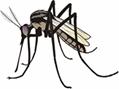 Yesterday, Department of Public Health (DPH) Commissioner Renée D. Coleman-Mitchell announced a second Connecticut resident has tested positive for Eastern Equine Encephalitis (EEE) infection. The patient is an adult resident of Old Lyme, who became ill during the second week of September with encephalitis and remains hospitalized. Laboratory tests, which were completed Friday at the Centers for Disease Control and Prevvention (CDC) Laboratory in Ft. Collins, Colo., confirmed the presence of antibodies to the virus that causes EEE.