Explore the English Renaissance in This Afternoon’s Concert by ‘The New Consort’ at Saint Ann’s

‘The New Consort’ in concert.

On Saturday, April 6, Saint Ann’s Parish in Old Lyme presents a concert by nationally-acclaimed vocal ensemble The New Consort, directed by baritone and Lyme native Brian Mummert. The performance, which is part of the Live@SaintAnn’s concert series, will begin at 4 p.m., with doors opening at 3:30 p.m. A reception will follow the performance, to which all guests are welcome.

The professional quintet will present Subtler Than Light: Music of the Dow Partbooks, a concert exploring the music written during the reign of Elizabeth I of England. These works have been immortalized by 16th century calligrapher Robert Dow in the Dow Partbooks: a set of manuscripts, each containing only the musical line of the singer reading from it, which represent some of the most important works of the Tudor era.

Preserved within these books, one finds a snapshot of exemplary artists struggling to make sense of the world through the lens of their Christian faith; from Robert White’s Lamentations to William Byrd’s Laetentur coeli, these Elizabethan masters endeavor to capture the scope of human emotion.

Music from the Dow Partbooks, pictured above, forms the basis of Saturday’s concert.

“We’re very lucky that Dow had impeccable taste,” explains Artistic Director Brian Mummert. “The music of composers like Byrd and Tallis is some of the most beautiful ever written, and Dow chose what I’d argue are the best pieces by each of them. I’m so excited to pair these works that have withstood the centuries with two world premieres on similar themes, and inspired by the Partbooks’ musical language, written specially for The New Consort by two important young composers: Rosśa Crean and Ethan McGrath. This concert is all about balance – warding off despair for our imperfect world with hope, and seeking an equilibrium between sombre contemplation and joy.”

Winners of the American Prize in Chamber Music, The New Consort was founded in 2015 and has quickly made embracing stylistic contrasts one of its hallmarks. Musical variety is an integral part of the ensemble’s identity: from Renaissance polyphony to contemporary and non-classical works, nothing is off-limits. By embracing contrasts and drawing diverse works into conversation, The New Consort attracts new audiences to classical music and encourages them to forge connections with unfamiliar genres of musical expression.

Brian Mummert of Lyme, Conn., is Artistic Director of ‘The New Consort.’

The ensemble has appeared in venues including Trinity College, Cambridge; The Walters Art Museum’s First Fridays series; The Bach Store, an NYC pop-up concert hall; High Hopes’ Music Under the Stars (CT); Spectrum NYC; and at churches and schools throughout the Northeast.

Members of The New Consort have appeared as soloists and conductors with some of the world’s best-respected ensembles from Carnegie Hall to Kuala Lumpur, but relish the opportunity that the ensemble presents to collaborate as chamber musicians.

Admission to the concert is a suggested donation of $20 in advance and $30 at the door, with a $10 senior/student discount; tickets are available for purchase at bit.ly/partbooks or by calling 917-740-9694.

At the reception after the performance, guests are encouraged to examine facsimiles of the Partbooks and meet the performers.

Saint Ann’s is an Episcopal parish in Old Lyme, Conn., that invites and welcomes all visitors to this outstanding musical event. Live@SaintAnn’s is a concert series organized by the Music Committee of Saint Ann’s Church whose mission is to enrich the community and introduce visitors to the parish. The church is located at 82 Shore Road (Rte. 156), two miles from Exit 70 on I-95. Parking is adjacent to the church.

For more information on The New Consort, visit www.newconsort.org.

For information about the parish, contact Kathy Rowe at 860-434-1621, via email at office@saintannsoldlyme.org, or visit Saint Ann’s online at www.saintannsoldlyme.org.

New Orleans Musicians Offer Free Concert This Evening to Benefit Old Lyme Church’s Immigration Assistance Fund

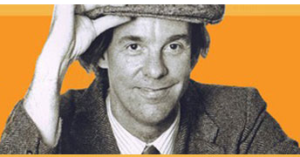
Tom McDermott

The First Congregational Church of Old Lyme (FCCOL) has announced that News Orleans musicians Tom McDermott and Ned Sublette will perform a free public concert at 6 p.m., Saturday, April 6, in the FCCOL Meetinghouse, to benefit the church’s Immigration Assistance Fund. Doors will open at 5:30 p.m.; seating will be on a first-come, first-served basis.

The concert will be followed by a free pizza dinner held in the Fellowship Hall supplied by the Pizza Corner restaurant in New Britain, which is owned and operated by Malik Naveed bin Rehman and Zahida Altaf, two local residents who sought sanctuary at FCCOL and later received a temporary stay of deportation allowing them to pursue their efforts to obtain legal status in the U.S.

Admission to both the concert and dinner is free, but donations will be welcomed during a free will offering. All proceeds from the evening will go towards funding the church’s efforts to help immigrants like Malik and Zahida, and the Torres family from Waterbury.

Earlier this year, the church announced it was working with immigration experts to return Glenda Cardena Caballero to her husband Miguel Torres while her deportation case winds its way through the immigration appeals process. Last August, Miguel and their two children Nathaly (11) and Keneth (7) – all of whom are U.S. citizens – watched helplessly as Glenda was taken from them by ICE, placed on an airplane and deported to Honduras.

Glenda had been in the US since 2005; she had complied with all of ICE’s directives; and her case was under appeal in the court system. Despite following immigration rules and regulations, ICE agents deported her suddenly and arbitrarily, leaving her family bereft and heartbroken.

The church’s goal is to bring Glenda home to her family in the U.S. while her case continues to wind its way through the appeals process.

McDermott is an internationally recognized pianist and composer, and a fixture in the world of New Orleans music. His work was featured in the HBO series “Treme” – where he played himself several times throughout the series. He has released 17 albums, including 90 original songs – in styles ranging from jazz to Brazilian choro, to ragtime, to swing, to classical compositions.

Mcdermott has played Carnegie Hall, the 92nd Street Y, most states in America and a couple dozen countries abroad. He’s been reviewed a half-dozen times by the “New York Times,” as well as the “Wall Street Journal,” “Rolling Stone” and other media; and has lectured at Harvard on New Orleans, American music and his unique house.

Sublette is an American composer, musician, record producer and author. His books include “The Year Before the Flood: A Story of New Orleans” and “The World That Made New Orleans: From Spanish Silver to Congo Square.” His most recent book, published with his wife Constance, is “The American Slave Coast,” which documents the slave-breeding industry that flourished in the 19th century US. Musically, he is known for fusing country-western and afro-Caribbean styles in his albums “Cowboy Rumba” (which reached Number 1 on the World Music Charts Europe) and “Kiss You Down South.”

His music label, Qbadisc, releases Cuban music in the US. In 2006, Willie Nelson released Sublette’s song “Cowboys Are Frequently, Secretly Fond of Each Other” in the wake of the success of “Brokeback Mountain.” For the past several years, Sublette has organized and led “Postmambo” tours of Cuba and Haiti, exploring the intersections of music, dance and ritual, and how those expressions have shaped our world.

Lyme-Old Lyme Junior Women Sponsor Bingo Fundraiser Tonight for Lyme Ambulance Association

On Saturday, April 6, the Lyme-Old Lyme Junior Women’s Club is sponsoring a Bingo Evening with cash and other valuable prizes galore at the Hamburg Fire House, 213 Hamburg Rd. in Lyme.

All proceeds will benefit the Lyme Ambulance Association, which, apart from Lyme, is also the first responder to calls in the lower portion of East Haddam and provides Mutual Aid to both East Haddam and Old Lyme.

Doors open at 5:30 p.m. and play starts at 6 p.m.

Drinks and snacks will be provided.  The event is BYOB.

Tickets are $20 per person for 10 game and $1 or $2 for specials.  Pre-registration earns you an extra game!

For tickets and questions, call Beverly at 860-434-5667.


Reading Uncertainly? ‘Sapiens: A Brief History of Humankind’ by Yuval Noah Harari

“I’m not trying to predict the future,” Yuval Harari argued in an Edge (an international group of the curious – see www.edge.org) discussion with Daniel Kahneman (March 5, 2015). “I’m trying to identify the horizon of possibilities that we are facing.”
Professor Harari, of the Hebrew University of Jerusalem and an Oxford PhD, wrote this incredibly imaginative alternate view of the entire 200,000-year history of our species, Homo sapiens, on this earth, a mammal with a uniquely large brain. He suggests we have survived and prospered, perhaps too much, through the use of myths: “large numbers of strangers can cooperate successfully by believing in common myths,” even though we now know, “there are no gods in the universe, no nations, no money, no human rights, no laws, and no justice outside the common imagination of human beings.”

Harari re-thinks just about every “myth” that confuses our practices as human beings.

This “history” challenges our numerous “misconceptions” by stepping back from all we thought we knew, separating the growth of human existence through three “revolutions” of human existence: the cognitive (when we learned to think and communicate), the agricultural (when we shifted from nomadic movement to a more sedentary life), and the scientific (when we began asking “why” and “how.”).

In doing so he manages to skewer, with both rational argument and good humor, most of our cherished beliefs. And how little we actually know about our predecessors, saying, “a curtain of silence shrouds tens of thousands of years of history,” simply because of our lack of language and surviving relics.

What about the disappearances of many earlier species? We’ve been taught that climatic conditions or perhaps asteroids were the causes. Harari argues that we, homo sapiens, are more likely responsible for their demise than crashes or dramatic climate changes (ice ages, he notes, have occurred about once every 100,000 years). Our earth’s climate “is in constant flux” and most species have been able to adapt.

But many could not adapt to us!

As a student of risk management, I was interested to learn that our Agricultural Revolution, beginning about 12,000 years ago also increased our concern about our future, linked with the new “fundamental uncertainty of agriculture.” That is when we constructed “an imagined order.” Harari cites both the Code of Hammurabi (circa 1776 BCE) and the American Declaration of Independence (1776) as “imagined orders” that enabled “us to cooperate effectively and forge a better society.”

Acceptance of these “imagined orders” became “ embedded in the natural world and shaped our desires.” They “existed within the community network linking the subjective consciousness of many individuals.” Imagined orders both free and imprison us …

They are, Harari argues, how humans “organized themselves into mass cooperative networks.”  They result in “imagined hierarchies” and “unjust discrimination” such as the Hindu caste system and the Babylonian separation of human beings into “superior men,” “commoners,” and “slaves.”

But, for example, do the “fundamental values” of equality and individual freedom (liberty) contradict each other? Harari suggests they do but that “this is no defect. Such contradictions are an inseparable part of every human culture. In fact, they are culture’s engines, responsible for the creativity and dynamism of our species.”

Money is also a shared myth. It is wholly imaginary but it does create healthy inter-dependence. Money is a “purely mental revolution” to “represent systemically the value of other things for the purpose of exchanging goods and services.”

Today, “more than 90 percent of all money – more than $50 trillion appearing in our accounts — exists only on computer servers.” Bitcoin, indeed! Money is the “apogee of human tolerance,” based on two “universal principles: convertibility and trust.”

Harari steps back and also studies religion, “a system of human norms and values founded on a belief in a superhuman order.” Religion moves from animism, to polytheism, to monotheism, to dualism, to socialist humanism, and, most recently, to evolutionary humanism. It appears to be a human construct.

Questions always remain: “Are we out of the global economic crisis, or is the worst yet to come? Will China continue growing until it becomes the leading superpower? Will the United States lose its hegemony? Is the upsurge of monotheistic fundamentalism the wave of the future or a local whirlpool of little long-term significance? Are we headed toward ecological disaster or technological paradise?”

Our most recent “revolution,” the Scientific, says Harari, began on July 16, 1945 at 05:29:53 with the explosion of the first atomic bomb. It also coincided with the explosion of population: 500 million in 1500 and 7.3 billion in 2015. One of the keys to our scientific progress has been “our willingness to admit ignorance,” leading to insatiable curiosity and constructive, mathematical observation. But we also have an “obsession with military technology.”

Is it time to “rethink the idea of continual progress?”

Are we obsessed with “growth?” Harari answers, “For better or worse, in sickness and in health, the modern economy has been growing like a hormone-soused teenager.”  But is perpetual growth an illusion or “will this idea burst like all bubbles?”

His reply: “When growth becomes a supreme good, unrestricted by any other ethical considerations, it can easily lead to catastrophe.” Or will “ecological turmoil endanger the survival of homo sapiens itself?” Will only rats and cockroaches survive our insanity, as also suggested by Elizabeth Kolbert in The Sixth Extinction?

And what about “the pursuit of happiness?” Harari suggests a biological approach to happiness, that our natural system releases serotonin and other organic compounds to produce “ephemeral eddys of good fortune,” but never long-lasting and always returning us to a median level of euphoria. “Happiness” is, to him, entirely subjective, despite the story of Huxley’s “soma.”

How will it all end? Will advancing technology produce cyborgs of all of us, enabling individuals to “live” for hundreds of years, or will we simply destroy our species, leaving smiling cockroaches?

Harari’s last questions are: “What do we want to become?” and “What do we want to want?” Unanswerable, of course, but we are innately curious and creative!

Editor’s Note: Sapiens: A Brief History of Humankind by Yuval Noah Harari is published by HarperCollins, New York 2015.

Felix Kloman

About the Author: Felix Kloman is a sailor, rower, husband, father, grandfather, retired management consultant and, above all, a curious reader and writer. He’s explored how we as human beings and organizations respond to ever-present uncertainty in two books, ‘Mumpsimus Revisited’ (2005) and ‘The Fantods of Risk’ (2008). A 20-year resident of Lyme, he now writes book reviews, mostly of non-fiction, which explores our minds, our behavior, our politics and our history. But he does throw in a novel here and there. For more than 50 years, he’s put together the 17 syllables that comprise haiku, the traditional Japanese poetry, and now serves as the self-appointed “poet laureate” of Ashlawn Farm Coffee, where he may be seen on Friday mornings. His late wife, Ann, was also a writer, but of mystery novels, all of which begin in a village in midcoast Maine, strangely reminiscent of the town she and her husband visited every summer.

Spring is in the Air and on the Street for ‘First Friday’ in Chester

These delightful Guinea fowl are handmade in Provence and for sale in ‘The Perfect Pear.’ Photo courtesy of The Perfect Pear,

CHESTER — Spring is in the air, and Chester is eager to shed the winter doldrums to celebrate First Friday this evening, April 5. Festivities include gallery openings, new shops and original offerings all around town.

Chester Gallery & Framing welcomes Spring with a new collection of works by select Connecticut artists, including four drawings of Chester by Chuck Baird (1947-2012), who was also a renowned storyteller and actor in the National Theater for the Deaf.

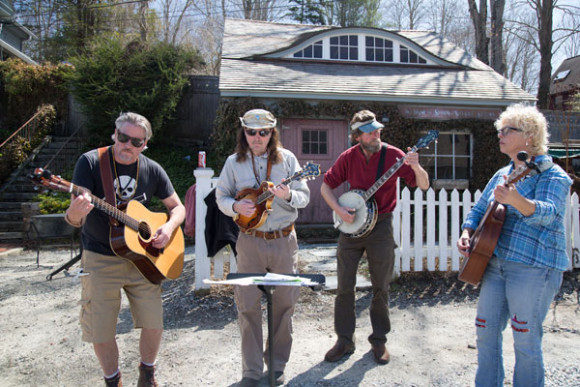
‘Arrowhead’ plays tonight during ‘First Friday’ at the Spring Street Studio and Gallery.

At Leif Nilsson Spring Street Studio and Gallery, Nilsson’s exhibit features new gouache and oil works and live music by Arrowhead.

Chester’s newest merchant, Erica Tannen and The E List Shop at 1 North Main Street, features an exhibit of recent work by Brian Keith Stephens along with the newly launched women’s clothing store. The E List’s neighbor, Caryn Paradis Interior Design, opens its new space at 3 North Main Street with a meet-and-greet with Jeremy Hughes, a Chester-based artist, who uses natural materials to create innovative and inspiring pieces for the home or office.

The C & G building in Chester is home to the new E-List Shop, which will be open tonight to celebrate First Friday in Chester.

Blackkat Leather is hosting local photographer Derek Hayn for a special showing of his works as an architectural photographer. His photos include dramatic aerial views of New York and Boston skylines, as well as landscapes of New England and abroad. 

At Lark, Pastry Chef Joyce Brewster of Hillanddale and the Golden Lamb Buttery in Brooklyn, Conn., will be on hand to talk, sample and sell her much-loved pie handiwork.

Shops at the Mill House is rolling out new Spring inventory from its wide selection of antiques dealers.

Along with a new line of Emile Henry made-in-France bread-baking gear, The Perfect Pear is introducing handmade ceramic Guinea fowl of Provence from Les Céramiques de Lussan. These whimsical birds are hand-crafted from Provençal clay and painstakingly painted in a wide range of colors.

On the restaurant front, Grano Arso is celebrating the First Friday in April with “Par for the Course,” a new cocktail by bartender Zack Joyce made with Prairie Vodka, English Breakfast tea, lemon and mint.

In addition to on-street parking in Chester, there is free parking available in the town’s public lots on Main Street by the cemetery, on Water Street and on Maple Street.

For more information about First Friday, visit Facebook.com/VisitChesterCT or call (860) 322-4047.