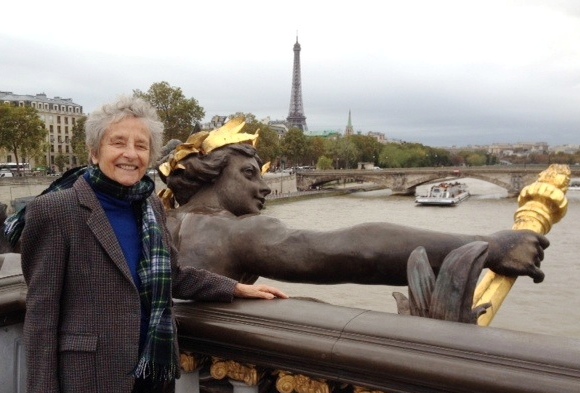
Together We Rise – Building Bridges For Justice has announced that East Haddam, Conn., is again registered as an Official Sister Event location for Connecticut, along with Hartford and Kent, for the Jan. 19, 2019, Third Annual Women’s March:#WomensWave March on Washington.
Together We Rise will join more than 650 sister events/marches throughout the World, when an outdoor gathering and vigil will be held from 10 a.m. to 12 p.m. at Two Wrasslin’ Cats Coffee House & Café, located at 374 Town St. in East Haddam, CT at the junction of Rtes 82 and 151.
Those interested in participating in the Together We Rise Jan. 19 Sister Event vigil should register by going to https://www.womensmarch.com/2019/ and clicking on Sister Events, and entering zip code 06469.
Participants are encouraged to arrive early. Parking Monitors will be on site to direct participants to parking venues near Two Wrasslin’ Cats. Parking in Two Wrasslin’ Cats parking lot is available only to those with disabilities.
Speakers at the Together We Rise Vigil in East Haddam will include Christine Palm, Emily Gerber Bjornberg, Marta Daniels and Ella Briggs.
Palm is the newly elected State Representative for the 36th Legislative District covering Chester, Deep River, Essex and Haddam. A lifelong Connecticut resident and progressive Democrat, her social justice advocacy began in high school when she marched with Caesar Chavez and the United Farm Workers. Palm’s work has culminated in her strong desire today to champion public policy that reflects the aspirations and concerns of people in the lower Connecticut River Valley.
Palm has been a journalist, high school teacher, communications manager, and small business owner. Most recently, she has served as Women’s Policy Analyst for the General Assembly’s Commission on Women, Children and Seniors, a group that advocates for policies that enhance the safety and economic security of these three under-represented populations. Before that, she was Communications Director of the Permanent Commission on the Status of Women.
Daniels is a writer, activist, and public historian. Her 35-year professional career has focused on expanding and improving civic engagement in public policy issues on peace, justice, and the environment.
She was director or co-director of half a dozen national and state educational organizations and also served as a consultant for several environmental and humanitarian organizations. Daniels is the author of several books on peace, many research papers and hundreds of articles and op-eds on peace and disarmament, and US-Soviet relations.
Daniels lives in Chester and is an active member of the Chester Democratic Town Committee, the Historical Society, and the Land Trust.
Briggs is the 2019 Connecticut Kid Governor. She is a 5th grader at Ana Grace Academy of the Arts Elementary Magnet School in Avon, CT. Ella lives with her family in East Hampton.
In addition to these speakers, music will be provided by Thomasina Levy and Diane Adams. Levy was Connecticut State Troubadour for 2005 and 2006. An award-winning mountain dulcimer player, singer, poet and songwriter, her performances weave together traditional and contemporary folk music.
Adams is a local musician, who has performed at a variety of public events celebrating justice and equality including Together We Rise’s 2018 March for Our Lives event.
Coach Kirk Kaczor (center) leads the traditional Old Lyme boy’s huddle before resuming play after a time-out.
Continuing their dominating season Old Lyme defeated Hale Ray 59-31 last Thursday, using a 12-0 blow-out late in the third quarter to secure their fifth win in succession. Brady Sheffield led the scoring with two three-pointers during that stretch.
Sheffield ended the night with 15 points, while Aedan Using notched 14 points and Quinn Romeo scored 10 points with nine rebounds. Liam Holloway contributed four steals.
Old Lyme is now 8-0 in the Shoreline Conference and 8-1 overall.
Jan. 14
Old Lyme crushed North Branford 86-47 in a Shoreline Conference game with Aedan Using leading the scoring for the Wildcats with 26 points and seven assists. Brady Sheffield added 13 points and seven assists to take Old Lyme to its fourth straight victory.
Mike Sitro led North Branford’s scoring with 16 points.
Old Lyme is now 7-0 in the Conference and 7-1 overall.
As the calendar progressed through December, most people were looking forward to Christmas with joy and anticipation.
For me, as I looked at the calendar last year, I found myself looking back to a December from my childhood. The year is 2003, and I am recalling the day I saw The Lord of the Rings: The Return of the King on the big screen; to this day it remains my favorite movie-going experience of all time.
I’m writing this because one of my recent reviews published in LymeLine.com was for a direct-to-Netflix release, not by some forgettable children’s movie, nor an attempt at slapstick by Rob Schneider and Adam Sandler … rather it was a film by the Coen brothers.
Years ago, we witnessed the vanishing of record stores with the digital revolution via iTunes. I was not alive when it was a social occasion to go to the record store and check out whichever new album had been introduced, but I did have a high school teacher who still raves about that to this day (I’m talking to you, Mr. Braychak.)
Going to the movies has always been magical for me. I recall that Steven Spielberg shared on Inside the Actor’s Studio that even he still takes his family to the theaters.
Years ago, I wished there were ways for me to see classic films on the big screen … how they were originally released. Lately, I’ve been able to see that wish fulfilled by catching The Big Lebowski, The Shining, Monty Python and the Holy Grail, and The Good, the Bad, and the Ugly courtesy of promotions by Regal Cinema, and the treasured Coolidge Corner Theatre (for those of you who have been in the Boston area).
And I firmly hold that catching a film on the big screen in its original run is as exciting and memorable of attending a live sports event. Both sources of entertainment you can watch at home, yes, but there’s nothing like being caught up in the energy of the moment.
A while ago, I developed the mindset of thinking that seeing a film by your favorite actor or director on the big screen is akin to seeing your favorite athlete compete. I am proud to share that I frequented Fenway Park and saw David Ortiz play. In time, I’ll talk of that in the same way that older folk today mention having seen Mickey Mantle or Ted Williams play.
Similarly, the day will come when Leonardo DiCaprio departs this world, and people will tell the younger generations about being caught up in Leo-mania with Titanic; or when George Lucas leaves us, people will recount the time they saw the unexpected sci-fi empire of Star Wars take flight at their local theater in 1977.
But as this ‘release via Netflix’ trend continues to gain momentum, I have to ask if we can really imagine replacing certain occasions that are meant for the theater to be changed to accommodate the streaming method? So many romantic relationships have begun with a date at the movies (Barack and Michelle Obama saw Do the Right Thing by Spike Lee on their first time out together).
Imagine this … “Alright! I got the computer ready … wait, the battery’s dead. Let me grab my iPad! Yeah, I heard this is supposed to be really great, didn’t you say you had a crush on … oh, come on! The Wifi is down? I thought I took care of that! Give me a couple of minutes to fix this!”
Going to the movies is quite simply magic … even if the movie does not entertain you. I always loved the process of lining up for my ticket (and skimming the list of other flicks that are playing), getting the drinks and popcorn, and picking my seat during the idle pre-showing ads.
Then the lights slightly dim for the previews, and you make remarks to either your friends or self as to whether the movie looks interesting or you plan on skipping it. Then the lights dim all the way until they’re out, save the little ones in the aisle.
Then the real magic begins.
And when it’s over, you leave, and you chat with whoever you came with about what you thought of the movie. Good, bad, whatever, and you marvel about the people attached to the project, and when their next movie is coming out.
The Lord of the Rings remains one of my all-time favorite movies. My love for the trilogy is increased all-the-more whenever I recall the day I went to see the final installment on the big screen on Dec. 20, 2003 … mainly because I felt like I was on my own personal quest towards seeing this film.
From Christmas of 2002 until the day I saw The Return of the King, I was on a metaphorical journey through the trilogy, in which I waited several months for opportunities to see each installment on DVD. This was also accompanied by a move to the home in which I would spend the rest of my childhood. Granted it was from Old Lyme to Lyme, so I would not be dropped somewhere with which I had no familiarity whatsoever, but leaving the place I had spent two thirds of my life was a big deal.
Not exactly like being taken halfway across the country and plopped in a totally foreign environment, like some others experience. But I was leaving the home that I had lived in for nearly nine years — three quarters of my life. It was all I knew.
We moved from Chestnut Hill in April of that year. But we did not move into our eventual home on Hamburg Road until that November. The home’s previous resident had dozens of animals on her property (some of you may be fondly smiling as you will recognize to whom I’m referring) and her new residence was not finished.
We therefore arranged a real estate deal that involved us renting the home to her, and since we had already sold our home, we briefly rented a home on Griswold Point. It was a beautiful home right on the Lieutenant River, and my mother raves that it was her favorite house. The only downside for my brothers and me was … it had no cable. Not something kids want to hear. But no cable meant … more time for The Lord of the Rings.
When we finally moved to Hamburg Road that November, the adaptation of the journey’s end in The Lord of the Rings seemed to go hand-in-hand with the fact that my own residence journey had also ended. All I had to do was wait another month.
But lo and behold, I was never a good student, and I got in trouble academically, resulting in the loss of my media privileges for over a month, which, in turn, meant I could not see The Return of the King.
What a devastating blow to the gut!
However, my mom understood how much this movie meant to me, so she made a compromise: if I went an entire week without a teacher calling to say I was missing homework, my punishment would be lifted (how bad a student do you have to be for a compromise like that?)
Luckily for me, I made it in time, and the Saturday after the film was released, Dec. 20, I ventured off with a friend to the Marquee Cinemas in Westbrook to catch the final installment. I remember standing in the long line, fretting over whether we would find a seat with a good view, drinking all of my soda before the movie started (and subsequently suppressing my need to use the bathroom for the next three hours), and once the movie was over … clapping vigorously when the words ‘The End’ appeared on the screen.
I left the theater more than satisfied.
I left fulfilled.
But I wonder how different this story would be had Netflix started the streaming business back then, and Peter Jackson opted for this method? I could not imagine myself getting hyped up for a groundbreaking movie that I would watch at home, leaning forward on my couch at the TV, no matter how sophisticated the device is?
If this is an action/adventure movie, and special effects are supposed to be out of this world, do I really want to see it on a 50-inch TV, and miss out on the sound system the theaters have? As much as we rave about Game of Thrones and treat each new episode as a social occasion, we can tell the special effects are not of the same quality as those we enjoy in full-length features. It’s almost as if everybody in the entertainment industry understands this.
Should the next Star Wars movie have the option for watching at home, I surely would skip that and go through whatever it might take to see it on the big screen, as it deserves. My plea to Hollywood legends is to not opt for the easier option, regardless of how much profit it might generate.
I certainly pray that if Mr. Spielberg reads this (first, I would faint upon learning he decided to read LymeLine.com!), he continues to respect the importance of the social aspect of movie-going … and that the rest of movie-dom join him in that belief.
About the Author: Kevin Ganey has lived in the Lyme/Old Lyme area since he was three-years-old, attended Xavier High School in Middletown and recently graduated from Quinnipiac University with a degree in Media Studies. Prior to his involvement here at LymeLine.com, he worked for Hall Radio in Norwich, as well as interned under the Director of Communications at High Hopes Therapeutic Riding Center. Kevin has a passion for movies, literature, baseball, and all things New England-based … especially chowder.
Jenny Dickson, Wildlife Biologist at the Connecticut Department of Energy and Environmental Protection (DEEP), will present ‘Birds Bring Benefits,’ Wednesday, Jan. 16, at 7 p.m. at the Old Lyme-Phoebe Griffin Noyes Library. This engaging presentation will discuss the economic and ecological benefits of birds and other wildlife in the Lyme Forest Block Important Bird Area (IBA).
A brown sparrow sits on a branch. Sadly, many birds are experiencing long-term population declines locally. Photo by Vincent van Zalinge on Unsplash
Connecticut’s woodlands are home to some of the highest concentration of bird species breeding in the continental United States. In 2016, the Lyme Forest Block, which includes Old Lyme, was recognized by the National Audubon Society and the State of Connecticut as an IBA.
Unfortunately, many birds are experiencing long-term population declines in the area, but local landowners and residents can learn how to help halt these declines.
This event is co-sponsored by Audubon Connecticut and is part of a presentation series offered by the Lyme Forest Block Conservation Project.
In October 1900, Picasso – at age 19 – arrived at the Gare d’Orsay in Paris from Barcelona. So, it is appropriate that the Orsay Museum would host an exhibition about the young Spanish artist.
The blockbuster, which opened in the autumn of 2018, was called “Picasso. Bleu, Rose” and refers to the 1900-1906 years. It is a long overdue theme, never before treated in France.
For several reasons, this period is unique among Picasso’s long career. It reveals the precocious virtuosity of such a young person as a draughtsman; never again will he express such intense emotions; Harlequin — a main character from the Commedia del’arte — is introduced for the first time and will remain his double throughout his life’s work. The image at right shows “Arlequin with an acrobat” (1905) portrayed as a young and emaciated boy.
Between 1900 and 1904, Picasso made several trips between Spain and Paris, until he settled permanently in the French capital where he rented a studio, along with other artists, in a dilapidated building baptized the Bateau-Lavoir (washhouse.)
He liked to hang around at the tavern of Els Quatre Gats (Four Cats) in Barcelona where he met Catalan friends – such as Santiago Rusinol or Ramon Casos. The exhibit shows hundreds of the small portraits and sketches, sometimes humorous, that he created at full speed.
With a voracious curiosity, he would watch the colorful, loud crowds at cabarets, bordellos, night clubs or caf’concs (cafés with a music hall performance) of Montmartre.
Toulouse Lautrec was his idol.
Like him, Picasso depicted the dejected night-life customers stunned under the effect of absinthe. “Arlequin and his companion” (1901, Pushkin museum, Moscow) shown at left represents a couple totally alienated from each other, sitting at a bistro table, with vacuous expressions on their faces.
The man is Harlequin, dressed in his usual costume with lozenges.
The “Portrait of Gustave Coquiot” (1901, Musee d’art moderne, Paris) at right is emblematic of this garish night life. The collector and art critic is depicted as a well-fed individual, with half naked girls dancing in the background, his mouth snarled in a lecherous grimace, under an insolent mustache.
But those years were lean years for Picasso. Both in Barcelona and in Paris Picasso lived in utter poverty.
This was the height of his “Blue Period” — the color of the bottom of the abyss. Beggars, orphans, the poor — Picasso showed his empathy for all of them.
He would take for models the former prostitutes incarcerated at the Saint Lazare prison in Barcelona, where many were dying of venereal diseases .
One usually links the Blue Period with the death of his close friend Casagemas in 1901 The painting at left of the young Catalan artist on his death bed, (1901, Musee Picasso, Paris) is realistic and shows the bullet wound on his temple after he committed suicide. The feverish multicolor strokes around the candle are reminiscent of van Gogh’s technique.
Abject poverty did not prevent Picasso from leading a lively, bohemian life among artists, poets, writers in the Montmartre district of the French capital, which was the center of the artistic world at that time.
The German art dealer Daniel-Henry Kahnweiler immediately discovered the genius of Picasso. Things started looking up when art merchant Ambroise Vollard bought several of his paintings. His melancholy disappeared when he fell passionately in love with Fernande Olivier, one of his many companions whose body and face he kept deconstructing.
The distinction between Blue and Pink Periods is rather artificial. Sadness lingered on through both periods.
Pink became predominant when the artist became interested in the circus world. Several times a week he would go to the cirque Medrano. But unlike other artists like Seurat, Rouault or Matisse, he was not interested in the spectacles per se but rather in what happened backstage and in the miserable existence of the acrobats.
In “Acrobate a la boule” (at right), a frail adolescent is trying to keep his (her) balance on a round ball watched by a heavy set acrobat sitting on a massive cube. Art historians give a deep meaning to the scene, to the contrast between the spiritual world, taking risks, being continually in motion with the stability of life grounded in the earth.
In the summer of 1906, Picasso’s life took a new turn. Being with Fernande on the hillside village of Gozolf, he seemed totally happy, enjoying the sun and inspired by the pink and ochre color of the clay. He discovered the Iberian sculptures of the fifth and sixth centuries BC influenced by Phoenician and Greek cultures as well as 12th century medieval sculptures.
His art seems to be changing course. In “Deux Nus” (1906, MOMA), shown at left, the bodies of the naked women, are deformed, with disproportionate legs and heavy torso. Picasso was ready for another discovery … African art.
Matisse showed him an African statuette in the apartment of Gertrude and Leo Stein. Picasso was stunned.
As a result, after numerous sketches, (the Steins bought most of them when Picasso was still unknown), Picasso produced the ‘Demoiselles d’Avignon’ (1907, MOMA), which remains probably the most important painting of the 20th century.
Editor’s Note: This is the opinion of Nicole Prévost Logan.
Nicole Prévost Logan
About the author: Nicole Prévost Logan divides her time between Essex and Paris, spending summers in the former and winters in the latter. She writes a regular column for us from her Paris home where her topics will include politics, economy, social unrest — mostly in France — but also in other European countries. She also covers a variety of art exhibits and the performing arts in Europe. Logan is the author of ‘Forever on the Road: A Franco-American Family’s Thirty Years in the Foreign Service,’ an autobiography of her life as the wife of an overseas diplomat, who lived in 10 foreign countries on three continents. Her experiences during her foreign service life included being in Lebanon when civil war erupted, excavating a medieval city in Moscow and spending a week under house arrest in Guinea.