Letter From Paris: Visit to Franco-American Museum in Blerancourt Sparks Review of Relationship Between the Two

Nicole Prévost Logan

La Fayette nous voilà (La Fayette, here we are) are the famous words General John J. Pershing , commander of the American Expeditionary Forces, is supposed to have pronounced  on July 4, 1917 during the commemoration near the tomb of the Marquis de La Fayette at the Picpus cemetery in Paris. The entry of the Americans in World War I was a way to return the favor to the French for being an ally throughout their history. The Franco-American museum in Blerancourt, in a concrete way, furthered this enduring amity.

From the outbreak of the war even before America declared war on Germany on April 6, 1917, a segment of US public opinion, wanted the country to enter the conflict. Among the Americans living in Paris (there were 100,000 of them at the time), private associations such as the American Field Service,  intellectuals, writers, and artists offered to join the allied cause. Many young people volunteered as ambulance drivers.
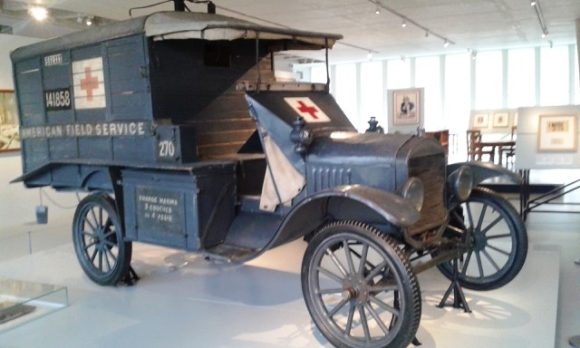
Many volunteers served in ambulances like this one on display in the Museum of Blerancourt during the Great War.

One of them was Anne Morgan (1873-1952)  third daughter of  John Pierpont Morgan, Sr., banker and art collector.
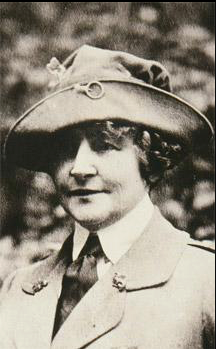
Anne Morgan

She started raising funds to equip the French army as early as 1915, and in 1917 chose the village of Blerancourt, which was in the midst of total devastation, to carry out her humanitarian aid to the wounded soldiers and civilian population. 

The Aisne department (a department in France is the US equivalent of a county) was one of the worst hit battle fields. It is sadly remembered for being the scene of three bloody campaigns all called Chemin des Dames in 1914, 1916 and 1917 . In April 1917 alone, 100,000 French soldiers died on that front. 

Morgan worked from the barracks she erected on the terraces of the Chateau de Blerancourt – a grand 17th century private residence built by the architect who designed the Luxembourg Palace, for Marie de Medicis.  In 1919, Morgan bought the ruins of the chateau and started its restoration. In 1923, she created the association of the Friends of Blerancourt and the following year founded what was to become the Franco-American Museum.

The restored 17th century elegant rooms of the chateau are quite fitting for the historical part of the museum.  French explorers -Jacques Cartier, Father Jacques Marquette-Cavelier de la Salle, Champlain and others  – left their trace in the geography books of the New World. Their names are still vivid but the lands they discovered – from Canada to Louisiana – have long severed ties with France.  Only the St Pierre et Miquelon archipelago remained part of the mother country.

La Fayette was the first Frenchman to enlist in the War of Independence in 1777. With a great deal of panache, in October 1781, the 6,000 men of Count of Rochambeau, joined the Continental Army of George Washington, later the fleet of Admiral de Grasse encircled the English forces.  The combined effort ended in the victorious battle of Yorktown and the rendition of the British.  

Was its support in the conflict beneficial to France?  Some historians do not think so.  Claude Moisy, former president of Agence France Press  (AFP), journalist and specialist in the political history of the US, is one of them and goes as far as to believe that France was caught in a fool’s game.  

During a talk Moisy gave to the France-England Association in 2007, he described the sequence of events, as he sees it: the US Congress had promised not to sign a separate peace with the English, but it did on November 30 ,1782, after secret negotiations.

The real objective for the American government was to resume, as soon as possible, trade and economic relations with Great Britain.  Washington had dispatched Benjamin Franklin to Paris. He soon became the coqueluche (the rage) of the Paris society and suspiciously close to it. The author describes Paris at that time as a “panier de crabes” (can of worms), crawling with spies and foreign agents.

The final peace treaty was only signed 10 months later in September 1783, with the participation of Holland and Spain.

2018, – the year of commemorations marking the 100th anniversary of the Great War- started appropriately with the “Cesars” selecting Au Revoir Là Haut, as best film and best director.  It is based on the 2013 Prix Goncourt novel by Pierre Lemaitre. Two soldiers- nicknamed “poilus” during the Great war-  experience the horror of trench war, including being buried alive .  (the writer may have been inspired by what happened to the poet and art theoretician  Guillaume Apollinaire, who was buried alive three times, underwent trepanation and died in 1918.).  The story continues after the war, when the two heroes, traumatized and disfigured by injuries, witness the sordid traffic of war memorials.
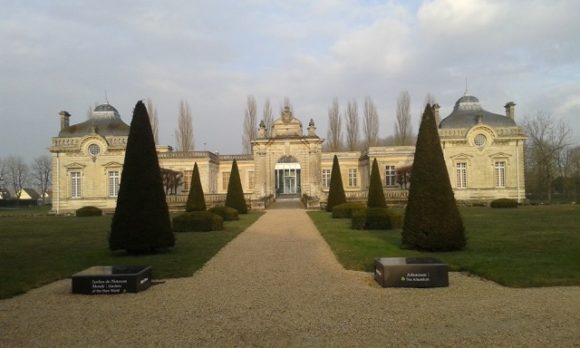
The Chateau de Blerancourt makes a charming picture.

The Blerancourt museum  is a lovely, luminous building,, located at about two hours drive north-east of Paris. The World war I activities of Anne Morgan -including her ambulance, uniform, wartime memorabilia and mobile library- are brought back to life. 

The Art department has just been renovated and contains more than 400 works. The collection  includes paintings by impressionist Childe Hassam, John Singer Sargent and many others.  The arrival of American troops in St Nazaire was caught in Art Deco style by French artist Jean Emile Laboureur in 1918.  Singer and dancer Josephine Baker, appears on the cover of the “Revue Nègre“.  She was born in St Louis, joined the Resistance and is an idol in France.

Editor’s Note: This is the opinion of Nicole Prévost Logan.
Nicole Prévost Logan

About the author: Nicole Prévost Logan divides her time between Essex and Paris, spending summers in the former and winters in the latter. She writes a regular column for us from her Paris home where her topics will include politics, economy, social unrest — mostly in France — but also in other European countries. She also covers a variety of art exhibits and the performing arts in Europe. Logan is the author of ‘Forever on the Road: A Franco-American Family’s Thirty Years in the Foreign Service,’ an autobiography of her life as the wife of an overseas diplomat, who lived in 10 foreign countries on three continents. Her experiences during her foreign service life included being in Lebanon when civil war erupted, excavating a medieval city in Moscow and spending a week under house arrest in Guinea.

Enjoy Irish Music This Evening at the Old Lyme-PGN Library

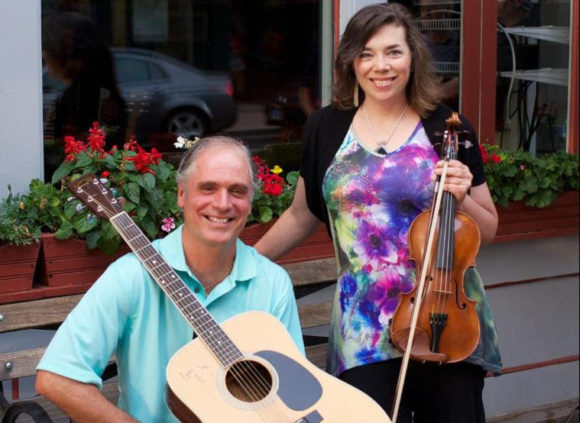
Fiddler Jeanne Freeman and singer/guitarist Dan Ringrose will play Irish music at the OL-PGN Library starting at 6 p.m. this evening.

Continue to celebrate St. Patrick’s Day this evening at 6 p.m. at the Old Lyme-Phoebe Griffin Noyes Library when the Celtic duo of fiddler Jeanne Freeman and singer/guitarist Dan Ringrose will play Irish music for the enjoyment of library patrons.  All are welcome, there is no admission fee and no registration is required.

Freeman’s playing has been described as, “effortlessly virtuosic,” and Ringrose’s voice has been described as, “stunning.”  Together, they bring a lively freshness to traditional and original tunes and songs, along with stories, poetry, and humor.
Both on the faculty of the Connecticut Academy of Irish Music, they have been featured on CT Public Television, at the Greater Hartford Irish Festival, and in many other venues. Enjoy the music and songs of the Emerald Isle as they help celebrate everything Irish in Old Lyme!

LYSB Hosts Community Forum on Vaping Tonight

Vaping paraphernalia

Lyme Youth Service Bureau’s (LYSB) recent survey shows alarming rates of youth vaping in Lyme and Old Lyme. In response, LYSB will host a Community Forum on Youth Substance Use on Monday, March 19, at 7 p.m. in the Lyme-Old Lyme Middle School auditorium to learn more about this growing trend that is popular among teens nationwide.  This is a rescheduled date due to last week’s snowstorm.

A Youth Panel comprising students from Lyme-Old Lyme Schools will participate in the forum to offer insights into the behavior of Lyme-Old Lyme youth in the context of substance use and abuse.

The evening will include:

  • a vaping presentation
  • results of the recent youth survey
  • Q & A with the youth panel
  • available resources

All are welcome to attend this free — and important —  forum.

Talking Transportation: Citizen Anger About Imminent Transport Funding Cuts Needs to be Directed at Legislature

In recent weeks I’ve been criss-crossing the state talking to folks about our transportation crisis:  the proposed fare hikes on trains and buses coupled with service cuts on the branch lines, and the multi-billion spending cuts at CDOT.

I call it the “Winter of our discontent” magical misery tour.

From Woodbridge to New Canaan, from Old Lyme to West Haven, I’ve talked to crowds large and small, explaining what’s going to happen July 1 and why.  Most folks knew something about our impending doom, but they all left unhappy about the cuts’ specific impact on their lives.

Like the First Selectwoman from Old Lyme who said taxpayers were going to have to spend $600,000 repairing a local bridge because, for the third year in a row, CDOT doesn’t have enough money to share with municipalities.

Or the manager of The Roger Sherman Inn in New Canaan who said she’d probably have to close if off-peak train service was cut on the branch, making it impossible for her cooks and waiters to get to work.

But the culmination of all these presentations was last Tuesday night’s public hearing in Stamford before an SRO crowd of 200+ angry residents.  I’d come more to listen than talk, but couldn’t resist and used my allotted three minutes to ask…

“What are we doing here?  Why are we at this hearing when nothing that you or I say tonight will do anything to change the inevitability of these fare hikes and service cuts?  This may be cathartic, but it’s just political theater.  The folks you should really be talking to are not from CDOT but your State Rep and State Senator.  The legislature created this funding problem and only they can fix it.  If they raise the gas tax and get serious about making motorists pay their fair share, none of these service cuts or fare hikes will happen”.

I was speaker number 11 of more than 80 who signed up to speak.  Some of them waited 4 hours for their few minutes in front of the mic.

But not the politicians.  As State Rep’s arrived, they were whisked by the CDOT Commissioner to the front of the speaker’s line, jumping the queue.  The Commissioner is no fool.  He knows who controls his budget and it isn’t the old guy with a walker complaining about the buses.

When the pols spoke it was the usual platitudes but no new ideas.  “Don’t raise fares, find other funding sources,” said one.  What funding sources?  To their credit, some of the pols did stay to listen, but others (including at least one gubernatorial hopeful) did their grandstanding and split.

One State Rep did have the guts to poll the crowd on their appetite for raising the gasoline tax and tolling our roads, both of which got loud support, much to his surprise.  The people have spoken so now’s the time for action.

By the way … what kind of message does it send when scores of New Canaan residents go to the Stamford hearing to oppose rail service cuts but take a chartered bus instead of the train?

People are angry.  But they need to direct their anger not at the CDOT but at the legislature, holding them accountable for their inaction.

Posted with permission of Hearst CT Media

Jim Cameron

About the author: Jim Cameron is founder of The Commuter Action Group, and a member of the Darien RTM.  The opinions expressed in this column are only his own.  You can reach him at CommuterActionGroup@gmail.com

For a full collection of “Talking Transportation” columns, visit www.talkingtransportation.blogspot.com

Family Wellness: Screens, Media and Family Life

How invasive is technology in our lives?  Photo by Alejandro Escamilla on Unsplash

The idea for this column came from a LymeLine.com reader, but there is also a general clamor for information about this topic that I am privy to in my work with families.

Anna and Rosalie Shalom were the picture of old school, imaginative play in their West Orange, New Jersey, home. The two, 5 and almost 3, labored in harmony at their task, preparing an elaborate pretend dinner to be served at the tiny table in their playroom. They set out play plates. They loaded them up with wooden fruits, vegetables, and dairy products. They sat down, ready to dig in. Ah, but first: they whipped out their pretend cell phones to make sure that no pressing pretend calls or texts required their attention. Their parents cringed. Where had they learned that? (See this article published in Time magazine about raising the screen generation)

Well, Anna and Rosalie aren’t in any imminent danger, but we probably understand why this was cringe-worthy for their parents.  I did observe real imminent danger posed by cell phone use just the other day – a young person almost struck by a car while crossing a busy Boston street, chatting on her phone.  (Coincidentally, I was on my way to a conference where topics around children’s phone, screen and media use abounded.)

So how have screens, phones and media affected family life?

Let’s start with a little context to this question.  According to The Moment, a time tracking app with nearly 5 million users, the average person spends four hours per day interacting with his or her cell phone.  The amount of time children 8-years-old and younger spend on phones or tablets had increased 10 fold between 2012 and 2017, according to a study by Common Sense, which also found that in 2017, 42 percent of kids in the same age group had their own mobile device, up from only 1 percent in 2011. I have to admit to shock and knee jerk dismay at these numbers.  It should be noted that TV usage still predominates for young people’s consumption of media. 

I think we all can think of many ways technology has made our lives easer.  What in the world did we do in the past when our car broke down on the road?  When Junior did not know what time play practice finished up?  When grandmother fell?

Media and technology are here to stay.  So what concerns do families have about media use?  Or “problematic media use,” as many psychologists have termed media use that interferes with “RL” (real life)? 

Real life includes when toddlers learn to play with each other (there is some evidence that excessive screen time results in decreased social and emotional development in young children).  Real life also includes the development of closeness and trust, learning logical reasoning, abstract thought, problem solving and creativity (see this story published in the Wall Street Journal about how cell phones hi-jack our minds).  Real life includes separating from parents during freshman orientation (see this article published in the New York Times about the mental health of college freshmen). 

So yes, there is evidence that excessive media use and dependency can interfere with “RL.”  But there still remains much research to do into the “who, what, when, why and how much” questions concerning family media use and screen time.

So what are we families to do while we wait for more research?  Families need to self-monitor as best they by can looking at their media usage and real (family) life.  Commonsensemedia.org may provide some help for us, as perhaps can Anya Kamenetz’s new book, The Art of Screen Time: How Your Family Can Balance Digital Media and Real Life.

I tend to be a bit of a technophobe, but will end on a positive note:  My son, a “digital native,” and my elderly mother bonded over his expertise in technology and her fear and ignorance of all things digital – enhancing both their “RLs” and strengthening their relationship.

Betsy Groth

Betsy Groth is an APRN, PMHS – BC and a pediatric nurse practitioner with advanced certification in pediatric mental health.

She is a counselor, mental health educator and parent coach in Old Lyme and writes a monthly column for us on ‘Family Wellness.’

For more information about Betsy and her work, visit Betsy’s website at betsygroth.com