UConn Professor Discusses ‘Puerto Rico: Wrecked by Storms and Politics’ at SECWAC This Evening

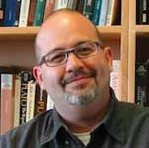
Professor Charles Venator-Santiago

The Southeast Connecticut World Affairs Council (SECWAC) will host Charles Venator-Santiago, Associate Professor of Public Law and Latino/a Politics at the University of Connecticut, to speak at 6 p.m. on Monday, March 5, at Crozier Student Center at Connecticut College in New London.

Venator-Santiago will discuss how Puerto Rico’s constitutional status informs the U.S. response to the devastation of the island’s infrastructure by Hurricanes Irma and Maria, which also caused a humanitarian crisis. This catastrophe has been exacerbated by both the federal and island government’s response to the crisis. This talk will provide an overview of Puerto Rico’s territorial status and examines the island’s future.
A reception will begin at 5:30 p.m., and the main event will begin at 6 p.m. The presentation is a part of the SECWAC Speaker Series. SECWAC meetings are free to members (half-year membership February-June is $37.50/year; $12.50/year for young professionals under 35).  Walk-ins are $20 for the general public (non-members; the $20 cost can subsequently be applied towards a SECWAC membership). SECWAC membership is free for area college and high school students.
Immediately following the presentation, SECWAC meeting attendees have the option for $35 to attend a dinner with the speaker at Connecticut College.  Reservations are required by Friday, March 2, at 860-912-5718.
Charles R. Venator-Santiago is a Associate Professor of Public Law and Latino/a Politics at the University of Connecticut with a joint appointment in the Department of Political Science and El Instituto. He has earned a Ph.D. in Political Science at University of Massachusetts at Amherst and has researched the history of U.S. territorial law and policy with a primary focus on Puerto Rico.
His most recent book is Puerto Rico and the Origins of U.S. Global Empire: The Disembodied Shade (Routledge 2015) (Reviewed and Recommended by CHOICE: http://bit.ly/1Qh9frH). He is also the author of Are Puerto Ricans Really American Citizens?March 2, 2017; The Conversation (reprinted in The Observer, TIME, U.S. News and World Report, Univision, Salon, AP and other venues) (280,000+ reads). Available at: https://theconversation.com/are-puerto-ricans-really-american-citizens-73723
Professor Venator-Santiago has provided research and academic support to Puerto Rican and Latino/a organizations in Hartford and Connecticut during the past decade. He is currently working on a series of projects to provide support to Puerto Rico and Puerto Ricans migrating to Connecticut. He is the Secretariat of the Puerto Rican Studies Association (PRSA) at El Instituto, University of Connecticut.

SECWAC is a regional, nonprofit, membership organization affiliated with the World Affairs Councils of America (WACA). The organization dates back to 1999, and has continued to arrange 8-10 Speaker Series meetings annually, between September and June. The meetings range in foreign affairs topics, and are hosted at venues along the I-95 corridor, welcoming members and guests from Stonington to Old Saybrook, and beyond.

SECWAC’s mission is “to foster an understanding of issues of foreign policy and international affairs through study, debate, and educational programming.” It provides a forum for nonpartisan, non-advocacy dialogue between members and speakers, who can be U.S. policy makers, educators, authors, and other experts on foreign relations. Learn more at http://secwac.org.
Letter From Paris: Annual ‘Salon de l’Agriculture’ Prompts a Peek into Farming in France

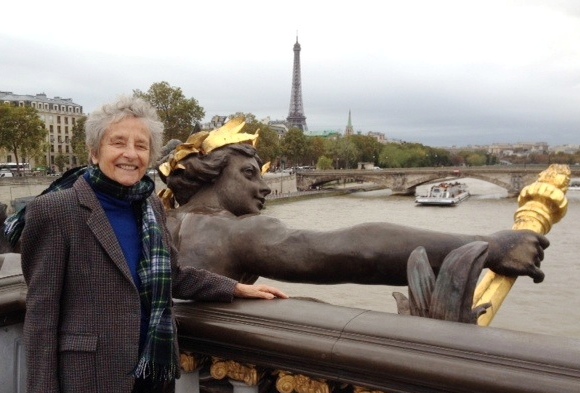
Nicole Prévost Logan

The Salon de l’Agriculture (agricultural fair) is the most popular event of the year in Paris.  For two weeks, the Porte de Versailles is turned into an oversize farm   Four thousand animals – bovines, pigs, sheep and fowl – move in for the delight of both children and adults.  It is the largest agricultural show in Europe.

The French are emotional about their relationship with the countryside and never forget that they share a common rural ancestry and that, just a few decades ago, 25 percent of the population lived and worked on the land. The fair is an opportunity for rural and urban communities to get together and have a good time.

Food is a big attraction at the fair.  Thirty seven restaurants offer culinary specialties from each region: trip à la mode de Caen (tripe cooked in cider and calvados), boeuf bourguignon,  tartiflette (Savoyard gratin with Reblochon cheese, cream and pork), Toulouse cassoulet , bouillabaisse and hundreds more dishes, accompanied by the best wines.

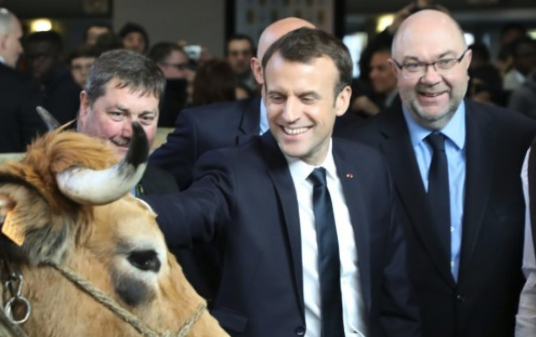
French President Emmanuel Macron meets the much-admired cow named Haute at the Salon de l’Agriculture.

Entertainment reaches its height with the competition for the best animal. This year the star of the show is Haute, a 700 kilo blonde cow of the Aubrac breed raised in Aveyron (a volcanic plateau in the south west), whose big black eyes are made-up with mascara.  Haute has a pedigree in the same way as a racehorse and her offspring are already in line to compete in the 2024 fair – the same year that the Olympics will be held in Paris. 

From the air, the French landscape looks like a beautiful tapestry with colored patches of fields, woods and clusters of roofs huddled around a church steeple. Behind this idyllic picture, it is hard to believe that there is a tough world of fierce competition, hard work, and for some, a struggle to survive . 

Among the 450,606 working farms in France to-day, many of them are small with less than 10 hectares (one hectare is equivalent to 2.47 acres.) Their owners find it hard to make a living. The average income of a farmer is 1,525 euros for month and can be as low as 500 euros, which is well below the poverty threshold.  There are many reasons for this. 

Food today represents only 20 percent of a family budget as compared to 34.7 percent in 1960.   The agri-business and chains of supermarket distributors, in order to increase their profit margin, force the farmers to sell their milk or meat at rock-bottom prices.

Farmers are deep in debt because of the necessity to invest but they have ways to show their anger and frustration, such as pouring manure or truck loads of raw eggs on public squares.  Another effective way is for them to launch an operation escargot (snail offensive.) They bring their five-mile an hour tractors on the highways with the expected result.   

European farmers could not survive without financial subsidies from Brussels.  In 1962, the Politique d’Agriculture Commune (PAC — Common Agricultural Policy) was set up by the European Union (EU) to assist and guide the agriculture of  its members.  The PAC is the second largest item in the EU budget and one of its pillars.  Methods and objectives have changed over the years.  

For a while, it requested farmers to lay fallow their cultivated land.  Quotas for milk were stopped in 2015 and sugar in 2017.  Today the PAC is putting more emphasis on the development of organic food and protection of farmers against the climatic vagaries.  France is the leading agricultural country in Europe with production valued at 71 billion ahead of Germany (56.7 billion), Italy (54.2 billion) and Spain (49 billion.) France remains the top beneficiary of financial assistance from the PAC. 

Most Europeans are hostile to the use of pesticides.  Brussels wanted to set a 10-year-moratorium on the use of the herbicide Glyphosate.  Macron fought and demanded three years.  Finally Brussels decided on a period of five years. 

In France, Monsanto has become the prime bad guy.  Europeans are also against genetically-modified food and the addition of hormones and antibiotics in meat.  The French are getting very finicky about the traceability of products   A couple of years ago, horse meat was found in prepared food produced in Eastern Europe.  The French public went up in arms.   Since then, on every package or can, the geographic origin of the product has to be indicated.

Macron, during his visit to the Agricultural Fair asked the crowd, “Did you know that that 70 percent of the meat you eat in French restaurants is imported?  It makes no sense when French meat is probably the best in the world.”  The president is not a protectionist but, in his eyes, free trade agreements have to be equally  beneficial for both sides.  At present, the signing  of  the Mercosur Treaty between Europe and four South American countries is stalled, leaving Europeans worried.

It is a “must” for each French president to visit the fair.  Macron outdid all his predecessors by mingling with the crowd for more than 12 straight hours.  Always eager to explain his policies, he did not hesitate to plunge into the fray and engage in heated discussions with angry farmers. 

The day before the opening of the Salon, Macron had invited 700 young farmers to the Elysees palace.  As always, his method was not to promise financial assistance, but help his guests find creative solutions to make their farms more competitive.

Editor’s Note: This is the opinion of Nicole Prévost Logan.

Nicole Prévost Logan

About the author: Nicole Prévost Logan divides her time between Essex and Paris, spending summers in the former and winters in the latter. She writes a regular column for us from her Paris home where her topics will include politics, economy, social unrest — mostly in France — but also in other European countries. She also covers a variety of art exhibits and the performing arts in Europe. Logan is the author of ‘Forever on the Road: A Franco-American Family’s Thirty Years in the Foreign Service,’ an autobiography of her life as the wife of an overseas diplomat, who lived in 10 foreign countries on three continents. Her experiences during her foreign service life included being in Lebanon when civil war erupted, excavating a medieval city in Moscow and spending a week under house arrest in Guinea.

Dazzling Red Carpet Oscar Event Tonight Raises Funds for ‘The Kate’


The Katharine Hepburn Cultural Arts Center (the Kate) will hold an Oscar Party benefit on Sunday, March 4beginning at 7 pm at the center located at 300 Main Street, Old Saybrook. This annual red-carpet event honors the Kate’s 12-time Oscar Nominated, 4-time-winning namesake and makes for an entertaining evening.  Proceeds support quality performing arts and cultural presentations at the Kate throughout the year.

“This event has always been volunteer-driven and I’m so proud of what we’ve accomplished over the past eight years to support the Kate,” said Diane Hessinger, Oscar Party chair. “Not only is it a very fun evening, but it’s a perfect way to pay homage to our namesake, Katharine Hepburn and raise funds to expand the arts on the Connecticut shoreline.”

Delicious hearty hors d’oeuvres and desserts are provided by Fresh Salt and a cash bar is available while the 90th Academy Awards ceremony airs live on the Kate’s big screen. Guests will walk the red carpet, pose for photos, and have the chance to hold a real Oscar, thanks to Devin Carney, state representative and grandson of the late award-winning actor Art Carney. Carney is an honorary chair of the event along with Ann Nyberg of WTNH, both members of the Kate’s board.

A silent auction and raffle add to the fun of the evening and, new this year, is the Becker’s Diamonds & Fine Jewelry of Old Saybrook “Mystery Red Box” activity. Fifty jewelry boxes wrapped in a vibrant red paper are available for purchase with each box containing a Becker’s gift certificate and one grand prize box holding a beautiful 14k gold bracelet with forty-nine diamonds.

For tickets, visit www.thekate.org or call 877-503-1286.

The 2018 Oscar Party is held in memory of Beverly Whalen, a long-time volunteer at the Kate who gave generously of her time and helped launch this event. The evening is sponsored by Becker’s Diamonds & Fine Jewelry of Old Saybrook, Secor Volvo, Comcast, Gulick & Co., Pough Interiors, and Saybrook Point Inn Marina & Spa.

The Katharine Hepburn Cultural Arts Center (the Kate) is a non-profit performing arts organization located in the former theatre and town hall, which is listed on the National Register of Historic Places, on Main Street in Old Saybrook. The Kate includes a 250-seat theatre and a small museum honoring Katharine Hepburn. From live music concerts, to children’s arts camp, to films of fine art, and the MET Opera and Bolshoi Ballet simulcasts, events presented at the Kate help to shape the community, making it brighter and more imaginative.

Rep. Carney Declares Testifies to Government Administration and Elections Committee,

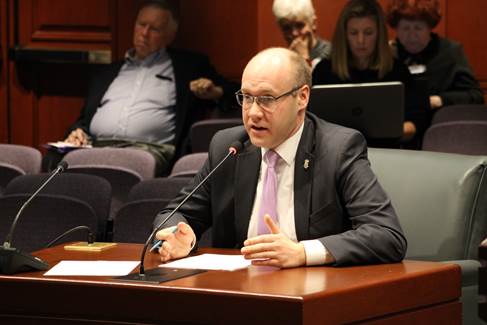
Rep. Carney testifies Feb. 26 in support of SB 180: An Act Requiring Executive and Legislative Review of Certain Quasi-Public Agency Contracts.

State Representative Devin Carney (R-23rd) testified during a public hearing of the Government Administration and Elections (GAE) Committee on Monday, Feb. 26, in support of SB 180: An Act Requiring Executive and Legislative Review of Certain Quasi-Public Agency Contracts. This proposal would require greater executive and legislative oversight of quasi-public agency contracts by requiring the submission of certain contracts to the Attorney General and relevant legislative committee

Rep. Carney said, “Connecticut is currently in the midst of a fiscal crisis due to overly generous employee contracts and poor management of said contracts. Folks throughout this state are feeling the pinch of higher taxes and poorer state services while at the same time reading about quasi-public agencies giving away six-figure salaries and bonuses without any oversight from the General Assembly.”

He continued, “It is time to change that culture and this legislation, if passed, would allow the people to have a voice before contracts over $100,000 are approved.”

While testifying before the GAE Committee Rep. Carney pointed to the Connecticut Airport Authority and the CT Lottery as two examples of this current issue with “quasi-public” agencies.

Rep. Carney said that this proposal would allow for more transparency and oversight, which Connecticut residents desperately need as they are feeling the burden of the state budget and, at times, asked to pay more.

He added, “There is no reason these quasi-public agencies are allowed to avoid tough questions about their practices and provide answers surrounding bloated pay and benefits while others are asked to cut and save wherever possible.

Inspiring Array of Speakers Speak at TEDxTheCountrySchool Today

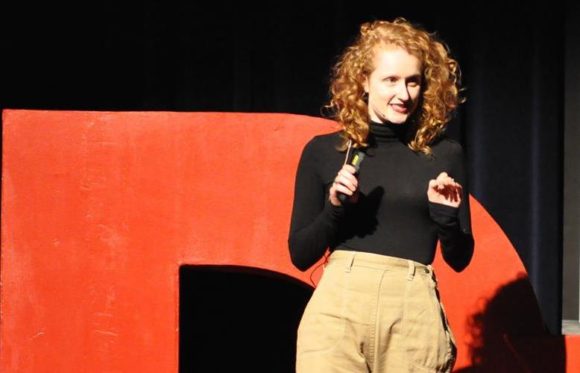
Sophia Harvey, a filmmaker and Country School and Lyme-Old Lyme High School graduate, speaks at the 2016 TEDxTheCountrySchool event.

On Saturday, March 3, The Country School will present TEDxTheCountrySchool, featuring short, thought-provoking talks delivered by a diverse and inspiring list of speakers. This family-friendly event, The Country School’s second TEDx conference, will also include fun, hands-on activities for attendees of all ages. All are welcome.

The conference will take place from 8:30 to 11:30 a.m. in the school’s DeFrancis Gymnasium. Learn more and register at www.thecountryschool.org/tedx.

Featured speakers include:

Robert D. Ballard, the renowned explorer and scientist who has taken part in more than 140 deep-sea expeditions. He is the Founder and President of the Ocean Exploration Trust, an Explorer-In-Residence at the National Geographic Society, Commissioner for the U.S. Commission on Ocean Policy, and has served in the U.S. Navy for more than 30 years. A riveting speaker, Dr. Ballard is perhaps best known for discovering the RMS Titanic.

Fahima Ali, an outspoken advocate for the rights of women and girls. A first-year student at Columbia University, she plans to major in Human Rights and Business Management. Ali was born and raised in Somaliland, and has led efforts to help girls in her homeland gain access to education. She has also spearheaded a campaign to assist families affected by famine and drought.

Anders Waldo, a student at the University of Connecticut studying Speech, Language, and Hearing Sciences. At UConn, Waldo is involved in Husky Adapted Sport and Conn-Men, an all-male a cappella group. After graduation, he looks forward to attending graduate school to pursue his masters in speech pathology.

Theresa Govert, a community activist and founder of Together We Rise, a group founded on the notion that “no one is free while others are oppressed.” She served in the Peace Corps for three years and was the recipient of the United States Peace Corps John F. Kennedy Service Award.

John Fixx, educator, coach, and author. An educator for more than three decades, Fixx serves as Head of School at The Country School, where he also coaches cross country and has inspired scores of students to take up the sport of running. Several of those athletes have gone on to compete locally, regionally, and nationally. He is also an author; his children’s book, The Curious Guide to Things that Aren’t, was published in 2016.

Marina Sachs, an artist and educator committed to empowering diverse young people through art-making. Sachs also coordinated The Country School’s first-ever TEDx conference in 2016. To learn more about her work with Lakota Youth Speak and developing TEDxTheCountrySchool, visit www.marinasachs.com. She is a 2007 Country School graduate.

Aristotle Mannan, founder of bosWell, a digital health startup aimed at improving coordination of care for our country’s most vulnerable citizens. His vision for bosWell came after leaving a job in cancer research at the Broad Institute of MIT and Harvard to volunteer at a mobile health clinic serving homeless people. Mannan is a 2003 Country School graduate.

Matthew Siracusa, CEO of WEWOOL, a business that works to provide socks to homeless individuals in Connecticut. Through WEWOOL, for every pair of socks purchased, one is given to someone in need. Siracusa had the vision for WEWOOL while running a breakfast outreach ministry in Hartford. Since then, WEWOOL has helped donate thousands of socks to those in need.

Mohamed H., a local 6th Grader originally from Syria.  Mohamed was born in Aleppo and lived there with his family until the war forced them to flee their homeland. Mohamed and his family ended up in Turkey with thousands of other Syrian refugees and lived there until, almost two years ago, they learned they had been accepted into a resettlement program and could move to a place called Connecticut. Mohamed loves his new life. He loves his friends, soccer, and spicy food, and he really, really loves school.

The Country School is a PreSchool-8th Grade coeducational independent day school serving students from across the shoreline. The TEDx program is a natural offshoot of the school’s Signature Programs, which include Public Speaking and Elmore Leadership as well as STEAM and Outdoor Edcuation.

Learn more at www.thecountryschool.org/signature-programs. This event marks the second time The Country School has held a TEDx conference. To learn about the 2016 event, visit https://www.thecountryschool.org/tedx/tedxthecouuntryschool-2016.

All talks and activities on March 3 will take place in the school’s DeFrancis Gymnasium, located on The Country School campus at 341 Opening Hill Road in Madison. This event is open to the public.