Cappella Cantorum Concert Registration Scheduled for Monday

Cappella Cantorum Men’s Chorus by Madeleine Favre of Deep River.

Registration and first rehearsal for Cappella Cantorum’s 2017 Christmas concert will be Monday, Sept. 11, at 7 p.m. at John Winthrop Middle School, 1 Winthrop Rd., Deep River. No auditions are required.

All are welcome to join Cappella Cantorum and its new director, Simon Holt, to prepare for the Dec. 2 concert. Holt is also the artistic director of the Salt Marsh Opera and director of music at the First Congregational Church of Old Lyme. He joins Cappella in its 48th year.

The program will feature Bach’s Cantata #140 (“Sleepers Wake”), Rutter’s “Gloria” and Vaughan Williams’ “Fantasia on Christmas Carols.”

Registration fee is $40; music is $20. Late registration will be Sept. 18, same time and place. Use the rear entrance.

For more information or to register in advance, visit www.CappellaCantorum.org.

SECWAC Hosts Irish Scholar, Author on Monday to Discuss a Century of Gender Equality Activism in Ireland

The Southeast Connecticut World Affairs Council (SECWAC) will host Irish author and independent scholar Micheline Sheehy Skeffington, pictured left, at 6 p.m. on Monday, Sept. 11, at Lyme-Old Lyme Middle School Auditorium, located at 53 Lyme St, Old Lyme, CT, 06371. She will deliver remarks based on her social activism and the history of her family’s involvement in Irish nationalism.

Sheehy Skeffington’s address will be preceded by a reception at 5:15 p.m., and the SECWAC Annual Meeting at 5:45 p.m.

This is part of her tour from Ireland to follow in her grandmother’s footsteps across the U.S. during the suffrage movement in 1917 (https://www.indiegogo.com/projects/hanna-and-me-passing-on-the-flame.) She inherited her activism from her illustrious grandparents, Hanna and Francis Sheehy Skeffington, who were renowned early 20th century suffrage activists and Irish nationalists.  A pacifist who tried to stop looting in Dublin during the 1916 Easter Rebellion, Francis was arrested by British soldiers and, without trial or due process of any sort, executed by firing squad along with two other innocent civilians who were journalists. Their murders contributed to the transformation of public opinion after the rebellion was suppressed.

In the face of British objections, Hanna visited the US in 1917, speaking on behalf of the cause of Irish independence at many cities from New York to Butte (Montana) to San Francisco.

She will also discuss 21st century gender equality issues in the workplace in Ireland. In 2014, Sheehy Skeffington, a retired professor of plant ecology, won a gender discrimination case against the National University of Ireland (NUI) Galway, with the Irish Equality Tribunal pointing to multiple failures in the promotion procedure that echo barriers faced by female academics in other Irish and international universities.  She continues to campaign on the issue of gender inequality in academia, having donated her compensation money to help five other female lecturers in challenging their promotion decisions.

The presentation is a part of the SECWAC Speaker Series.  SECWAC meetings are free to members ($75/year; $25/year for young professionals under 35).  Walk-in’s are $20 for the general public (non-members; the $20 cost can subsequently be applied towards a SECWAC membership) and free for area college and high school students.

Immediately following the presentation,  SECWAC meeting attendees have the option to attend a dinner at Old Lyme Country Club with the speaker for $35.  Reservations required by Friday, Sept. 8, at 860-912-5718.

SECWAC is a regional, nonprofit, membership organization affiliated with the World Affairs Councils of America (WACA). The organization dates back to 1999, and has continued to arrange eight to 10 Speaker Series meetings annually, between September and June. The meetings range in foreign affairs topics, and are hosted at venues along the I-95 corridor, welcoming members and guests from Stonington to Old Saybrook, and beyond.

SECWAC’s mission is “to foster an understanding of issues of foreign policy and international affairs through study, debate, and educational programming.” It provides a forum for nonpartisan, non-advocacy dialogue between members and speakers, who can be U.S. policy makers, educators, authors, and other experts on foreign relations. For more information, visit www.secwac.org.

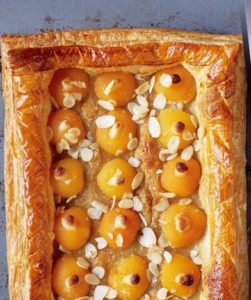
A La Carte: Apricots and Almonds Make Great Galette!

Apricot and Almond Galette

My mother always wanted to live in San Diego, but as far as she got was Troy, NY.

She was born in the beginning of the 20th century, died in the beginning of the 21st century and was buried in an ecumenical cemetery not more than 20 blocks or so from where she lived her whole life.  San Diego, she said, correctly, had the perfect climate: fairly sunny, warm in the daytime and cooler at night. No snow ever.

For me, almost any season is okay. I like the autumn smell of wood smoke in the air and in winter, curling up with two cats as I read long, meandering novels. Spring never seems to linger too long and, now, we bid adieu to summer.

No matter the season, I love to cook. I am still having such fun with all the summer vegetables. I eat two or three tomatoes a day. I am grilling zucchini and summer squash outside or sautéing them with a little butter and garlic and salt on the cooktop in the kitchen. Last night I roasted a spaghetti squash, then tossed the innards with chopped tomatoes, basil and a little butter. Today I will make a frittata with sweet peppers for a 9:30 am meeting at my house.

Next weekend I will make a little dessert with fresh peaches and almonds. The recipe below, from calls for apricots, but any stone fruit will do.

Apricot and Almond Galette

From Bon Appetit, June, 2017

Yield: 4 servings

One-half cup blanched almonds
One-third cup sugar, for more for sprinkling
1 large egg
4 tablespoons unsalted butter, at room temperature
One-half teaspoon almond extract (optional, but I do love almond extract)
One-half teaspoon pure vanilla extract
Pinch of salt
1 tablespoon all-purpose flour (plus more for surface)
1 package frozen puff pastry, preferably all-butter, thawed
12 apricots (about 1 and one-quarter pound), halved and pitted (or other stone fruit, quartered if large)

Place a rack in middle of oven and preheat to 425 degrees. Pulse almonds and one-third of sugar in a food processor until very finely ground. Add egg and pulse to combine. Add butter, almond extract (if using), vanilla extract, salt and 1 tablespoon flour; pulse until almond cream is smooth.

Roll out pastry on a lightly floured surface just enough to smooth out any creases.

If you are using a package of pastry than as 2 sheets, stack and roll out to a one-quarter- to one-third rectangle.

If your package contains a single 16-inch to 10-inch sheet of puff pastry, halve it crosswise and roll out one half on a lightly floured surface until rectangle is one-quarter to one-third inch thick, saving remaining half for another use. Transfer to a parchment-lined (or Silpat-lined) baking sheet. Fold over edges of pastry to make a one-half inch border around sides. Prick surface all over with a fork (this keeps the pastry from rising too much when baked and helps it cook through. (Spread almond cream over pastry, staying inside borders. (Chill dough in the freezer for a few minutes if it becomes too soft to work with.) Set apricots, cut sides up, on top of the cream. Sprinkle lightly with sugar.

Bake until pastry is golden brown and puffed, 15 to 20 minutes. Reduce oven temperature to 325 degrees and continue to bake until pastry is deep golden brown and cooked through and apricots are softened and browned in spots, 15 to 20 minutes longer.

Tickets Now Available for 44th Season of Collomore Concerts in Chester

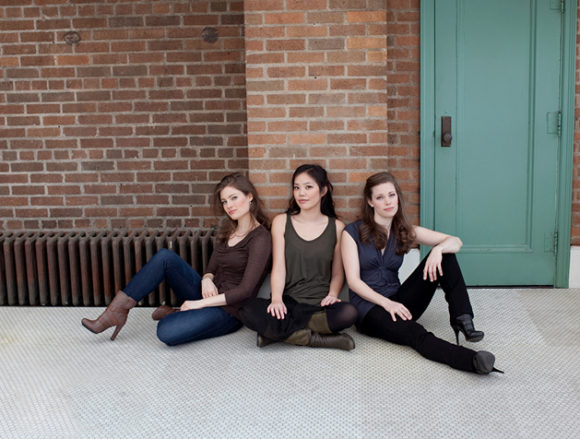
The Claremont Trio opens the 44th season of the Collomore Concerts on Sept. 24.

CHESTER — For its 44th season, the Robbie Collomore Music Series will offer all four of its concerts in the fall, between Sept. 24 and Nov. 26. These will be on Sundays at 5 p.m. in the historic and charming Chester Meeting House. It is now the time to buy your season subscription.

Beginning the season, on Sunday, Sept. 24, is the Claremont Trio, brought to Chester as the Barbara and Edmund Delaney Young Artists Concert. Called “one of America’s finest young chamber groups,” these three young women have performed worldwide to great acclaim, both as a trio and as individual soloists. One reviewer wrote, “Their exuberant performance and gutsy repertoire… was the kind of fresh approach that keeps chamber music alive.” Their Chester concert will feature sonatas by Bach, Debussy, Britten and Rachmaninoff.

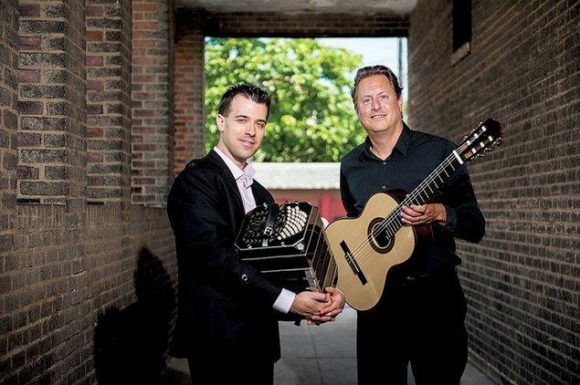
Internationally renowned Jason Vieaux and Julien Labro pair up on classical guitar and bandoneon on Oct. 15.

In recent years, Jason Vieaux and Julien Labro have thrilled Collomore Concert audiences separately – Jason playing classical guitar in a solo concert and Julien playing accordion with the Detroit Hot Club. When the Collomore committee heard they had joined forces touring, playing the guitar and bandoneon, they jumped at the opportunity to have them return to Chester on Sunday, Oct. 15.  You can expect something “entertaining, fun, exciting, virtuosic in the unusual pairing of these two instruments. The program contains some modern classical, world music from Brazil and Argentina, and even some pop music.”

Latin Jazz comes to Chester on Nov. 5, with the Curtis Brothers Quartet featuring Ray Vega, percussionist.  The Curtis Brothers Quartet takes bold steps towards a modern Latin Jazz sound, fearlessly pushing their musical approach into new territories. Their unique rhythmic concept is what separates them from most other jazz quartets. All of their music, original or not, is based on the percussive concepts that they have accumulated through their various musical experiences.

And on Nov. 26, the soulful songs of the Gullah culture will be brought to life by Ranky Tanky, a five-piece band of native South Carolinians who mix the low country traditions with large doses of jazz, gospel, funk, and R&B. They’ve been called “infectious, intoxicating and exotic” with
“frisky and hypnotic rhythms with a bone-deep mix of spirituals and gutbucket blues.”

Buy a season subscription now and save money, plus you’ll be certain you will have a seat even when a concert is sold out. A subscription to all four concerts is just $98. Individual concert tickets cost $28. For students from elementary through graduate school, a subscription is $15 ($5 per concert). Tickets and subscriptions can be purchased online at www.collomoreconcerts.org using PayPal. All ticket-holders are invited to stay for a reception after the concert to meet the performers. For more information, check the website or call 860-526-5162.

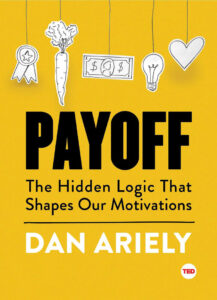
Reading Uncertainly? ‘Payoff’ by Dan Ariely

What is “motivation” and how does it affect our daily activity? Is motivation “central to our lives”? Dan Ariely, a professor of behavioral economics at Duke University, explores the human feeling of identification with and empathy for others, suggesting these two feelings help stimulate motivation, while their absence destroys it.

This brief book (103 pages) combine stories from Dr. Ariely’s personal life and his continuing work studying our strange behaviors. It continues his earlier work: Predictably Irrational, The Upside of Irrationality, and The (Honest) Truth About Dishonesty, all of which I’ve read with fascination.

At the very start, the author describes his own teenage accident in Israel, in which he sustained severe burns over some 70 percent of his body, leading to three years of hospitalization and slow and painful recovery. It was then he began to discover the idea of motivation, enlarged later when he helped a friend’s two teenage children, similarly injured.

As he writes, “I also realized how many of our motivations spring from trying to conquer a sense of helplessness and reclaim even a tiny modicum of control over our lives.” Any success in such an effort becomes a “feeling of accomplishment.” This then leads to the need to “look closely at the positive side of motivation,” creating pleasure and affection for your own handiwork.

But does financial reward motivate us? Ariely suggests “money matters far less than we think.” We should avoid “overemphasizing the countable dimension and beware (my italics) treating the uncountable dimension as if it were easily countable.” This skewers the old adage that if you can’t count it, it doesn’t exist!

He continues: “In short, these findings suggest that when we are in the midst of a task, we focus on the inherent joy of the task, but when we think about the same task in advance, we over-focus on the extrinsic motivators, such as payment and bonuses. This is why we are not good predictors of what will motivate us and what will crush our motivation. This inability to intuit what will make us happy at work is sad.” Trust and goodwill seem to be far better inspirations than cash … Is it possible that large bonuses are actually counterproductive?

Dr. Ariely concludes: “We are certainly far from grasping the full complexity of motivation, but the journey to understand  … (its) nuances … (is) exciting, interesting, important and useful.”

As usual, brevity enhances comprehension. A short book motivates continued reading!

Editor’s Note: ‘Payoff ‘ by Dan Ariely is published by TED Books, New York 2016.
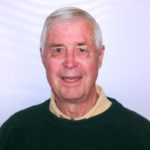
Felix Kloman

About the Author: Felix Kloman is a sailor, rower, husband, father, grandfather, retired management consultant and, above all, a curious reader and writer. He’s explored how we as human beings and organizations respond to ever-present uncertainty in two books, ‘Mumpsimus Revisited’ (2005) and ‘The Fantods of Risk’ (2008). A 20-year resident of Lyme, he now writes book reviews, mostly of non-fiction that explores our minds, our behavior, our politics and our history. But he does throw in a novel here and there. For more than 50 years, he’s put together the 17 syllables that comprise haiku, the traditional Japanese poetry, and now serves as the self-appointed “poet laureate” of Ashlawn Farms Coffee, where he may be seen on Friday mornings. His wife, Ann, is also a writer, but of mystery novels, all of which begin in a bubbling village in midcoast Maine, strangely reminiscent of the town she and her husband visit every summer.