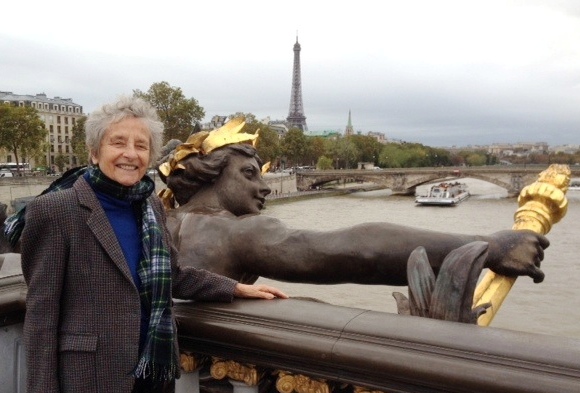
Nicole Prévost Logan
“The sixty years since the Treaty of Rome, on March 25, 1957, have not been a long quiet river for Europe”, commented academic Robert Frank. This is an understatement. Today, the disaffection for the European Union (EU) has reached such a point that the need for its re-foundation is considered a matter of survival.
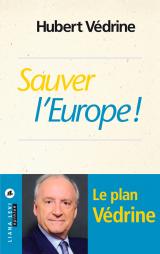 A good place to start the soul-searching process is by reading a gem of a book, written by a former diplomat and one of the most influential French scholars on foreign affairs today. The book has the merit of being very short but so dense in meaning that every single word deserved to be pondered over. The book is called Sauver l’Europe and was published on Nov. 21, 2016. The author, Hubert Vedrine, born in 1947, was a collaborator of president Francois Mitterand from 1981 to 1995 and served as minister of foreign affairs from 1997 to 2002 under president Jacques Chirac.
First, the author makes a diagnosis regarding what went wrong.
- The EU has been working against nations instead of with them. A federalist Europe, with a superpower in Brussels, Vedrine thinks, is a utopia. Unlike the USA, Europe is made of nations with different cultures, languages and history. “There is no democratic path to federalism for Europe.”
- The “elites” in Brussels have grown increasingly disconnected from the people. There is a perception that an accumulation of treaties are drowning the public without acknowledging the opposition. In the collective memory the worst grievance was when France and the Netherlands said “no” in a referendum about the 2005 constitutional project. Two years later that project was repackaged and forced through in the treaty of Lisbon. (Note: this is not entirely true because the second text included several positive modifications)
- Over the years, Brussels, has interfered too much into the people’s lives in imposing annoying regulations: how to make cheese, set the size of bananas or of the shower heads. Europe cannot take care of everything. The key word is “subsidiarity.” It means that competence not attributed to the Union by treaty should belong to the member states. Vedrine writes, “Europe was built upside down and should undergo a drastic cure of subsidiarity by simplifying the autistic hypertrophied regulations. “
- “Sovereignty” is a hard-won concept one should be proud of. The final objective of Europe is not to dissolve the sovereignty of the member states but add to it.
- Many critics of Europe confuse the EU and globalization. One by one, French factories have disappeared, for not being competitive enough. One of the first ones to close was Moulinex. In 2001 everybody went up in arms against the loss of jobs at the small plant of Normandy . In 2016, when the Whirlpool plant was relocated to Poland, outsourcing had become the norm. Whether the phenomenon occurred inside Europe or in Asia, the impact on people who lost their jobs in France was the same.
- With the wild expansion of Europe to 27 (nine new members entered the Union in the single year of 2003), it has become hard to run a such a cumbersome structure, especially when some of the states give the priority to their national interests. This is particularly true with the populist attitude of the Visegrad Group – Poland, Hungary, Czech Republic and Slovakia – which showed no solidarity with the rest of Europe at the time of the refugee crisis.
- The arrival of more than 1.5 million refugees in 2015 and also in 2016 has shaken a system unprepared for such a brutal surge. The huge number of immigrants created an unavoidable confrontation between different ways of life, the loss of identity, exasperated by fear of terrorism,
- The adoption of the Euro has meant further constraints for the 17 members of the Eurozone. The 1992 Treaty of Maestricht set two basic rules; the general government deficit should not exceed 3 percent of the gross domestic product (GDP) and the public deficit should not exceed 60 percent of the GDP.
In the opinion of Vedrine, the solution to the problems listed above is not for more integration and certainly not more enlargement. One needs to mark a pause, to listen to the people and to re-center Europe on the essential. One should return to the values of the founding fathers. Remember how Jacques Delors, who was president of the European Commission from 1985 to 1995, called the EU a “federation of States-Nations” .
To prepare for the celebrations making the 60th anniversary of the 1957 Treaty of Rome, Jean-Claude Juncker, president of the Commission, issued a White Paper offering several scenarios for the 2025 horizon. One of them was to “allow the member-states to move forward, if they wish, in very specific areas. ” The goal is that no one should feel excluded.
On March 6, 2017 the leaders of Germany, France, Italy and Spain met for a mini-summit in Versailles to discuss a Europe à plusieurs vitesses (going at different speeds.) This was a format never seen before and maybe a preview of what lies ahead.
The American economist Joseph Stiglitz advocates an éclatement (breaking up) of the Euro group into four more flexible zones, until the conditions for more integration are met.” The opinion of the IMF (International Monetary Fund) and OCDE (Organization of Cooperation and Economic Development) and other economists is that the EU had gone to too far on the method of austerity. The priority now is to create sustainable growth, rather than reduce the deficit .
The most ambitious proposal for European defense so far has been made by the Robert Schuman Foundation. It calls for Germany, France and the UK to sign an intergovernmental treaty for defense and security of the EU. Let us show more solidarity and agree to share the burden of military expenses before pronouncing empty words like “European defense.”
The author of “Save Europe” points to the mistakes made by Angela Merkel: abandoning nuclear, after Fukushima, without enough preparation for what to do next; extending a “generous but too personal” invitation to the refugees to come to Europe and single-handedly signing an agreement with Turkey.
Vedrine wants the European way of life to be preserved. Even though many complain, there is in Europe a douceur de vie (gentle pleasure of life) one should treasure. Let Brussels set objectives and the States go their own way .
A recurrent slogan in the campaign speeches of Marine Le Pen (and of other anti-European populists), is to put la patrie (homeland) first. By demonstrating that it is possible to keep one ‘s sovereignty, to show it is not a sin to be a patriot and at the same time be a European, would be an effective way to obliterate her arguments.
On March 29, Donald Tusk, president of the European Council, received with emotion the letter from the British Ambassador, marking the departure of the UK from the EU at the outset of the Brexit. It was, however, both reassuring and encouraging to read this the upbeat remark in Sauver l’Europe , “The idea of a continental partnership between the UK and the EU, expressed by the Brussels-based Bruegel think-tank, could solve many problems.”
Let us hope this concept is pursued.
Editor’s Note: This is the opinion of Nicole Prévost Logan.
 About the author: Nicole Prévost Logan divides her time between Essex and Paris, spending summers in the former and winters in the latter. She writes a regular column for us from her Paris home where her topics will include politics, economy, social unrest — mostly in France — but also in other European countries. She also covers a variety of art exhibits and the performing arts in Europe. Logan is the author of ‘Forever on the Road: A Franco-American Family’s Thirty Years in the Foreign Service,’ an autobiography of her life as the wife of an overseas diplomat, who lived in 10 foreign countries on three continents. Her experiences during her foreign service life included being in Lebanon when civil war erupted, excavating a medieval city in Moscow and spending a week under house arrest in Guinea.