SECWAC Presents UConn Professor Pieter Visscher Tonight in Old Lyme Speaking on ‘Lithium in the Andes’

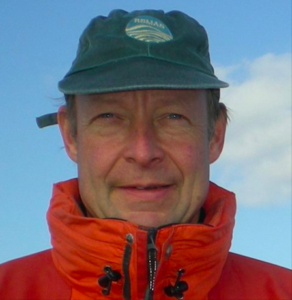
Professor Pieter Visscher

The Southeast Connecticut World Affairs Council (SECWAC) presents Pieter Visscher — professor of marine sciences at the University of Connecticut and director of the university’s Center for Integrative Geosciences — speaking on “Lithium in the Andes” at Lyme-Old Lyme Middle School on Tuesday, March 21, at 6 p.m.

His presentation will explore the ecological, economic and geopolitical impact of the world’s largest lithium mines – which are located in the Andes and provide more than 600,000 tons of this metal annually for use in lithium batteries.  Mining of these lithium reservoirs makes a significant impact on the fragile Andean ecosystem.

The mining process requires substantial amounts of water, yet many of the mines are located in the Atacama Desert, the driest place on the planet.  While the Chilean government works with mining companies and local populations on conservation efforts, significant socio-economical, ecological and political tensions remain.

Tickets are $20 for the general public, and free for area college and high school students and SECWAC members; tickets can be obtained at info@secwac.org. (Ticket cost can subsequently be applied towards a SECWAC membership.)  Reporters are welcome to attend as guests of the SECWAC Board.  (Interested reporters should contact Paul Nugent at info@secwac.org or 860-388-9241.)

The event will be preceded by a 5:30 p.m. reception.  Immediately following the presentation, SECWAC members with reservations (made at least 24 hours in advance) will reconvene for dinner ($35) at the Old Lyme Country Club.

Prior to joining the university, Visscher worked for Hawaii’s Oceanic Institute, the University of Miami’s Rosenstiel School and the US Geological Survey.  He is a founding member of NASA’s Astrobiology Institute.

Funders of his research have included NASA, NSF, NIH, EPA and DOE. His current research focuses on biosignatures (changes in rock or atmosphere that provide evidence for life).

Visscher holds graduate degrees in chemistry, environmental law and microbiology from the University of Groningen in the Netherlands.  He is currently a Fulbright Specialist and travels extensively to Argentina, Bolivia and Chile, where he is involved in conservation issues.

The presentation is a part of the SECWAC Speaker Series.  SECWAC is a regional, nonprofit, membership organization affiliated with the World Affairs Councils of America.  Its mission is to foster an understanding of issues related to foreign policy and international affairs through study, debate and educational programming.

Through its annual Speaker Series, SECWAC arranges up to 10 presentations a year that provide a public forum for dialogue between its members and experts on foreign relations.  Membership information is available at www.secwac.org.

Letter From Paris: The Netherlands to the Rescue

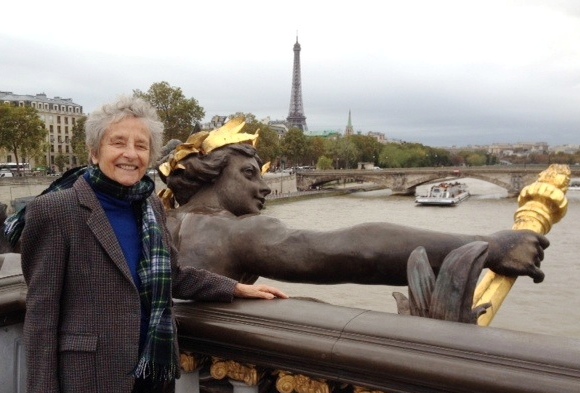
Nicole Prévost Logan

Thank goodness for The Netherlands!  

Their March 15 vote for their House of Representatives was exactly what Europe needed at this point – the reassuring voice of a founding member of the European Community (EU) expressing its belief in Europe while being open to the world. The result was greeted with a sigh of relief by pro-Europeans. It was another sign — after the victory of the Green Party-backed Independents in the Austrian elections of December 2016 — that populism and rejection of Europe are not inescapable. 

A brief look at history will help better understand the elections of The Netherlands and realize how coherent the Dutch position is.  During its “Golden Age” in the 16th and 17th centuries,  Holland was an opulent merchant class society marked by Calvinist ethics of discipline and frugality.  It stood out as being tolerant toward religions and a place where liberty of conscience was inscribed in the constitution.

The founding of the Dutch East India Company opened a maritime and commercial empire, becoming a hub of finances and trade. The first ever stock exchange was created in Amsterdam.  Erasmus (1466-1536), the humanist Renaissance scholar, gave his name to a most successful student exchange program established in 1987.

Someone described The Netherlands of that time as having high literacy and low interest. Rotterdam, until recently the largest port in the world, is still number one in Europe.  What was tolerance has developed into permissiveness and it is one of the dominant traits of the Dutch people today.  Finally, that small country, located well below the sea level, has shown incredible courage in carrying out its Pharaonic fight against the elements. 

“The Netherlands is the country, which has the most to lose from the Brexit” says Marc-Olivier Padis, from the Terra Nova Think Tank.  It shares with the UK an attachment to free trade policies and also to the unhindered circulation of goods and capital within the European Common Market.  Holland’s agriculture, horticulture and dairy industry have always profited from Europe’s Political Agricultural Policy (PAC). The reason the Dutch voted “No”  to the 2005 referendum on a European constitution was because they  worried about the seemingly uncontrolled expansion of Europe, especially with Holland being the largest of the small countries in the continent.

The participation in the March 15 elections was incredibly high at 77.6 percent.  The ballot system by proportional representation produces multiple parties.  In order to be able to govern, any of the 28 parties has to join a coalition with others. 

Here is a snapshot  of the votes showing the changes since the 2012 elections.  The winner was Mark Rutte (VVD), former prime minister, head of the conservative liberal centrist party with 21.3 percent votes and 33 seats. He lost eight seats.  In second place, the far-right Party for Freedom (PVV), led by Greet Wilders, obtained 13.1 percent and will have 20 seats. Two pro-European parties, Christian democrat Appeal (CDA) and centrist reformer (D66) won 19 seats each.  Those two may share an alliance with Rutte.    

Rutte said he would not join Wilders again, as he had done in 2012.  The Labour party Social democrats (PVDA) collapsed going from 29 seats to only nine seats.  The radical left also did not perform well.  One notes two interesting developments: a young 30-year-old had a spectacular rise — Jesse Klaver has a Dutch-Indonesian mother and a  father of Moroccan origin.  His party, Groenlinks (GL)  or green- left, will secure 14 seats.

A new party, Denk, meaning “think”, headed by Unahan Kuzu, received 2 percent of the votes and will have three seats.  It is 100 percent Moslem.

Wilders, the “peroxide candidate,” leader of PPV, the only extremist party,  gained five seats.  He progressed but did not win.  “We are the party, which did not lose,” he commented.”  He is well-known for his outrageous attacks against Islam.  He wants to outlaw the Koran , close all mosques and expel the Moslems.  As a consequence, he is under constant threat.

For the past 13 years he has been living in a safe house with  a “panic room,” is under police protection round the clock and rides in an armor-plated car.  “I would not wish my life to anybody”  A “buffer zone,” to use the expression of German journalist Michaela Wiegel, isolates Wilders in the parliament. 

The Dutch elections took place at a time of high tension between Ankara and Europe.  The Turkish minister of foreign affairs Mevlut Cavusoglu was about to land in Rotterdam as part of a political campaign among the Turkish diaspora of  2.8 million.  Recep Tayyip Erdogan’s objective is to gather the Turkish population’s support prior to the April 16 constitutional referendum on his increased powers.  After Erdogan called Holland the Nazi capital of the West and kept hurling other insults, Germany and Holland had the courage to forbid the Turkish officials from entering their territories.  Rutte was very firm and impressed the voters scrambling during the last minutes before the polls.

Today Dutch economy is so healthy as to make its neighbors drool with envy with 6 percent unemployment and an economic growth rate of 2.1 percent.  The government reacted quickly to the recent economic crises in 2008 and 2010-11.  In 2012, it was even able to generate a trade surplus.  Its rigorous austerity program was so efficient as to lower public expenses down from 65 to 45 percent.  The reforms were not imposed on the people but accepted by them in a form of consensus.

The main issues at stake are not so much economic nor social but a fear of losing one’s cultural identity and also anxiety about security.  Therefore immigration and the challenge of integration are at the core of the people’s concerns. 

Holland is a multicultural society with a surge of a Turkish and Moroccan immigration — something which has occurred during the past 50 years.  Half the population of Rotterdam consists of recent immigrants.  The Dutch have been working hard at establishing good relations with these populations: 70 associations act as go-between; a minister from a reformed church in Rotterdam just gave a sermon in a mosque; Ahmed Aboutaleb, mayor of Rotterdam, is of Moroccan origin, and is strongly against the radicalization of Islam.

The Netherlands should be considered as a model for the other EU members. Unfortunately, many of their qualities are not to be found in other countries.  It is hoped that the position and demands of the Dutch are heard in a restructuring of the EU, possibly to unfold in the next few months. 

Editor’s Note: This is the opinion of Nicole Prévost Logan.

Nicole LoganAbout the author: Nicole Prévost Logan divides her time between Essex and Paris, spending summers in the former and winters in the latter. She writes a regular column for us from her Paris home where her topics will include politics, economy, social unrest — mostly in France — but also in other European countries. She also covers a variety of art exhibits and the performing arts in Europe. Logan is the author of ‘Forever on the Road: A Franco-American Family’s Thirty Years in the Foreign Service,’ an autobiography of her life as the wife of an overseas diplomat, who lived in 10 foreign countries on three continents. Her experiences during her foreign service life included being in Lebanon when civil war erupted, excavating a medieval city in Moscow and spending a week under house arrest in Guinea.

Lyme Art Association Hosts Art Supply Expo, April 8

Photo by Ricardo Viana.

The Lyme Art Association (LAA) at 90 Lyme St., Old Lyme, Conn., is presenting the first annual Art Supply Expo on Saturday, April 8, from 10 a.m. to 3 p.m. The Art Supply Expo is an opportunity for artists to meet premier art supply vendors, learn about new techniques and materials, see demonstrations, and enjoy discounts and special offers. This event is free and open to the public.

The Art Supply Expo is the brainchild of the LAA’s Education and Activities Committee, who felt that the region’s numerous active art associations and artists could benefit from finding high quality vendors under one roof demonstrating and selling their wares. Companies such as Rosemary Brushes from England and Michael Harding Paints signed on enthusiastically, knowing that online sales, while convenient, are not the best tool for demonstrating their unique and high quality materials and supplies.

Vendors who will be participating also include Gamblin, Chelsea Classical Studio, Wholesale Frame Company, Vasari, Jerry’s Artarama, and New Wave Palettes.

The LAA was founded in 1914 by the American Impressionists and continues the tradition of exhibiting and selling representational artwork by its members and invited artists, as well as offering art instruction and lectures to the community.

The Association is located at 90 Lyme Street, Old Lyme, CT, in a building designed by Charles Adams Platt and located within the town’s historic district. Admission is free with contributions appreciated. Gallery hours are Wednesday through Sunday, 10 to 5 pm, or by appointment.

For more information on exhibitions, purchase of art, art classes, or becoming a member, call 860-434-7802 or visit www.lymeartassociation.org

Saybrook Point Inn Installs Comcast Business High Speed Internet Services

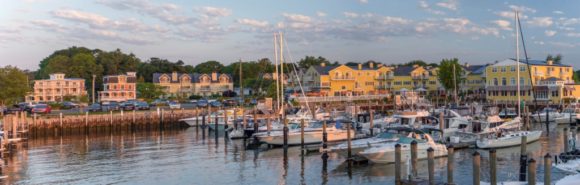
A view of Saybrook Point Inn from the Connecticut River.

Comcast Business today announced that Saybrook Point Inn, a luxury Connecticut inn featuring elegant accommodations, fine dining and premier spa services, is using Comcast Business Ethernet, Internet, Phone and Video offerings to provide guests with high-quality technology services as well as improve inn operations.

The privately-owned travel destination is located on the Connecticut River at the entrance to Long Island Sound and features more than 100 guest rooms, a full-service spa, fine dining restaurant and marina that can accommodate vessels up to 200 feet. To meet its commitment to environmental conservation, operational efficiency and exceptional guest services, the management team streamlined its technology offerings and implemented Comcast Business Internet to increase the performance for all three of its networks in the marina, office and guest areas.

“Both our social and corporate guests require high-speed internet service, from the visiting yachts in the marina who use it for self-diagnostic marine systems and video applications, to those staying in our inn. Comcast Business provides us with reliable internet as well as phone and video services throughout the property,” said John Lombardo, general manager of Saybrook Point.

He continued, “Leveraging technology allows us streamline operations. We can be more of a high-touch resort because our staff can spend more time interacting and servicing our guests, whether they are visiting for a vacation or attending an event in our ballrooms and conference center.”

Saybrook Point Inn was the first “Green Hotel” designated in Connecticut and is well-known for its eco-friendly practices, several of which rely on technology to meet the property’s green commitment.

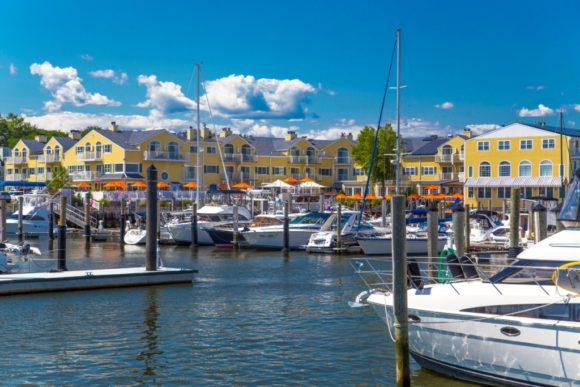
Looking across the Saybrook Point Inn’s marina to the accommodations beyond.

In the guest rooms, Saybrook Point implemented Comcast Business’ Q2Q hospitality solution offering guests full voice and video offerings with a specific Saybrook Point default channel to promote various events and news and a second menu channel. These channels eliminate the need for the Inn to print materials for the rooms continuously, thus adding to its eco-friendly mission. Their cogeneration and extensive solar panel system also rely on solid internet services to perform properly.

“Technology offerings including high-speed internet, phone and hi-def video are among the top amenities for resorts such as Saybrook Point Inn to keep guests connected to their families and work during their travels as well as provide entertainment options,” said Michael Parker, regional senior vice president for Comcast’s Western New England Region.

He added, “Saybrook Point Inn is a well-known for its beautiful location, exceptional guest services and commitment to the environment and community. Comcast is fortunate to work with this Inn to provide the high-tech solutions to meet guest needs as well as optimize business operations.”

Additionally, Saybrook Point Inn relies on Comcast Business to strengthen its operations with a 100 Megabit-per-second (Mbps) Ethernet Dedicated Internet line and PRI business phone service for direct dialing around the property.

“Our invoices are processed via an online central accounting system so our efficiency is greatly impacted if the network is slow or offline. Also, our staff offices, printers and copiers are connected through an online shared system, which needs reliable internet,” Lombardo noted.

He commented, “Comcast Business ensures that we are operating at peak productivity. And it has allowed us to implement new guest service systems. For instance, in the dining room, we use iPads and OpenTable to communicate the status of each table in real-time with the hostess station to decrease guest wait times, and we are implementing systems for housekeeping and maintenance departments to both eliminate paper, intrusive radio communication and have better accountability.

Lombardo said, “We also installed two treadmills recently that have built-in Wi-fi capability for internet surfing and access to online special fitness programs.”

Editor’s Notes:

  1. Situated along the picturesque shores of historic Old Saybrook, Connecticut, Saybrook Point Inn, Spa and Marina features a collection of 100 elegantly-appointed guestrooms, 24 villas offering long and short-term rentals, a rejuvenating full-service SANNO spa, and casual fine dining restaurant, Fresh Salt, as well as a unique waterside Lighthouse Suite. In addition, the historic Three Stories and Tall Tales luxury guesthouses offer exquisite rooms that convey the story of famous local residents, including Katharine Hepburn. Saybrook Point also shines with the pristine Saybrook Point Marina, a landmark boating destination conveniently located at the mouth of the Connecticut River with easy access to Long Island Sound. It can accommodate vessels from 12 to 200 feet and has received numerous premier Connecticut marina awards.
    More information is available at www.saybrook.com.
  2. Comcast Business offers Ethernet, Internet, Wi-Fi, Voice and TV solutions to help organizations of all sizes transform their business. Powered by a next-generation, fiber-based network, and backed by 24/7 technical support, Comcast Business is one of the largest contributors to the growth of Comcast Cable. Comcast Business is the nation’s largest cable provider to small and mid-size businesses and has emerged as a force in the Ethernet market; recognized over the last two years by leading industry associations as its fastest growing provider and service provider of the year.
    For more information, call 866-429-3085. Follow on Twitter @ComcastBusiness and on other social media networks at http://business.comcast.com/social.

Old Lyme Land Trust Hosts Annual Meeting This Afternoon; Includes ‘CT River Tidal Marshes’ Talk, ‘Volunteer of the Year’ Award

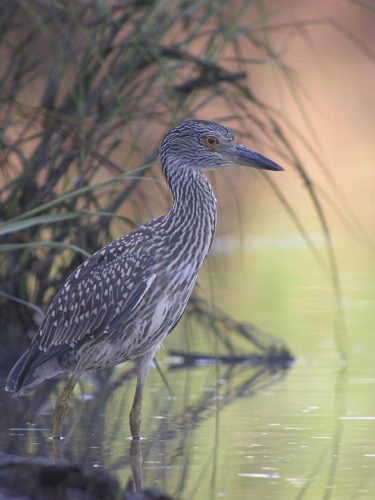
This photograph by Hank Golet, of Old Lyme, won the top award at the 2016 Land Trusts Photo Contest, jointly sponsored by OLLT and the land trusts of Lyme, Essex, East Haddam, and Salem. It is of a juvenile yellow-crowned night heron, fishing at the edge of a tidal creek in Old Lyme.

The Old Lyme Land Trust will host its 51st Annual Meeting on Sunday March 19, at the Lymes’ Senior Center, Town Woods Rd., Old Lyme.  The meeting will begin at 3 p.m. with refreshments, and the public is invited.

The Trust will also present the 2017 annual Volunteer of the Year Award at the meeting. This award is given annually to recognize extraordinary volunteer service to the Trust, and by extension, to the Town of Old Lyme. All residents of Old Lyme and neighboring towns can enjoy the 14 preserves and over 1,100 acres maintained by Old Lyme Land Trust.

The 2016 recipient was Rob Evans of Old Lyme for his work in building and maintaining walking trails in the Hatchett’s Hill Preserve. Evans’ work included construction of two bridges in the preserve.

The featured guest speaker at the meeting will be Dr. R. Scott Warren, an internationally recognized authority on the ecology of tidal wetlands. Dr. Warren recently retired from a distinguished career at Connecticut College and stays active in the field. He is currently serving as Sr. Scientific Adviser to the Coastal Waters Consortium of the Louisiana Universities Marine Consortium. His current focus is research on the effects of the Deep Water Horizon oil spill.

In 1971 representatives of seven nations met in Ramsar, Iran, to sign the first-ever intergovernmental treaty for global conservation.  Its purpose was, and is, the conservation and sustainable use of wetlands. Sites selected for their critical importance are designated “Wetlands of International Importance”.

Today 90 percent of the United Nations member states, 169 countries, have signed the Ramsar Convention, and there are 2,231 Ramsar Wetlands worldwide.  Only 38 are in the United States, and only one is in New England – the “Connecticut River Estuary and Tidal Wetlands Complex”, most of which is in Old Lyme.

Dr. Warren’s talk, “Connecticut River Tidal Marshes: Ecology and Significance,” will cover their basic ecology, how sea level is affecting marshes, and why they are such important ecosystems. An engaging and animated speaker, Dr. Warren will use photographs, maps, and other props to illustrate his points.  This is a great opportunity to come learn about these vitally important and very delicate natural systems.

The John Lohmann Connecticut River Preserve is one of the 13 preserves in Old Lyme owned and managed by the Old Lyme Land Trust.

The OLLT is an all-volunteer, non-profit organization and several hundred of the acres it protects are wetlands, both tidal and freshwater.   All 14 OLLT preserves are open to the public, with walking trails that lead to wonderful places. 

You can gaze across the Connecticut River, including some of those Ramsar Wetlands, from the shore at Whaleback Rock, or climb rocky ridges covered with Mountain Laurel and tall pines.  There are trails through large, unbroken tracts where rare birds hide, and a guided trail for children at the Mile Creek Preserve. 

Chances are that if you live in Old Lyme, you’re not far from an OLLT preserve.  The Trust will also announce the recent acquisition of additional acreage and plans for continuing to grow preserved lands in Old Lyme.

The OLLT is a private nonprofit corporation not affiliated with the town government. Membership is open to all.

Join the OLTT for an entertaining and informative afternoon on March 19, and learn more about your local land trust.  The meeting is from 3 to 5 p.m. at the Lymes’ Senior Center, 126 Town Woods Rd., Old Lyme.  All are welcome and admission is free.