Nicole Prévost Logan
Introduction
For years the buzz word in France has been “amalgam.” On ne doit pas faire l’amalgame entre Islam modéreé et Islamisme radical. (One must not confuse moderate Islam and radical Islamism.) After the repeated terrorist attacks in France and Belgium and with the discovery of other jihadist enclaves, it is hard to keep making that distinction. The voice of moderate Muslims has been barely audible lately. Until they start speaking with a stronger voice, the cohabitation within our democratic and secular society is becoming more difficult.
Belgium
Belgium was the last victim of terrorist attacks when, on March 22, 34 people died at Zaventem airport and at Malbeek metro station (close to the European Commission offices) combined.
Why Belgium? For the past two decades, it has been a divided country between Flemish and Walloon languages and cultures. It remained without a central government for 18 months. How can such country produce six parliaments and six governments? asked David Van Reybrouck, a Dutch-speaking Belgian writer in Le Monde dated March 28. The author of the article adds with irony, “… and the icing on the cake is the creation by the government of a Commission communautaire commune” (joint Commission of communities.)
It was in Molenbeek that the four and a half month-long chase of Salah Abdeslam, who was involved in the Nov. 13 Paris attack, ended. Molenbeek is one of the 19 Brussels municipalities — it has a population of 93,000 with 80 percent of them Muslim, 56 percent of them unemployed and 24 mosques. After the closing of the coal mines and the steel plants in northern France in the 1980s and 1990s, many of the workers emigrated to Belgium. Molenbeek is a typical agglomeration of a second generation Maghreb population – more specifically of Rifains, coming from the Rif mountains of Morocco. It constitutes almost a self-ruled community, many of whose members are related and even siblings. No better safe haven for people running away from the law.
Belgium has been described as the “ventre mou” (litterally the soft belly), in other words, the weak link, of Europe. Patrick Kanner, one of the French ministers made the chilling remark, “but there are tens of Molenbeeks in France “.
France on the front line
France is, in fact, on the front line of the confrontation with radical Islamism.
The weekly Le Point‘s issue of March 24 describes the long history of France’s interaction with the Arabs. It started with the 732 AD defeat of the Saracens at Poitiers by Charles Martel, grandfather of Charlemagne. Then came The Crusades and subsequently Napoleon Bonaparte’s expedition to Egypt in 1798. The French began their conquest of Algeria in 1830 and made it a part of France. The country gained its independence after the bloody war of 1954-1962. France established protectorates in Tunisia in 1881 and in Morocco in 1912 until 1955. At the present time, France has become the “gendarme” across the Sahel region, ready to deploy its forces to stop extremist groups.
Gilles Kepel, professor at Sciences Po and an authority on Islam, has just published “Terreur dans l’Hexagone – Genèse du Dhihad Français,” in which he stresses the deep-rooted antagonism of the North African population for the former colonial power and the existence of a specific French jihadism. Acts of terrorism in France are accomplished by individuals with French nationality. The country holds the sad record of having the highest number of jihadists in theEuropean Union who have gone to Syria.
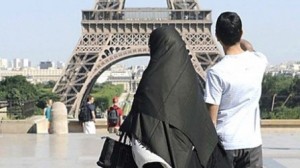 Kepel, sees a correlation between politics and the spread of Islamism in France. He remarks that, during the 2012 elections, François Hollande benefited from 93 percent of the Muslim electorate voting for him. Kepel believes, as most other Islam scholars do, that the problem our society is facing is cultural. He criticizes the unpreparedness of the political elites for the ongoing debate about religions. He deplores the fact that insufficient public funds have been allocated both to research and Middle East studies.
Mohammed Sifaoui is a brillant French journalist born in Algeria, who is quite forthright in expressing his opinions. He advocates a relentless reprisal against the preachers of violence in the 2,000 mosques and Koranic schools of France. Sifaoui’s opinion is that we have to abandon the attitude that only the FN (Front National party) has a right to fight back against the Islamists. Besides, he says, we should stop treating these people as victims from discrimination.
Daesch
After the fall and occupation of Fallouja in Irak in 2014, Abou Bakr al-Baghdadi became the self-appointed ruler of the Islamic State organization or Daesch. (The “ch” sound stands for “sham” meaning Levant in Arabic ) The objective of this organization is to re-create a caliphate reminiscent of the golden years of the 661-750 AD Ommayad and 750-1258 AD Abbasid caliphates. The totalitarian organization banished the Wahhabism and any other doctrines of Islam and has broken all ties with Al-Qaeda. Al-Baghdadi gave his founding speech at the great mosque of Mossoul, dressed in black like the Abbasids.
Mathieu Guidère, professor of Islamic Studies at the University of Toulouse 2, a learned scholar in geopolitics with a PhD in the Arabic language, believes that the objective of Daesch is to build a state, anchored solidly in a territory, with the elimination of the 1916 Sykes-Picot borders. Its aim is also to break up the cohesion of Europe. So far, we are still only at the initial stage of “collateral terrorism,” comments Guidère.
The riposte
Alain Bauer, professor of applied criminology at the Conservatoire des Arts et Metiers, former advisor to Nicolas Sarkozy and Manuel Valls on security and counter-espionage, says, “The problem is that we seem to have too much information and not enough analysis. We still do not have the ability to connect the dots. We have a brain and two ears and four ears will not help ” He concludes, “What we need is a return to Human Intelligence.” Bauer and Guidère agree that there should be a European Intelligence agency but several states oppose it for fear of losing part of their sovereignty. The creation of a PNR (personal name register) still awaits a vote.
Euro 2016 – the European soccer championship – will be held in France in June. This means, on the one hand, a great deal of excitement for millions of spectators, but on the other, an equal — or even greater amount — of nervousness for the security forces.
Editor’s Note: This is the opinion of Nicole Prévost Logan.
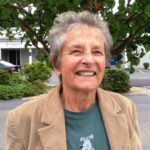 About the author: Nicole Prévost Logan divides her time between Essex and Paris, spending summers in the former and winters in the latter. She writes a regular column for us from her Paris home where her topics will include politics, economy, social unrest — mostly in France — but also in other European countries. She also covers a variety of art exhibits and the performing arts in Europe. Logan is the author of ‘Forever on the Road: A Franco-American Family’s Thirty Years in the Foreign Service,’ an autobiography of her life as the wife of an overseas diplomat, who lived in 10 foreign countries on three continents. Her experiences during her foreign service life included being in Lebanon when civil war erupted, excavating a medieval city in Moscow and spending a week under house arrest in Guinea.
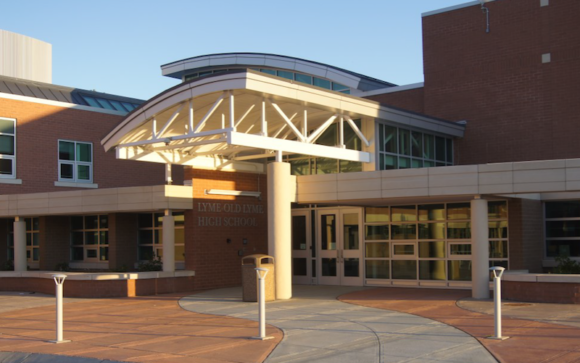
 Cementing its position as one of the top high schools in both the state and country, Lyme-Old Lyme High School (LOLHS) has been named the eighth best public high school in Connecticut by US News & World Report in their listing of “Best High Schools” published this week. Moreover, LOLHS was ranked nationally at #429 and consequently, as one of the top 500 schools in the country, was awarded US News & World Report’s highest honor of a gold medal.