Letter From Paris: Cameron Obtains (Some) Concessions From Europe in Effort to Prevent ‘Brexit’

Nicole Prévost Logan

Nicole Prévost Logan

After 30 hours of negotiations at the European Council on Feb. 18-19, British Prime Minister David Cameron could claim some measure of victory in terms of the new concessions he obtained from the European Union (EU) to make Britain’s special status even more favorable.  It is clear that he had to appear victorious in order to impress his electorate and convince Eurosceptics in his country to change their mind and vote against the exit of the United Kingdom from the European Union — dubbed ‘Brexit’ — at the June 23 referendum.  Cameron is obliged to hold the referendum as part of his election platform.

As he left, Cameron declared “I do not like Brussels.”  A French analyst commented that was a strange way to convince his own people not to leave Europe.  Although the talks lasted through the night, the process was, in fact, surprisingly rapid.  There are two possible reasons for this:  Cameron believed England’s economy would lose more from a ‘Brexit’ than Europe, so he had to be flexible in his demands.  Furthermore, the British prime minister was fortunate to benefit from the presence of a Europe busy with more serious problems such as the migrant crisis or the surge of populism. 

Since 1973 — the date of its entry into the European Union under the pro-European government of then Prime Minister Edward Heath — the United Kingdom has had one foot in Europe and one foot out: it is not part of the Eurozone, nor of the Schengen space and it did not adhere most of the fundamental principles inscribed in the 1992 Maastricht Treaty.  For a long time, it benefited from a special status within the EU. 
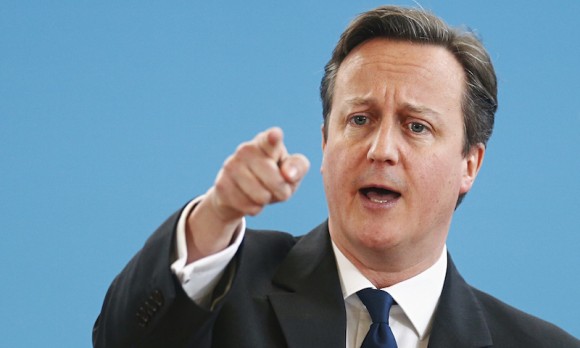
British Prime Minister David Cameron

British Prime Minister David Cameron

The demands Cameron just presented to the European Council were therefore intended to reinforce that different treatment regarding social benefits for migrant workers, independence of ‘The City’ (the financial center of London) from European financial regulations, refusal of a “Supra State”  infringing upon British sovereignty, and the right to refuse further integration of the EU.

The debate over a possible ‘Brexit’ is asymetric.  For England, Europe is basically a profitable market for more than 40 percent of its exports.  For the core and early members of the EU – Germany, France, Benelux, Italy – the  arduous construction of Europe over decades since the 1950 European Steel and Coal Community (ECSC) is an ideal and has long-term objectives.

For Europe, to part with England would have dangerous consequences by creating precedents regarding the other 27 EU members’ requests.  Cameron’s suggestion to use “red cards” to give the right to national parliaments to oppose the decisions made in Brussels if they could gather 54 percent of the votes was turned down, lest it lead toward the unraveling of the European structure.

The reactions and the final comments of the main players at the negotiations were mixed.  Jean Claude Juncker, President of the European Commission, called the text of the agreement “honest.”  Donald Tusk, Head of the European Council, approved “a done deal.”  Germany’s President Angela Merkel was putting all her energy to block a Brexit, overlooking the big English deficit (larger than that of France) and departing from the harsh words she had for Greek Prime Minister Alexis Tsipras at the height of the Greek debt crisis.  

French President François Hollande acted as a mediator during the proceedings and also fought against the Brexit.  Cameron was taken aback by Hollande’s determination to set as a red line a right of veto by Britain over the decisions taken by the Eurozone.  England has only a “droit de regard” (a right to look), in the same way as the other 19 non-Eurozone members. 

Cameron does not want “The City” to submit itself to European regulations and lose its beneficial tax position.  The “single bookrule” of the Central European Bank (ECB) should apply to Britain without making any exception, stressed Hollande.  However, England is obtaining a “discount” on the funds it paid the ECB to help with the Eurozone crisis.  A letter, co-signed by the 200 largest British companies, warned Cameron against ‘Brexit.’  When the Mayor of London, Boris Johnson, announced he was a partisan of “Brexit,” the English pound lost 2.4 percent against the US dollar – its lowest level since 2009.

For 20 years, from 1993 to 2013, the foreign-born population in Britain has more than doubled from 3.8 to 8.3 million.  In the London area, 39 percent of the population is of foreign origin.  A few thousand workers from Eastern Europe were expected but, in fact, 850,000 Poles arrived.  This explains why Britain is protecting itself from the recent waves of immigration . 

By a bilateral agreement signed at Le Touquet in 2003, England and France placed the border at the Gare du Nord railroad station in Paris.  This is where all the border controls take place before boarding the Eurostar train to London.  But the Le Touquet agreement did not foresee the 2015 and 2016 arrival of close to 6,000 migrants on the French side of the English Channel (called La Manche by the French) near Calais.  What if ‘Brexit’ became a reality?  Would the border move to Dover on the English coast?  That is perhaps a strong argument against ‘Brexit’! 

A frequently acrimonious attitude between England and Europe does not reflect the deep ties they share.  Many British people own houses or come for the weekend to le Touquet.  Go to a town market in a Perigord village and one is surrounded by people speaking English.  For the two million British people living on the continent, ‘Brexit’ is a very real threat. 

Nicole LoganAbout the author: Nicole Prévost Logan divides her time between Essex and Paris, spending summers in the former and winters in the latter. She writes a regular column for us from her Paris home where her topics will include politics, economy, social unrest — mostly in France — but also in other European countries. She also covers a variety of art exhibits and the performing arts in Europe. Logan is the author of ‘Forever on the Road: A Franco-American Family’s Thirty Years in the Foreign Service,’ an autobiography of her life as the wife of an overseas diplomat, who lived in 10 foreign countries on three continents. Her experiences during her foreign service life included being in Lebanon when civil war erupted, excavating a medieval city in Moscow and spending a week under house arrest in Guinea.
Lyme-Old Lyme High School Hosts Prospective Student Day

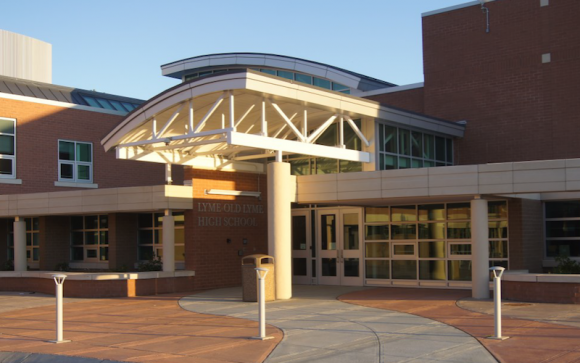
The front entrance of the recently renovated Lyme-Old Lyme High School.

The imposing front entrance of the recently renovated Lyme-Old Lyme High School.

Tomorrow, Friday, March 4, from 12 to 2 p.m., Lyme-Old Lyme High School (LOLHS) welcomes prospective students who do not currently attend a Region 18 school and their parents/guardians to preview the high school if they are considering enrolling for the fall of 2016. The school counselors and administration will be available to provide an overview of the school, its curriculum, and student opportunities. The event begins at 12 p.m. and also includes tours of the high school.

Asked why Region 18 is hosting a Prospective Student Day, Lyme-Old Lyme Public Schools Superintendent Ian Neviaser explained, “This is something we have done for a number of years in order to provide information for students and their families who are considering attending Lyme-Old Lyme High School.”  He added, “With the current decline in Connecticut’s student population, this event has become even more important as we are actively recruiting students to attend what we believe is the best high school in this area.”

In terms of the type of students and/or families the District is aiming to attract, Neviaser said, “This event is offered for students in a variety of situations such as students whose families are looking to move to the area, students who reside here but attend private, parochial, or magnet schools, and tuition-paying students who live in other towns.”

In April 2015, Lyme-Old Lyme High School was awarded the 185th spot in Newsweek‘s annual list of America’s Top High Schools. Newsweek selected the top 500 schools in the country, “based on a broad range of data to determine which institutions do the best job of preparing students for college.”  Out of the 15 schools named to the list in Connecticut, LOLHS came in fifth after three schools in Fairfield County and one in East Hartford. Lyme-Old Lyme High School was also the only school named to the list, which is located in New London County, and last year, in terms of SAT results, LOLHS took 6th place statewide with average scores significantly above the state average in all disciplines.

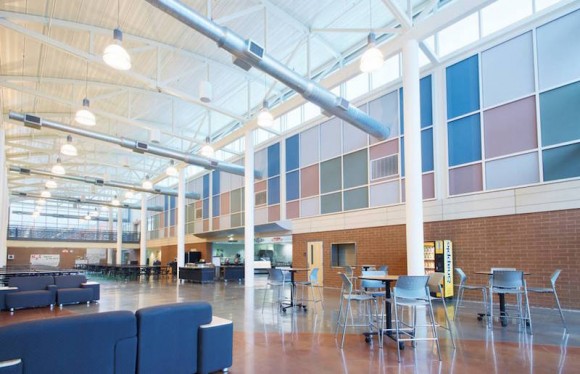
The interior of the state-of-the-art 'Commons' where students gather informally and some events are held.

The interior of the state-of-the-art ‘Commons’ where students gather informally and some events are held.

Facilities at the high school are exceptional with state-of-the-art technology implemented throughout the building thanks to a $49 million renovation project completed in 2014.  The math, science, language and multi-media laboratories along with the art, music, drama and athletic facilities are now of a quality and sophistication that resembles a college environment, rather than a high school.   

Current enrollment at LOLHS is 462 students across Grades 9 through 12 and the average class size is between 15 and 20. The school offers a full spectrum of core subjects taught in-house, including 15 AP subjects, and also an extensive range of classes taken online. Students also have the option to pursue the acclaimed Techno-Ticks robotics program along with more than 30 extracurricular clubs including High School Bowl, Mock Trial, and Key Club.

Lyme-Old Lyme High School enjoys exceptionally strong music, drama, and art programs, which have been recognized with numerous awards both at the state level and nationally. The school’s athletic program has similarly received innumerable honors over the years and is proud to have several past, present, and future Olympians among its alumni.

The colleges attended by LOLHS graduates include a wide range of Ivy League and top-tier schools each year. Complementing the academic success of the students, the vast majority of the high school’s faculty has obtained additional qualifications beyond their Bachelor’s degree and Connecticut teacher certification.

If you would like to attend this informative event, RSVP to 860-434-2255 or online at the Region 18 website (www.region18.org). For further information, contact Tracy Lenz, Director of Counselling, at 860-434-2255 or lenzt@region18.org or James Wygonik, Principal, at 860-434-1651 or wygonikj@region18.org.

For more information about Lyme-Old Lyme Public Schools, visit Region18.org.

After Crushing Rams in Semis, ‘Cats Meet Cromwell Tonight in Shoreline Championship

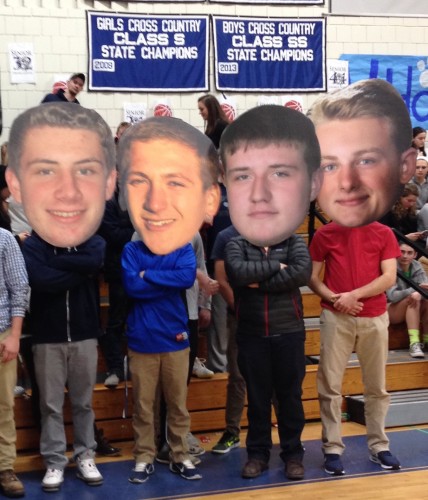
The Wildcat seniors (from left to right) Matt Watts-St. Germain, George Doll, Drake Gavin and Josh Turkowski will play again Friday in the Shoreline Conference final.

The Wildcat seniors (from left to right) Matt Watts-St. Germain, George Doll, Drake Gavin and Josh Turkowski will play again Friday in the Shoreline Conference final. Photos by Danielle St. Germain.

Kirk Kaczor’s Wildcats stormed to success last night with a stunning 62-45 victory over the Old Saybrook Rams in a Shoreline Conference semi-final.

Coach Kaczor gives advice to his seniors during the team's 49-46 victory over East Hampton last Saturday.

Coach Kaczor gives advice to his seniors during the team’s 49-46 victory over East Hampton last Saturday.

Playing in front of a capacity crowd in the opposition’s own gymnasium, Drake Gavin, who was named the Shoreline Conference Player of the Year over the weekend, poured in the points scoring 33 by the end of the game.

Following a long tradition at Lyme-Old Lyme High School, the seniors pose with oversize cut-outs of their heads used later by the fans to show support for the team.

The Wildcat seniors!

The Old Lyme boys now face top-seeded Cromwell in the Shoreline Conference final at Wilbur Cross High School on Friday.

Talking Transportation: The Secrets of Riding Metro-North

Screen Shot 2016-03-04 at 2.19.18 AMEach week, dozens of people ride Metro-North for the first time. This week’s column is to let both new and veteran commuters in on the secrets of a successful rail commute.

PARKING:
You can’t take the train if you can’t get to the station, so invest in your commuting future by getting your name on your town’s (and neighboring towns’) waiting lists for annual parking permits. In four or five years, when your name rises to the top of the list, you’ll thank yourself. Meantime, opt for legal day-parking, find a friend to ride to the station with or try biking. There are free bike racks at most stations.

PLATFORM POSITIONING:
There’s a science to deciding where on the platform to wait for your train. Many commuters position themselves at the front or rear of the train for a quick get-away when they arrive in Grand Central. Contrarian that I am, I tend toward the center of the train because that’s where there’s a better chance of getting a seat.

FINDING A SEAT:
Believe me, your commute will be a lot better seated than standing. Seats are in short supply, so here’s the strategy. As your train pulls in, scan the cars that pass you and see how the passenger load looks. As the doors open, move quickly inside, eye-ball your target seat and get there fast. Put your carry-ons in the overhead rack and sit down. If you hesitate, you’re toast and will be a standee.
On trains leaving Grand Central, you may be able to get onboard up to 20 minutes before departure. Take a window or aisle seat on the three seat side. The middle seat next to you will be the last to be filled.

STANDEE STRATEGY:
If you didn’t get a seat on boarding, don’t give up. A few people on most trains get off in Stamford, so look for them and position yourself to get their seat before it gets cold. Here’s the secret: intermediate passengers have seat checks with a tear down the middle or a torn corner. Look for them and just before Stamford, position yourself near their row and, bingo, you’ve got a seat!

TICKETS:
Do not make the mistake of boarding a train without a ticket, or you’ll get hit with up to $6.50 penalty for buying a ticket on the train with cash. But if you’re thrifty, don’t buy a ticket from a ticket window or ticket machine. No, the cheapest tickets are only available online at www.mta.info. Go for the ten-trip tickets for an additional discount.

ON-BOARD ETIQUETTE:
Train time is not “your own time,” but shared time. So be considerate of your fellow commuters. Don’t hog empty seats, use the overhead racks. Keep your feet off the seats. If you must use your cellphone, go to the vestibule. Be like the Boy Scouts: anything you carry onto the train (including newspapers, coffee cups, etc.) carry off the train and dispose of properly.

If you’ve got your own “secrets” for a successful commute, send them along and I’ll include them in upcoming columns. Just e-mail me at CommuterActionGroup@gmail.com

Jim Cameron

Jim Cameron

Editor’s Note: Jim Cameron is founder of The Commuter Action Group, and a member of the Darien RTM. The opinions expressed in this column are only his own.

You can reach him at CommuterActionGroup@gmail.com

For a full collection of “Talking Transportation” columns, see www.talkingtransportation.blogspot.com

Reading Uncertainly? ‘The Wild Places’ by Robert Macfarlane

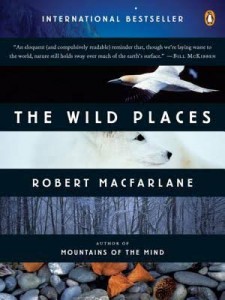
The_Wild_Places_by_Robert_MacFarlaneLast year, at our son’s suggestion, I read and reviewed with enthusiasm Robert Macfarlane’s The Old Ways (2012), his recounting of extensive walks in Great Britain, Spain, Palestine, and Tibet (see LymeLine.com review of Oct. 12, 2014.) That led me to his Landmarks (2015) and now to an earlier work, The Wild Places.
What begins as a eulogy for our disappearing wilderness becomes an elegy, even a celebration of remoteness, privacy and “the wild.” But the reply of the wild, wherever he finds it, at the remote corners of the British Isles or in his own Cambridge backyard, is “reports of my demise are premature!”

Macfarlane, a don at Emmanuel College, Cambridge, mixes remarkable research, reading and language, to explore both geographic and intellectual wildness. On his perambulations, he is always picking up small rocks, leaves, stems, feeling them, admiring them, and saving them for his library. He links every trek with apt, far-ranging quotations from a global entourage of writers. And his words, what words …

Consider:

  • “ideas like waves have fetches.”
  • The sky a “slurless blue”
  • The “grain of the mind”
  • “a row of hawthorns quaffed eastwards by the onshore winds”
  •  the “krekking of a raven”
  • “small waders – knots, plovers, turnstones – form their palping jellyfish-like shoals”
  • “a gang of rooks chakked over the corn stubble”
  • “I had a heptic memory, too.”
  • A rock that was “knapped out.”

Do you recognize any of the places he visited: Ynys Enlli (Scotland), Coruisk (Isle of Skye), Rannoch Moor (near Glencoe), Black Wood (east of Rannoch Moor), Cape Wrath (Scotland north coast), the Holloways (Dorset), Orford Ness (Suffolk), and Burren (north of County Clare, Ireland)? Macfarlane comes to acknowledge that wildness is often found close to home. How many of us know Hog Pond (the old name), Cedar Pond, Brown Hill, Joshua Rocks, Whalebone Creek, Nickerson Hill, Moulson’s Pond, Oliver’s Hole or Rat Island?

Wildness, to this professor, is “a quality to be vanquished and to be cherished.” It has “implications of disorder and irregularity” but it is also “an expression of independence from human direction … containing an energy both exemplary and exquisite.” Wild places remind us “of the narrow limits of human perception, of the provisionality of (our) assumptions about the world.”  Our response: “a brief blazing perception of the world’s disinterest” in what we humans have created — they give us “this sense of the human presence as being something temporary.”

Fellow wanderers appear.  Macfarlane asks a “Helen” to join a walk seeking birds: falcons, tiercels, ospreys, goshawks, and peregrines. None other than Helen Macdonald, also a professor at Cambridge, whose H Is For Hawk I enjoyed earlier this year.

The Wild Places reminded me of my own traipsing along the public footpaths of West Sussex and the South Downs, in the fall of 1978, and along the wanderwegs of St. Gallen and the Appenzell in Switzerland in the 1980s and 1990s. Plus the trails of Nehantic State Forest in the 1990s …

Macfarlane suggests wildness is an attribute to be carefully enjoyed, with both sight and sound: “rooks haggled in the air above the trees … the noise of the wood in the wind; a soft marine road. It was the immense compound noise of friction – of leaf fretting on leaf, and branch rubbing on branch.”

His admonitions: listen and look. Wildness may be close at hand.

Editor’s Note: The Wild Places by Robert Macfarlane was published by Penguin, New York, 2007.

Felix Kloman_headshot_2005_284x331-150x150About the Author: Felix Kloman is a sailor, rower, husband, father, grandfather, retired management consultant and, above all, a curious reader and writer. He’s explored how we as human beings and organizations respond to ever-present uncertainty in two books, ‘Mumpsimus Revisited’ (2005) and ‘The Fantods of Risk’ (2008). A 20-year resident of Lyme, he now writes book reviews, mostly of non-fiction that explores our minds, our behavior, our politics and our history. But he does throw in a novel here and there. For more than 50 years, he’s put together the 17 syllables that comprise haiku, the traditional Japanese poetry, and now serves as the self-appointed “poet laureate” of Ashlawn Farms Coffee, where he may be seen on Friday mornings. His wife, Ann, is also a writer, but of mystery novels, all of which begin in a bubbling village in midcoast Maine, strangely reminiscent of the town she and her husband visit every summer.