Few Changes for Lyme Republican Slate in November Election

The Lyme Republican Town Committee has endorsed a slate of candidates for the November election comprised primarily of incumbents. The only changes are that current Region 18 Board of Education Chairman Jim Witkins is stepping down from that board and has been endorsed for the board of finance. Running in Witkins’s stead for the board of education is newcomer Mary Powell-St. Louis.

The remainder of the slate is made up of Linda Ward for tax collector; Linda Winzer for town clerk; William Hawthorne for treasurer;  David Tiffany for planning and zoning commission with Peter Evankow as an alternate; David Lahm for zoning board of appeals; and Jerry Ehlen and Holly Rubino for library directors.

Lyme-Old Lyme HS Alum, Former Teacher Breault Skippers US Team to Victory in ISAF Nations Cup

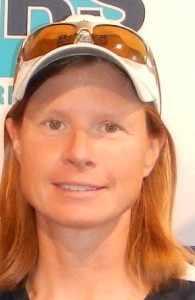
Nicole Breault at the helm of her winning sailboat at Vladivostock.

Nicole Breault (right) at the helm of the winning US Women’s Match Racing sailboat in Vladivostek.

Nicole Breault, a graduate of Lyne-Old Lyme schools and former head of the History Department at Lyme-Old Lyme High School (LOLHS), was the skipper of the US Women’s Match Racing team, which was victorious in the Women’s Grand Final at the International Sailing Federation (ISAF) Nations Cup held in Vladivostek, Russia over July 15-19.

The ISAF Nations Cup was first introduced to the world in 1991, with Open and Women’s contests based on a series of Regional Finals with the top crews meeting at the Grand Final.

Nicole Breault

Nicole Breault

Breault now lives in San Francisco but still has many friends in Old Lyme.  She graduated as Valedictorian, an All-State soccer player, point guard on the basketball team and captain of the LOLHS team that won the 1990 Connecticut High School Sailing Championship.

Breault was a two-time International 420 champion (the first woman to achieve this in a high performance dinghy class.)

She went to Yale University and was an All-American collegiate sailor there and captain of their co-ed sailing team.

Click here to read an article with photos published on Scuttlebutt Sailing News about Breault’s victory.


Country School Students Fund Well in Uganda with Support from Local Community

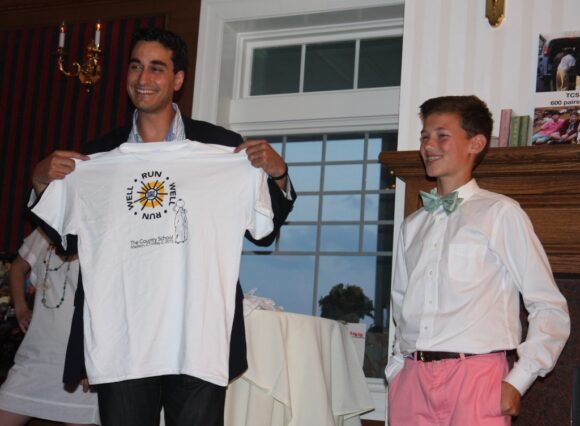
Joseph Coyne presents a Run Well t shirt from the school’s 5K fundraiser to Jordan Rizza, publisher of Coastal Connecticut magazine. The magazine invited Joseph to speak at a recent VIP reception during a Grassy Strip Music Series concert, where The Country School’s well project was the featured nonprofit.

Joseph Coyne presents a Run Well t shirt from the school’s 5K fundraiser to Jordan Rizza, publisher of Coastal Connecticut magazine. The magazine invited Joseph to speak at a recent VIP reception during a Grassy Strip Music Series concert, where The Country School’s well project was the featured nonprofit.

Following a full year of fundraising, and with generous help from the local community, students at The Country School recently announced that they had raised enough money to underwrite the creation of a well to provide clean drinking water in Kaberamaido, Uganda.

The successful conclusion of the fundraising effort, a partnership with the Madison nonprofit Call To Care Uganda, means construction can begin this summer. The well will be based at the Odongai Primary School and will provide clean water for as many as 1,500 people, including students at the school and others who live near it. The TCS well will mark the 28th well Call To Care Uganda has dug since its founding in 2007.

The Country School’s well effort began last fall after Joseph Coyne, an 8th Grader and member of the Student Leadership Committee, learned about the work of Call To Care Uganda (www.calltocareuganda.org). In addition to the obvious health benefits, Joseph discovered that a well would mean that children – primarily girls – could remain in school, rather than having to spend several hours each day walking miles back and forth to deliver potable water to their families.

Knowing that The Country School has a strong service learning component, Joseph suggested that his school embark on a well project with Call To Care Uganda, both as a way for Country School students to “serve their communities and the larger world,” as the school mission statement calls upon them to do, and so students could learn about children in other parts of the world.

Joseph Coyne, the student leader on the fundraising project to construct a well in Uganda, with his mother Beth Coyne, Dean of Student Life at The Country School, and Martha Hoffman, founder of Call to Care Uganda.

Joseph Coyne, the student leader on the fundraising project to construct a well in Uganda, with his mother Beth Coyne, Dean of Student Life at The Country School, and Martha Hoffman, founder of Call to Care Uganda.

The full cost of the well is $8,500, and so it was an ambitious undertaking for students at a PreSchool-8th Grade school, but Joseph and his Service Committee colleagues were confident it could be done. Starting in September, they held a series of fundraisers, from a school wide-coin collection to sales of Ugandan jewelry and dress down day fundraisers. This spring, they organized a 5K run on campus, attracting scores of local runners and inspiring several local businesses to serve as sponsors.

By the end of the school year, they had raised $5,353. With a little over $3,000 still to go, they were considering their options when they were invited by Coastal Connecticut magazine to be the featured nonprofit at the first Grassy Strip Concert of the summer, a performance by Christine Ohlman at the Madison Beach Hotel. During the concert, students sold jewelry and collected donations, and Joseph delivered a speech as part of a VIP reception.

The evening raised close to $1,300, but students still had a gap to close. Shortly after the concert, they heard from Jordan Rizza, publisher of Coastal Connecticut, who told them the magazine would cover the balance so they can officially proclaim, “Well done!” Construction of the well is expected to begin this month.

The Country School is extremely grateful to Coastal Connecticut, to sponsors of the 5K run (Zane’s Cycles; Dr. Laura Miller, DDS; Bershtein, Volpe, and McKeon P.C.; Group Insurance Associates; Woodbridge Running Company; and Barndoor Lighting Outfitters), to the countless individuals who made donations, and to our partners in this initiative, Call To Care Uganda, and its founder, Martha Hoffman, who visited The Country School repeatedly throughout the year to share news from and information about her program, students at Odongai, and Uganda.

Hoffman also helped Country School students initiate a pen pal program with Odongai students, and last fall, Country School students held a shoe drive, collecting 600 pairs of new and gently used shoes to send to their partner school. Recently, Hoffman forwarded photographs of Odongai students wearing their new shoes. The next photo Country School students hope to see their pen pals drinking clean water from their new well.

Founded in 1955, The Country School is a coeducational, independent day school serving students in PreSchool through Grade 8. At The Country School, a rigorous academic program is accompanied by a commitment to hands-on learning, a dynamic STEAM curriculum (integrated science, technology, engineering, arts, and math), a focus on the whole child, and service learning. The Country School prepares students to meet the future with confidence, encouraging them to reach their highest, both in school and in life. Learn more at www.thecountryschool.org.

Old Lyme PGN Library Friends Hold Annual Meeting, Encourage New Members

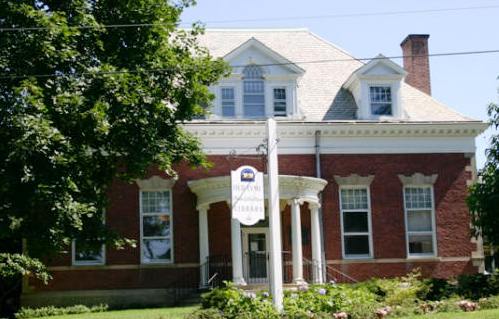
The Old Lyme Phoebe Griffin Noyes Library is one of the beneficiaries of the LOLJWC 2013 Art Show.

The Old Lyme Phoebe Griffin Noyes Library welcomes newcomers to its Friends organization.

The Friends of the Old Lyme-Phoebe Griffin Noyes Library held their Annual Meeting June 24, at the Library.

Friends and volunteers were recognized for helping to make 2014-2015 a successful year and some notable highlights of those efforts were reviewed – the Bookworm Ball, the BookCellar’s strong showing under new leadership and the group’s appreciation for its many profitable years under the previous managers.

Retiring Friends’ Chairman Mary Haymann was honored for her many years of dynamic leadership. She in turn expressed her appreciation for the honor of having led the group, reminding the library’s Friends and patrons that “in this age of virtual reality, let’s not forget to actively support our brick and mortar Library.”

The results of fundraising activities such as the Bookworm Ball and the BookCellar were presented, with Library Director Mary Fiorelli expressing her appreciation and reporting on how the library uses and benefits from the Friends’ financial support.

New Friends Council members Steve Ross and Christiana Fusari were elected. There was agreement on the importance of welcoming new Friends. All those who use or care about the library are being encouraged to join. Information and applications can be found on the library’s website at http://www.oldlyme.lioninc.org/friends-of-the-library/

The meeting was followed by a presentation on the life of Phoebe Griffin Noyes given by Carolyn Wakeman, an author and Trustee of the Florence Griswold Museum, whose talk was enhanced by the inclusion of detailed information, photographs and illustrations depicting the community of Old Lyme in Phoebe’s day.

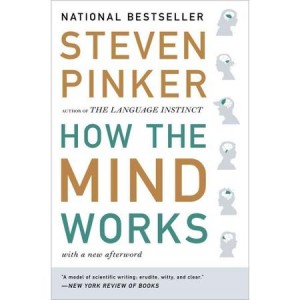
Reading Uncertainly? ‘How The Mind Works’ by Steven Pinker

How_the+Mind+WorksWhy is reading, at least for me, so soothing, stimulating and confusing, all at the same time? Why does my mind react so strangely at times to what I am reading?

Four years ago, I tried Steven Pinker’s monumental (some 800 pages of small type!) suggestion that we humans are actually becoming less violent, in The Better Angels of Our Nature. So it was only natural that I stepped back in time to read How The Mind Works, his equally long tome of 1997, updated to 2009, describing the innumerable quirks and ramblings that emanate from inside our heads.

A noted professor of psychology at Harvard University, Dr. Pinker attempts, and succeeds, I think, in synthesizing, “An emerging view of human nature,” one replete with frequent humor, quotations from numerous other sages (ranging from Plato and Pascal, to Bierce and Mencken, including Monty Python, Peanuts and Woody Allen!), and solid scientific evidence.

But he begins on a “note of humility,” saying, “We don’t understand how the mind works and I have not discovered what we do know about how the mind works.”

He cautions, “… our minds are not animated by some godly vapor or single wonder principle.” We do know, “the mind is a product of the brain and the brain is a product of evolution.” That leads him to “the central idea … that the mind is a system or naturally selected organs of computation.” He notes, “We increasingly understand ourselves in terms of the inner workings of our minds, their origins in the natural world, and their interplay with the contents of culture and civilization.”

Pinker explains further: “The mind is a system of organs of computation, designed by natural selection to solve the kinds of problems our ancestors faced in their foraging way of life; in particular, understanding and outmaneuvering objects, animals, plants and other people.”

Many of his succinct “definitions” made me come to a complete halt, frequently with a laugh, followed by serious reflection:

The tongue: “a boneless water balloon, controlled by squeezing.”

The computer: “the most legalistic, persnickety, hard-nosed, unforgiving demander of precision and explicitness in the universe.” (Could a computer actually become a “thinking machine?”)

Life: “a series of deadlines”

Winter: “the best insecticide”

Our brains: “… take up only two percent of our body weight but consume 20 percent of our energy and nutrients.”

Information: “…  the one commodity that can be given away and kept at the same time.”

Mathematics: “… ruthlessly cumulative.”

The stock market: “a large industry of self-appointed seers hallucinating trends in the random walk of the stock market.”

Jewish dietary laws: “Talmudic sophistry and bafflegab”

Status: “the public knowledge that you possess assets that would allow you to help others if you wished to.” (But Pinker notes that these “assets” must be conspicuous to be of any use …)

Music: “an enigma – a cocktail of recreational drugs that we ingest through the ear to stimulate a mass of pleasure circuits at once.”

And humor: “an anti-dominance poison, a dignicide.”

But “problems continue to baffle the modern mind: consciousness in the sense of sentience, the self, free will, knowledge, and morality.” Pinker suggests that you “step outside your own mind for a moment and see your thoughts and feelings as magnificent contrivances of the natural world rather than as the only way that things could be.”

And comments in conclusion, “Our bafflement at the mysteries of the ages may have been the price we paid for a combinatorial mind that opened up a world of words and sentences, of theories and equations, of poems and melodies, of jokes and stories, the very things that make a mind worth having.”

We human beings, surmounting by our minds, are extraordinary, complex and yet strange adaptations.

What a read!

Editor’s Note: ‘How The Mind Works,’ by Steven Pinker is published by W. W. Norton, New York 2009.
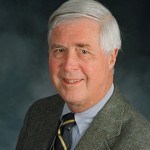
Felix Kloman_headshot_2005_284x331-150x150About the author: Felix Kloman is a sailor, rower, husband, father, grandfather, retired management consultant and, above all, a curious reader and writer. He’s explored how we as human beings and organizations respond to ever-present uncertainty in two books, ‘Mumpsimus Revisited’ (2005) and ‘The Fantods of Risk’ (2008). A 20-year resident of Lyme, he now writes book reviews, mostly of non-fiction that explores our minds, our behavior, our politics and our history. But he does throw in a novel here and there. For more than 50 years, he’s put together the 17 syllables that comprise haiku, the traditional Japanese poetry, and now serves as the self-appointed “poet laureate” of Ashlawn Farms Coffee, where he may be seen on Friday mornings. His wife, Ann, is also a writer, but of mystery novels, all of which begin in a bubbling village in midcoast Maine, strangely reminiscent of the town she and her husband visit every summer.