Pfeiffer to Speak on ‘Woods’ at Old Lyme Historical Society’s Annual Dinner, Saturday

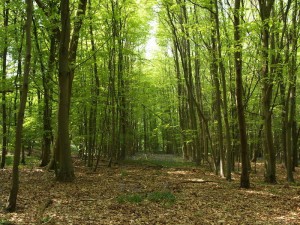
View of leafy woodsThe Old Lyme Historical Society will host its annual dinner and lecture on Saturday, April 18, at 6 p.m. at the Lymes’ Senior Center, 26 Town Woods Rd., Old Lyme.

In this continuing series, Old Lyme Historian Dr. John Pfeiffer’s lecture, “Wood: Our First Natural Resource,” will cover the role this important resource played in our local area. From our first days of establishing a settlement on the eastern shore of the Great River, wood was on everyone’s mind. The control of this one resource was the focus of our first public meeting and was recorded on the first page of our society records.

The evening will begin with refreshments and a dinner catered by Coffee’s Country Market; Dr. Pfeiffer’s talk will follow.

Tickets are $35 per person if purchased by April 11, or $40 at the door, if there is availability. This event sells out every year, so it is advisable to buy tickets early.

Tickets are available at the historical society’s office in the Genealogy Room at the Old Lyme-Phoebe Griffin Noyes Library (Tuesday, Thursday, and Saturday 10 a.m. to 12 noon), at Webster Bank in Old Lyme, and online at our website www.oldlymehistoricalsociety.org .

For more information, call the Old Lyme Historical Society at 860-434-0684.

Essex Savings Bank Donates Over $29,000 to 90 Organizations as Part of Community Investment Program

ESSEX – Results of the recent voting by Essex Savings Bank customers who participated in the Bank’s Community Investment Program were announced at a meeting of employees, directors and trustees at the Bank’s Plains Road Office on Wednesday, April 8.

The Top Ten Winners in attendance received special recognition. They were in order by number of votes:

  1. The Shoreline Soup Kitchens & Pantries
  2. Forgotten Felines, Inc.
  3. Old Saybrook Fire Company Number One, Inc.
  4. High Hopes Therapeutic Riding, Inc.
  5. Tait’s Every Animal Matters (TEAM)
  6. Dog Days Adoption Events, Inc.
  7. The Essex Fire Engine Company No. 1
  8. Bikes for Kids, Inc.
  9. Pet Connections, Inc.
  10. Visiting Nurses of the Lower Valley, Inc. (VNLV)

The customer balloting portion of Essex Savings Bank’s 2015 Community Investment Program, began on Feb. 2 and concluded on March 2. The program entitles the Bank’s customers to select up to three charities from a list of 90 qualified non-profit organizations. Fund allocations are awarded based on the results of these votes.

Gregory R. Shook, President and Chief Executive Officer of Essex Savings Bank stated, “At Essex Savings Bank, we believe the way to move the world forward is by giving back. Our Community Investment Program is designed to provide vital financial support to those organizations that enhance the quality of life in our communities.”

Each year, the Bank donates 10 percent of its net income to non-profit organizations within the immediate market area consisting of Chester, Deep River, Essex, Lyme, Madison, Old Lyme, Old Saybrook and Westbrook. This year, the Bank has allocated $98,741 to assisting non-profit organizations who offer outstanding services to our community and one third of that amount is then voted upon by the Bank’s customers.

According to Thomas Lindner, Vice President and Community Relations Officer for Essex Savings Bank, 6,987 votes were cast this year for a total of $29,620. By year end 2015, the total distribution of charitable funds will reach 4 million dollars since the inception of the Bank’s Community Investment Program in 1996.

Essex Savings Bank is a FDIC insured, state chartered, mutual savings bank established in 1851. The Bank serves the Connecticut River Valley and Shoreline with six offices in Essex (2), Chester, Madison, Old Lyme and Old Saybrook. Financial, estate, insurance and retirement planning are offered throughout the state by the Bank’s Trust Department and subsidiary Essex Financial Services, Inc. Member FINRA, SIPC. Investments in stocks, bonds, mutual funds and annuities are not FDIC insured, may lose value, are not a deposit, have no Bank guarantee and are not insured by any Federal Government Agency.

Click here to see the full results with voting numbers and amounts donated to each organization.

A Letter From Paris: Munich Museum Celebrates Tragically Truncated Careers of Two German Artists

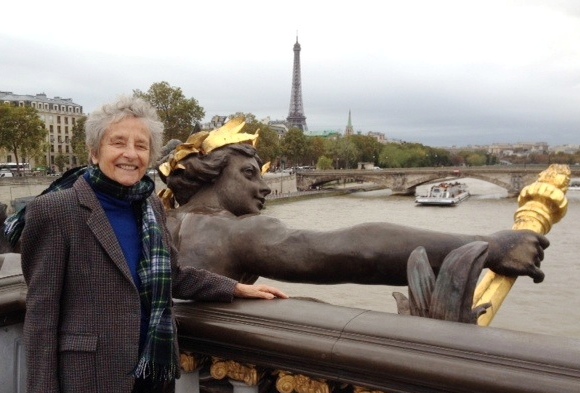
Nicole Prévost Logan

Nicole Prévost Logan

The promise of two young men to become among the most important German artists of the 20th century was cut short when Franz Marc (1880-1916) and August Macke (1887-1914) were both killed on the front at the outset of World War I.

Animals in a Landscape by Franz Marc, 1914.

Animals in a Landscape by Franz Marc, 1914.

The Lenbachhaus museum of Munich, built at the turn of the (20th) century when Munich was the capital of German art, will hold an exhibit in May entitled. “Two Friends.” It shows how Marc and Macke met in 1910, discovered their mutual works with enthusiasm and struck a friendship, which was to last until their death.

The eve of the “Great War” was a time of artistic explosion, not limited to the Impressionists, Cézanne and other great French masters. All of Europe, including the Russian giants like Malevich, or Tatlin, was set ablaze and the German schools of painting played an important role in the cross-pollinization of the art movements.

In 1905 Ernest Ludwig Kirchner (1880-1938) founded Die Brucke (the bridge) in Dresden. The human figures he painted are very distinctive with an angular and depraved look. The Nazis called him “degenerate.” Die Brucke was part of a larger German Expressionist movement based at the Sturm gallery in Berlin and characterized by the rejection of any form of academism, the acerbic satire of the bourgeois decadence, and the crude, almost perverted, representation of the bohemian life the artists led in their studios.

In 1909, Wassily Kandisky (1866-1944) wanted to distance himself from the Neue Künstlervereinigung München (NKVM — the Munich New Artist’s Association) painters and settled in Murnau, a small village on the edge of Bavarian Alps with a group of artists including his companion Gabriele Munter and Alexej Jawlensky. For Marc and Macke, it was a pivotal moment to meet them there.

Even before knowing each other, Marc and Macke had shared a love for painting animals, particularly cats. Both were fascinated by the artistic developments taking place in France. In 1907, and again in 1908 Macke was in Paris and visited the galleries of Bernheim-Jeune, Ambroise Vollard and Durand Rueil, to see Pissaro, Monet, Dégas, Renoir and Seurat. Marc travelled several times to France from 1903 onwards, spending long hours at the Louvre, where he was particularly attracted to Van Gogh’s paintings.

Zoological garden by August Macke, 1912.

Zoological Garden by August Macke, 1912.

August Macke’s city scenes showed silhouettes of slim and elegant women, admiring the latest fashion at shop windows and a sophisticated urban population sitting at cafes or strolling leisurely in a park. Macke looked for harmony in humans and in nature. His colors were vibrant and the atmosphere serene in sharp contrast with the violent, even depressive paintings of the Expressionists like Otto Dix, George Grosz or Max Beckman.

Blue black fox by Franz Marc.

Blue black fox by Franz Marc.

Before becoming an artist, Marc had thought of becoming a theologian. In 1909, he left Munich for the wilderness of Bavarian Alps to paint animals and eventually moved closer to Murnau. He sought the essence and the purity of animal through a theosophical view of the cosmos. Instead of being naturalistic, his representation of deers or tigers was increasingly stylized. The young wild horses seemed to bask in their freedom. In 1911 Wassily Kandisky and Marc created Der Blaue Reiter (The Blue Rider) group, named after the themes of horses and cavaliers found in their paintings.

At a time when the abstraction was like a tidal wave – Picasso and Braque in France, Paul Klee in Switzerland, or Mikhail Larionov in Russia – it is not surprising that Marc and Macke were drawn to these new forms. Robert Delaunay and Italian Futurist Gino Severini became their inspiration.

But sadly this was to be a brief adventure, since both artists were killed prematurely in the war.
Nicole Prévost Logan

Nicole Prévost Logan

About the author: Nicole Prévost Logan divides her time between Essex and Paris, spending summers in the former and winters in the latter. She writes a regular column for us from her Paris home where her topics will include politics, economy, social unrest — mostly in France — but also in other European countries. She also covers a variety of art exhibits and the performing arts in Europe. Logan is the author of ‘Forever on the Road: A Franco-American Family’s Thirty Years in the Foreign Service,’ an autobiography of her life as the wife of an overseas diplomat, who lived in 10 foreign countries on three continents. Her experiences during her foreign service life included being in Lebanon when civil war erupted, excavating a medieval city in Moscow and spending a week under house arrest in Guinea.

Middlesex Land Trust & CT River Gateway Commission Announce New Open Space Acquisition in Haddam Neck

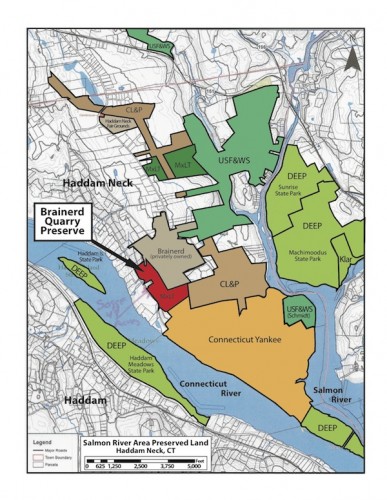
haddamNeckMapRaulBrownFINAL031815_v2In February of this year the Middlesex Land Trust, in partnership with the Connecticut River Gateway Commission, purchased 50 acres of open space for permanent protection in Haddam Neck. This new preserve offers breathtaking views across the Connecticut River to Haddam Meadows State Park from a rough path that runs along the base of dramatic cliffs created from the property’s historic use as a quarry.

The Middlesex Land Trust now owns the preserve and is planning to develop a trail system for the public to enjoy for hiking, passive recreation and education. The tract lies along Injun Hollow Road just north of the 585 acres Connecticut Yankee property.

The land has been named the Brainerd Quarry Preserve to reflect the historic importance of the Brainerd Family in Haddam. Daniel Brainerd was one of the 28 founding settlers of Haddam in 1662, and a century later, in 1762, Deacon Esra Brainerd opened a quarry on the now preserved site. The quarry operated for more than 150 years, shipping stone down river to New York and as far south as Maryland, Virginia and New Orleans.

A 2011 study of the history and archeology of the area describes the Brainerds as “a family of entrepreneurs in the forefront of early industry and commerce in the Connecticut River Valley” and recommends the quarry site as “an ideal candidate for use as an outdoor classroom for studies in local history, geology, mining, early American industry, the Industrial Revolution in Connecticut and other related topics for grammar school, high school and college students.”

This significant property along the Connecticut River is now owned and managed by the Middlesex Land Trust, a regional not-for-profit volunteer land conservation organization that, since 1987, has been dedicated to the preservation of open space in northern Middlesex County.

The purchase was initiated by, and made possible through grant funding from the Connecticut River Gateway Commission, a state-local compact that protects the Lower Connecticut River Valley, one of the “most important ecological landscapes in the United States” according to the Secretary of the U.S. Department of the Interior.

A dedication ceremony for the new Brainerd Quarry Preserve and the opening of the preserve to the public is anticipated for the summer of 2015.

Local Fire Departments Host Areawide Food Drive Saturday

Food donations collected last year are gathered beside an Old Saybrook firetruck

Food donations were collected in Old Saybrook last year by the Old Saybrook Fire Department.

For the fourth year, local Fire Departments are hosting an area-wide food drive to collect non-perishable food for area residents in need.

The fire stations will be open to receive donations of non-perishable food on Saturday, April 11, from 9 a.m. to 1 p.m. The donations will go to five local food pantries run by The Shoreline Soup Kitchens & Pantries (SSKP).

SSKP hopes to include as many fire departments as possible in the 11 shoreline towns they serve. So far, the Old Saybrook, Chester, Killingworth, Clinton, Niantic and Westbrook fire departments have committed to the event. All fire departments are welcome to participate.

At a time of year when food donations are low, this food will help to restock the pantries and ensure that everyone in our communities will have a place at the table.

The Soup Kitchens’ five pantries combine to distribute approximately 17,000 pounds of food every week. Only 40 percent of this food comes from the CT Food Bank; the remainder must be either purchased or donated, so every item is appreciated. Last year’s drive raised 6,500 pounds of food. Join the effort by bring your donation to a participating firehouse on April 11.

The most needed items are:

Canned Meats (tuna, chicken, salmon)

Canned Fruits & Vegetables

Peanut Butter

Canned & Boxed Meals

Canned or Dried Beans

Pasta & Rice

Cereal

Items that cannot be accepted:

Rusty or Unlabeled Cans

Perishable Items

Homemade Items

Noncommercial Packaged or Canned Items

Alcoholic Beverages & Mixes

Open or Used Items

For more information call (860) 388-1988 or cbellerjeau@shorelinesoupkitchens.org or visit www.shorelinesoupkitchens.org.

The Shoreline Soup Kitchens & Pantries provides food and fellowship to people in need and educates the community about hunger and poverty, serving the Connecticut shoreline towns of Essex, Chester, Clinton, Madison, Old Saybrook, East Lyme, Lyme, Old Lyme, Killingworth, Westbrook and Deep River. Founded 26 years ago, in 1989, at the Baptist Church in Essex, the agency continues in its mission to feed the hungry in body and spirit. Last year with a small staff and over 900 dedicated volunteers, SSKP served almost 950,000 meals worth of food to shoreline neighbors in need.