Holiday Show & Sale in Old Lyme

display_compressed
A group of local artists and crafters is hosting their popular 9th Annual Holiday Show tomorrow, Saturday, Nov. 15, from 10 a.m. to 4 p.m. and Sunday, Nov. 16, from 11 a.m. to 3 p.m. at 11 Smith Neck Rd. ( off Rte. 156, opposite the Nearly New Shop )  Admission is free and all are welcome.

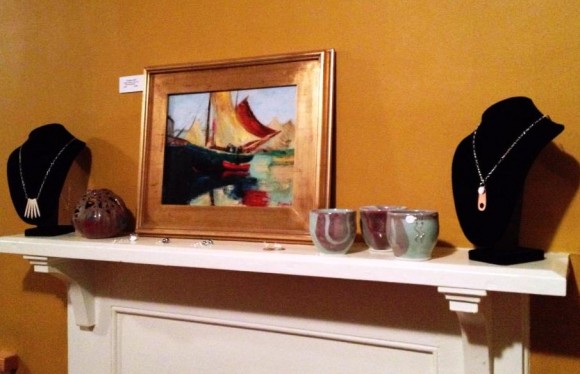
Jewelry, felted bags, pottery, cards and more will be for sale at competitive prices.

The artists and crafters involved include Betsey Copp, Ashby Carlisle, Stephanie Kenny, Tracey McMahon, Karen Stevenson and Lina Tuck.

For more information, call 860-434- 2691 or email asby@ashbycarlisle.com

See Lyme-Old Lyme High School’s Fall Play, Nazi Labor Camp Survivors to Speak After Performance

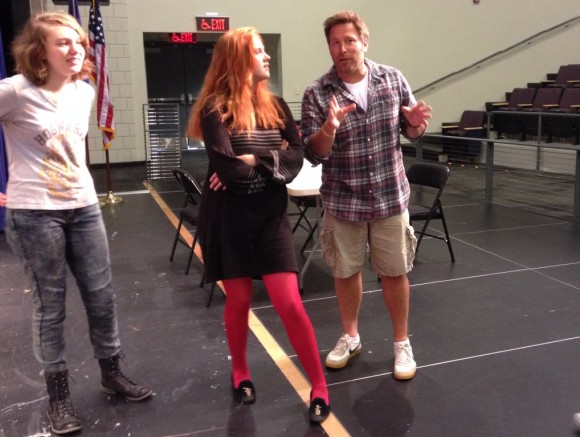
Director and history teacher Brett Eckhart gives instruction to cast members during a recent rehearsal for "Letters to Sala."

Lyme-Old Lyme High School fall play director and history teacher Brett Eckhart gives instruction to cast members during a recent rehearsal for “Letters to Sala.”

This year the Lyme-Old Lyme High School fall play will be “Letters to Sala.”  The performances will take place at 7:30 p.m. in the high school auditorium on Friday and Saturday, Nov. 14 and 15, with an admission price of $7, or $5 with a canned good.

LymeLine.com has received an exciting update to the performance details as follows:

Henny Rosenbaum Simon, an 89-year-old survivor of three camps and Ben Cooper, a liberator of Dachau, will be attending the Saturday performance.

Following the show, they will share some of their stories, and Cooper is going to bring some of the artifacts he has collected over the years.  He is a wonderfully engaging speaker and the items he has to share (e.g., his army jacket to match the one in a photo of himself at age 19, or the 20 foot Nazi flag taken from a building), are both chilling and fascinating.

“Letters to Sala” is a true story about a woman “sharing her past with her family” through letters that she wrote while in a labor camp during World War II, according to Brett Eckhart, the director of the play, who also teaches in the history department at the high school.  Eckhart says he “came across [the play] by accident” while “sifting through some [play options] online.” He chose the play because students had asked for a more dramatic piece, rather than his usual comedic selections.  Being a history teacher, Eckhart says he just, “fell in love with the story,” which is based on real life.

The play details the “trials and tribulations of a young lady in the Holocaust,” comments Eckhart.  Sala is an old woman by the time she divulges the letters to her daughter, Ann, and her two granddaughters, Caroline and Elizabeth, so the play takes place in both the modern day and the 1940s during World War II.  Eckhart wants “Letters to Sala” to “shed light on labor camps,” which were not like the well-known concentration camps.

“Not many know about the labor camps, which were instituted during the war,” says Eckhart. Operation Schmelt, which began at the start of World War II, involved the creation of 177 different labor camps around Nazi Germany and its allies so that those countries were supplied with people to sew uniforms and complete other menial tasks for the soldiers.  In the labor camp, Sala, along with the other workers, was allowed to send and receive mail until 1943.
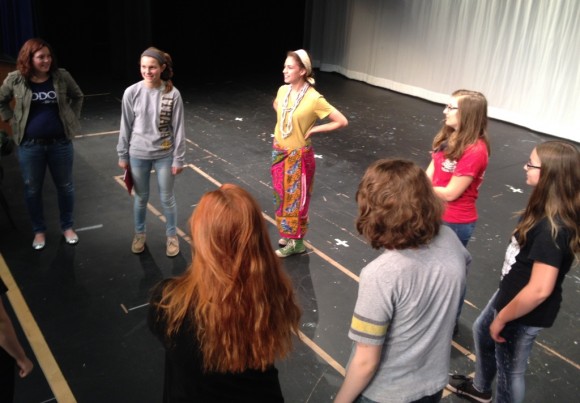
Cast members rehearse a scene from "Sala's Gift."

Cast members rehearse a scene from “Letters from Sala.”

Eckhart wants the performance to be “educational as well as entertaining” and has reached out to local survivors of the war and also children of survivors to attend the performances and speak to the cast, so that they might gain insight in to what life was like at that time.  At the end of each performance, a screen will come down in front of the stage, and Eckhart will show pictures of the real Sala and her family, as well as other labor camp workers whom Sala knew.

“Letters to Sala” is based on a book titled, “Sala’s Gift,” written by Ann Kirschner, Sala’s daughter, as well as the true accounts that Sala gave her daughter and grandchildren when she showed them the letters.  Anne donated the letters to the New York Public Library, which currently has the letters on show in an exhibition in their building. The Library also has a permanent online exhibition on their website, so that people can view the historical documents from any online location worldwide.

Eckhart concludes, “If the play is done right, the audience will be emotionally drained — in a good way.”
Sunshine, Spineti Sing at ‘Nightingale’ Tonight, Benefits NL Homeless Hospitality Center

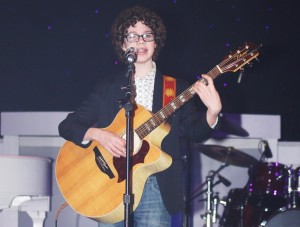
Braiden Sunshine will performing with Lauren Spineti at Nightingale Cafe on Lyme St. Friday night.

Braiden Sunshine will performing with Lauren Spineti at the Nightingale Cafe on Lyme St. on Friday night.

Last Saturday, Braiden Sunshine of Lyme was one of 16 high school students to sleep outside in cardboard boxes on the lawn of the First Congregational Church of Old Lyme to try and gain an understanding of what it might be like to be homeless. He said that just one night — knowing he had a warm home and comfortable bed at home — could never give him a real understanding of homelessness.

But nevertheless, it was cold and lonely, and Braiden is now turning that experience into action to help the homeless.  As the nights turn colder, he hopes to raise money to keep the homeless of New London warmer.

Braiden and his friend Laura Spineti are performing at The Nightingale Cafe on Lyme Street this Friday, Nov. 14, from 7 to 9 p.m. to raise money for the Homeless Hospitality Center in New London.

Any donations for the Homeless Hospitality Center will be graciously accepted.

Come out and enjoy some great acoustic music with terrific harmonies and help support a worthy cause.

Letter to the Editor: LOLJWC Expresses Appreciation to Old Lyme Inn for New Member Social

To the Editor:

On behalf of everyone at LOLJWC, we thank the Old Lyme Inn and its fabulous staff for hosting our New Member Social on October 29, 2014.  Because of them, we were able to highlight and share our club’s goals and missions, from social events and camaraderie to community support and the much anticipated spring fundraiser.  These fantastic women were treated to the Inn’s generous offering of appetizing bites and divine libations.  And from the sounds of laughter echoing through the restaurant, a great time was surely accomplished.
It is the support and contributions of local businesses such as the Old Lyme Inn that lead to our club’s success, thereby benefiting our community.  We thank you.
Sincerely,
Stacy Winchell,
Old Lyme.

Tunisian Election Outcome Offers Remarkable Example to Countries Dealing With Terrorism, Violence

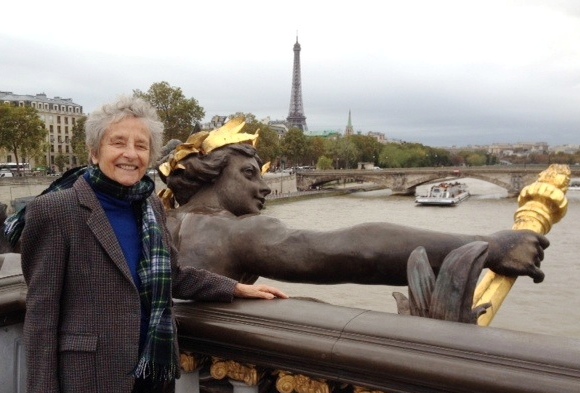
Nicole Prévost Logan

Nicole Prévost Logan

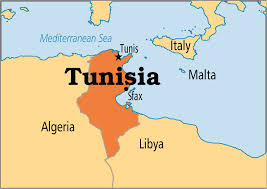
Map_of_tunisiaTunisia did it again!  This small country in North Africa was the one to start the Arab Spring in December 2010.  On Oct. 26 of this year, the parliamentary elections marked the return to some degree of normalcy after a difficult period of assassinations and violence.

The latest elections revealed a “collective intelligence,” to use the words of a French political scientist – the result of a well established civil society.  Instead of a single party hijacking the political scene, the people voted for several parties.  The liberal party Nidaa Taures won with 38 percent of the votes.  In order to reach a majority of 109 seats in the parliament, it is willing to form a coalition – quite unusual in this part of the world.

The Islamist party Ennahda secured second place with only 28 percent of the votes and 69 seats — or 16 seats less than in the previous election.  Wisely it  conceded defeat.  How to explain the resistance of the population to the Ennahda program?

The answer lies for a large part in the key role played by women.  They spearheaded the resistance against the strict enforcement of the Sharia or moral code, which limits their rights in many areas: inheritance, divorce, veil and regulations on clothing, custody of children, adultery sanctioned by stoning or “honor killing,” right to travel, right to open a bank account, and access to higher education, etc.

In the text of the constitution approved in January 2014,  Ennahda had reluctantly agreed to replace the expression “complementarity of men and women” by “equality for all.”  A journalist had the nerve to make the following extraordinary comment, “This was a small victory for a few Tunisian feminists”.

Tunisian_flagThe “Personal Status Code,” which was installed by president Habib Bourguiba in 1956,  had given empowerment to Tunisian women, thus making them the most emancipated in the Arab world.  This revolution was at the center of his program in order to model his country on Kemal Ataturk’s vision of a secular  and modern country.  Incidentally, it is interesting to note that both Turkey and Tunisia have almost identical flags.  Bourguiba is said to have remarked at one time, “… the veil – that odious rag.”

Tunisia can be considered to-day as a bulwark between a dangerously chaotic Libya and an Algeria unable to control terrorism (on Oct.14, a  Frenchman visiting the rugged mountainous area south of Algiers, in order to train young Algerians to become mountain guides, was taken hostage and  beheaded two days later.)   In other words, Tunis is of great importance not only as a model of democratic process coexisting with a moderate Islam but also, one hopes, as an oasis of stability for the whole area.

Nicole Logan

Nicole Prévost Logan

About the author: Nicole Prévost Logan divides her time between Essex and Paris, spending summers in the former and winters in the latter.  She writes a regular column for us from her Paris home where her topics will include politics, economy, social unrest — mostly in France — but also in other European countries.  She also covers a variety of art exhibits and the performing arts in Europe.  Logan is the author of ‘Forever on the Road: A Franco-American Family’s Thirty Years in the Foreign Service,’ an autobiography of her life as the wife of an overseas diplomat, who lived in 10 foreign countries on three continents.  Her experiences during her foreign service life included being in Lebanon when civil war erupted, excavating a medieval city in Moscow and spending a week under house arrest in Guinea.