
I hate to be the bearer of bad news, but chances are we will see another fare hike on Metro-North in the coming months.
Not that any elected official would endorse such a plan (at least not before the November elections), but once again Connecticut is not totally in control of its financial destiny when it comes to our trains.
True, fare increases in Connecticut must be initiated by the state regardless of what New York does to its riders, but the financial numbers speak for themselves.
We are tied to New York’s operations by an antiquated contract going back 30 years. The cost of running “our” trains is born by both Connecticut and New York, and those costs are soaring from $70 million a year to $110 million thanks to remedial track work and expected contract settlements (with four years of retroactive pay hikes).
How will Connecticut make up this $40 million deficit? There are only three choices: raise fares, cut service or find that money elsewhere. The latter two choices are either undesirable or impossible, leaving the prospect (necessity?) of fare increases.
After a year of slower, unreliable and often-disrupted service, it’s hard to explain to commuters they should be paying more… especially in an election year. So when the rumored necessity of a fare hike was floated last week, Governor Malloy expressed outrage and bewilderment.
But our governor and his Department of Transportation (DOT) knew darn well this was coming. They’re the ones who pushed Metro-North for badly needed track work after derailments and deaths. Who did they think would pay for that? And one wonders… does Connecticut’s DOT ever audit Metro-North’s ever-increasing budgets and bills to our state?
Fares in Connecticut are already the highest in the US because our subsidy of those fares is the lowest. Upstate lawmakers who dominate our legislature loathe the idea of subsidizing fat-cat investment bankers’ trips to their high-paying jobs in New York City. But they have no trouble taxing their incomes, do they?
Fairfield County residents represent 26 percent of our state’s population but pay 40 percent of its taxes. Legislators made us subsidize Adriaen’s Landing ($770 million) in Hartford and the UConn football stadium ($90+ million), neither of which we are ever likely to use. So why can’t they keep residing in Fairfield County affordable by keeping Metro-North safe, on-time and affordable.
Since 2012 we’ve already had 12 percent fare hikes, thanks in part to Governor Malloy using rail fares to balance his budget (a move I called that more of a tax on commuters than anything else.)
The good news is that a fare increase in Connecticut requires 90 days notice and public hearings. And with the November elections just weeks away, no right-minded politician will pull that trigger.
Mind you, it was now-GOP nominee Tom Foley who recently told reporters he thought we in Connecticut spend too much subsidizing mass transit, so who knows? It should be an interesting campaign season and my hope is that Metro-North will be a much debated topic.

Jim Cameron
Editor’s Note: Jim Cameron has been a Darien resident for 23 years. He is the founder of the Commuter Action Group and also serves on the Darien RTM. The opinions expressed in this column are only his own. You can reach him at CommuterActionGroup@gmail.com


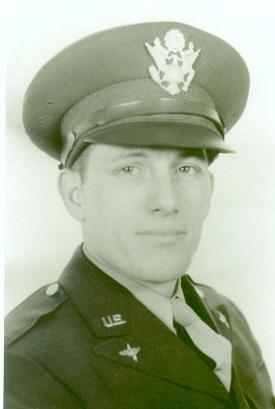 Dr. William H. “Bill” James, age 104, of North Branford, Connecticut, died peacefully on August 19, 2014.
Blessed with long life, good health, and a strong work ethic, William was possibly Connecticut’s oldest military veteran, serving in May this year as Grand Marshall of his town’s Memorial Day events, at which he gave a speech. He leaves a record of accomplishment, drive, intelligence, and widespread friends and affiliations. Born in 1910 to John and May James, William came of pioneer stock and spent his childhood on rural farms. Starting in the 1920’s, he and his mother traveled to Europe where each pursued educational opportunities, with William studying at the University of Lausanne, Switzerland, before returning to the U.S. to attend and graduate from Brown University in 1933.
Dr. William H. “Bill” James, age 104, of North Branford, Connecticut, died peacefully on August 19, 2014.
Blessed with long life, good health, and a strong work ethic, William was possibly Connecticut’s oldest military veteran, serving in May this year as Grand Marshall of his town’s Memorial Day events, at which he gave a speech. He leaves a record of accomplishment, drive, intelligence, and widespread friends and affiliations. Born in 1910 to John and May James, William came of pioneer stock and spent his childhood on rural farms. Starting in the 1920’s, he and his mother traveled to Europe where each pursued educational opportunities, with William studying at the University of Lausanne, Switzerland, before returning to the U.S. to attend and graduate from Brown University in 1933.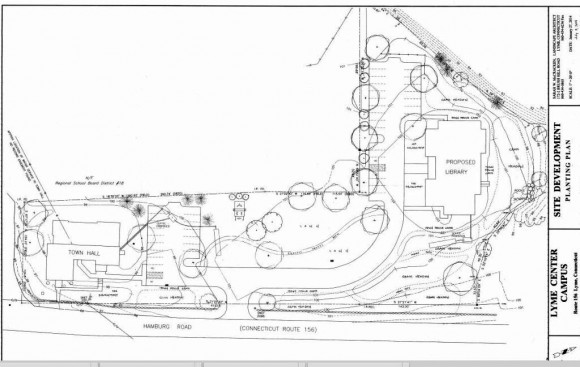
 The residents of Lyme have been eagerly watching the renovation of their town hall and the building of the new library over the last year; however, during the excitement of construction, the Lyme Garden Club has been quietly working on an often overlooked finishing touch for any building project, the landscaping. They have been coordinating with town groups, businesses, and individuals, but the landscaping plans have only recently been made public.
 The final design is simple, yet elegant, and fits into the Lyme aesthetic. It covers the landscaping of both buildings as well as the development of the new town green that will be created when the old library is demolished. Making use of grasses that don’t have to be mowed and hardy plants, the grounds will be easy to maintain and, by necessity, deer resistant. The front of the library will be planted in an herb garden in recognition of much loved former club member, Betty Cleghorn, and of the library herb garden that the Lyme Garden Club has maintained for years.